


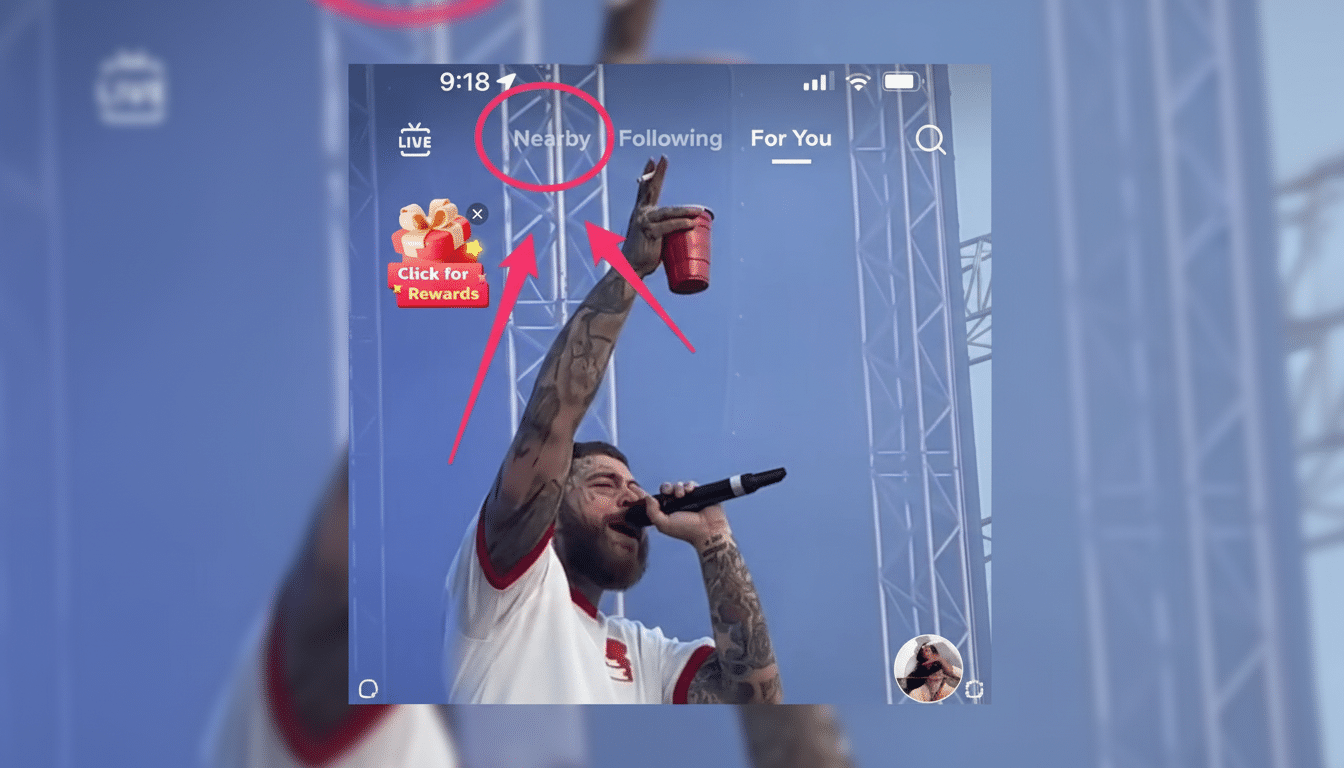
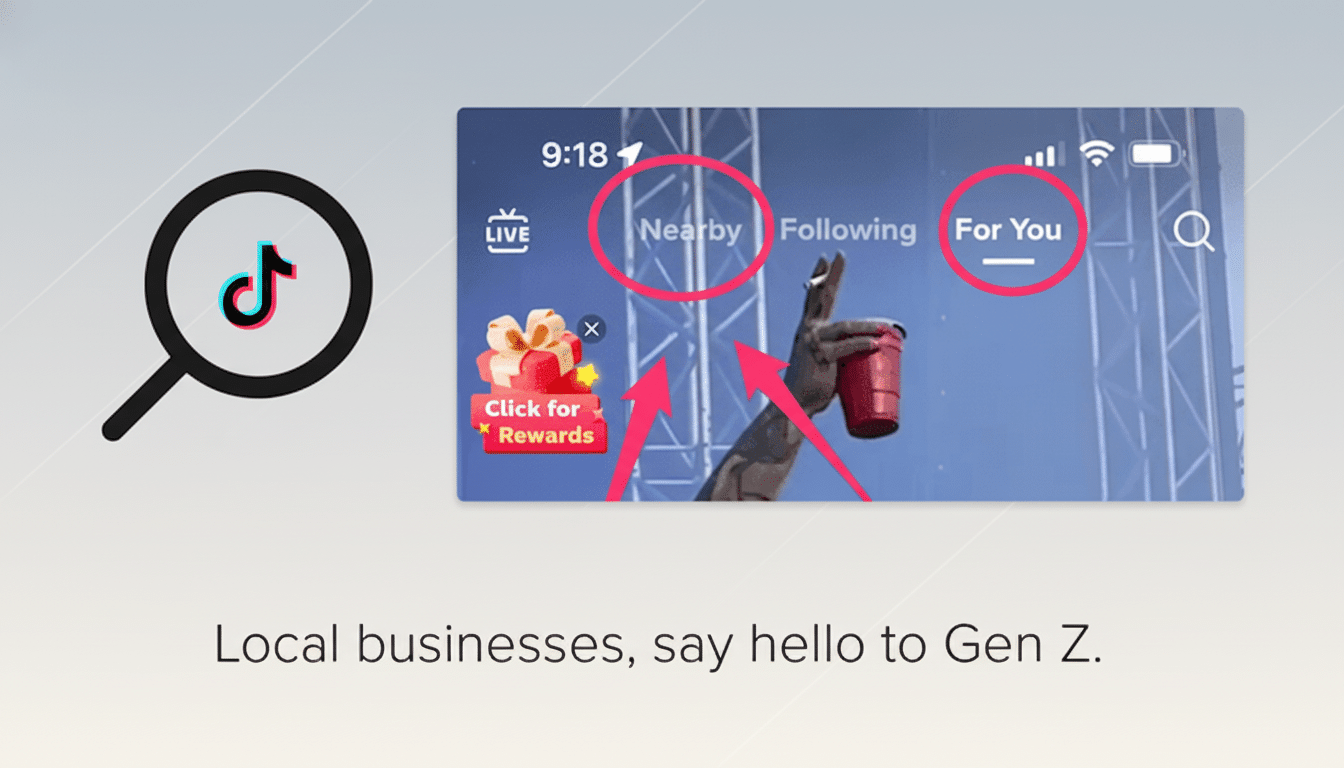
TikTok is introducing a Nearby Feed in a handful of countries to offer users a dedicated means of discovering short-form videos that are relatively local to them. It’s rolling out in the U.K., France, Italy, and Germany first and is designed to serve up local recommendations like events or services while retaining TikTok’s swipeable feel.
How TikTok’s Nearby Feed curates and ranks local posts
The Nearby Feed combines location with TikTok’s fundamental ranking signals. Posts are ordered based on where you are, what they are about, and when they appeared. Look for clips anchored to:
- How TikTok’s Nearby Feed curates and ranks local posts
- Privacy controls, sharing options and who is eligible
- Why local discovery on TikTok matters for real-world plans
- What Nearby means for creators and local small businesses
- Competitive landscape and product context for Nearby Feed
- Rollout scope and key areas to watch during early launch
- Travel tips
- Neighborhood festivals
- Food and drink places
- Local services aligned with your interests and prior engagement
Public posts made by creators can target individuals in a city or region where the post was uploaded, especially when it’s tagged with a location or service. If you’d rather roam a specific geography, you can manually scroll to a different area in the feed—for trip planning and checking in on that new neighborhood. The tab won’t show “Nearby” itself; rather, it displays the name of the area in a way that feels native to your location.
Privacy controls, sharing options and who is eligible
Location sharing is optional and available only to those 18 and older. When activated, TikTok can read location settings to establish local content, and iOS users will receive a notification when GPS has been used. Content from users under 18, private accounts, and posts set to Friends or Only You will not appear in the Nearby Feed.
The company says it is still collecting and using location information in accordance with the laws where it operates. In Europe, that includes fulfilling stringent standards for consent and transparency under GDPR, and broader recommender-system transparency requirements that regulators have hinted at in the context of frameworks like the Digital Services Act. The opt-in process and clear signals likely relate to those obligations.
Why local discovery on TikTok matters for real-world plans
Local discovery has emerged as a core use case for short-form video. “More than 40% of young people have told us they use social apps to take recommendations on where to eat or what to do nearby,” Google’s search chief said. TikTok, which says it has more than a billion monthly users around the world, is catering to that behavior with a feed designed for proximity and immediacy.
TikTok says it can help people discover local businesses or cultural exchanges by adding the Nearby Feed, which could bolster those small business and rally appearances. These are videos that some subset of TikTok will be shown, with the hope (probably accurate) that it will result in someone showing up in real life to experience what they’re watching in lilliputian form. Forty-six percent of U.K. users on TikTok have reportedly visited a local shop, restaurant, or attraction they saw on the platform, as if a second incentive were needed for this trend.
What Nearby means for creators and local small businesses
The initial opportunity for creators, Mr. Raghavan said, was to combine location tags with “evergreen local formats”—he suggested things like quick tours of a place or “three things to try” there, event recaps that align with weekends, and so on.
Posting cadence and recency count: A speedy pace of updates about openings, pop-ups, and seasonal goings-on is more likely to appeal in a feed that’s tuned to what’s happening soon and nearby.
Local businesses can make the most of TikTok by optimizing for TikTok-native discovery:
- Signage in frame
- Short captions that include relevant locations
- Calls to action that sync with how people plan (hours, neighborhood, reservation links in the profile)
While there have been no new ad products for TikTok introduced with Nearby, the format naturally complements place-based promotions and could broaden options for measuring footfall and offline conversions over time.
Competitive landscape and product context for Nearby Feed
TikTok more directly places itself next to social-first maps and discovery tools. Instagram has latched onto a searchable map and location stickers; Snapchat with Snap Map; Google still leans on visual search for local results. TikTok’s advantage is its recommendation engine: If it can mix signals of interest with a sense of real-world proximity, it might increasingly feel less like an inflexible telephone book, more like a dynamic local guide.
The feature also comes after earlier regional tests of a related Nearby experience, indicating TikTok has been fine-tuning how location signals inform content relevance. The decision to brand the tab by place rather than “Nearby” speaks to a design principle: make local browsing feel seamless, not hived off.
Rollout scope and key areas to watch during early launch
The launch is available only in the U.K., France, Italy, and Germany, and TikTok has not specified when it will roll out elsewhere. Key areas to watch include:
- How well the feed balances freshness and accuracy
- Guardrails around youth safety and privacy
- Whether TikTok introduces complementary business tools—such as more robust profiles, booking integrations, or local analytics features—to monetize discovery
If adoption follows broader behavior patterns, Nearby could become a routine way to begin planning a meal, a night out, or an itinerary for the weekend—thereby transforming short videos into a real-time map of what to do around you.