


Threads is introducing Communities, a new way to bring together fast-moving conversations into one public place focused around users’ interests — and that seems tailor-made for live events and shared hobbies. The idea behind it is simple but powerful: instead of waiting for the main feed to float up the posts we really care about, users can just step into a dedicated room where discussion stays relevant and in real time.
What Threads Communities Are and How They Work
Communities are public forums organized around interests such as basketball, television, books, and K-pop. They operate more like open lounges than exclusive clubs, with a focus on discovering new voices and timely conversation over long-term, locked membership. Meta refers to them as casual spaces — lightweight to join, easy to follow, and designed to surface the most relevant posts as momentum is gained.
- What Threads Communities Are and How They Work
- How to Join and Follow Threads Communities
- Custom Reactions and Contributor Badges Explained
- Early Rollout and Real Examples from Threads Communities
- Why Threads Communities Matter for Live Events and TV
- Moderation and Safety Considerations for Public Communities
- How Threads Communities Compare to Other Social Platforms
- Adoption Outlook and the Broader Context of Threads’ Growth
- What to Watch Next as Threads Communities Continue to Grow
How to Join and Follow Threads Communities
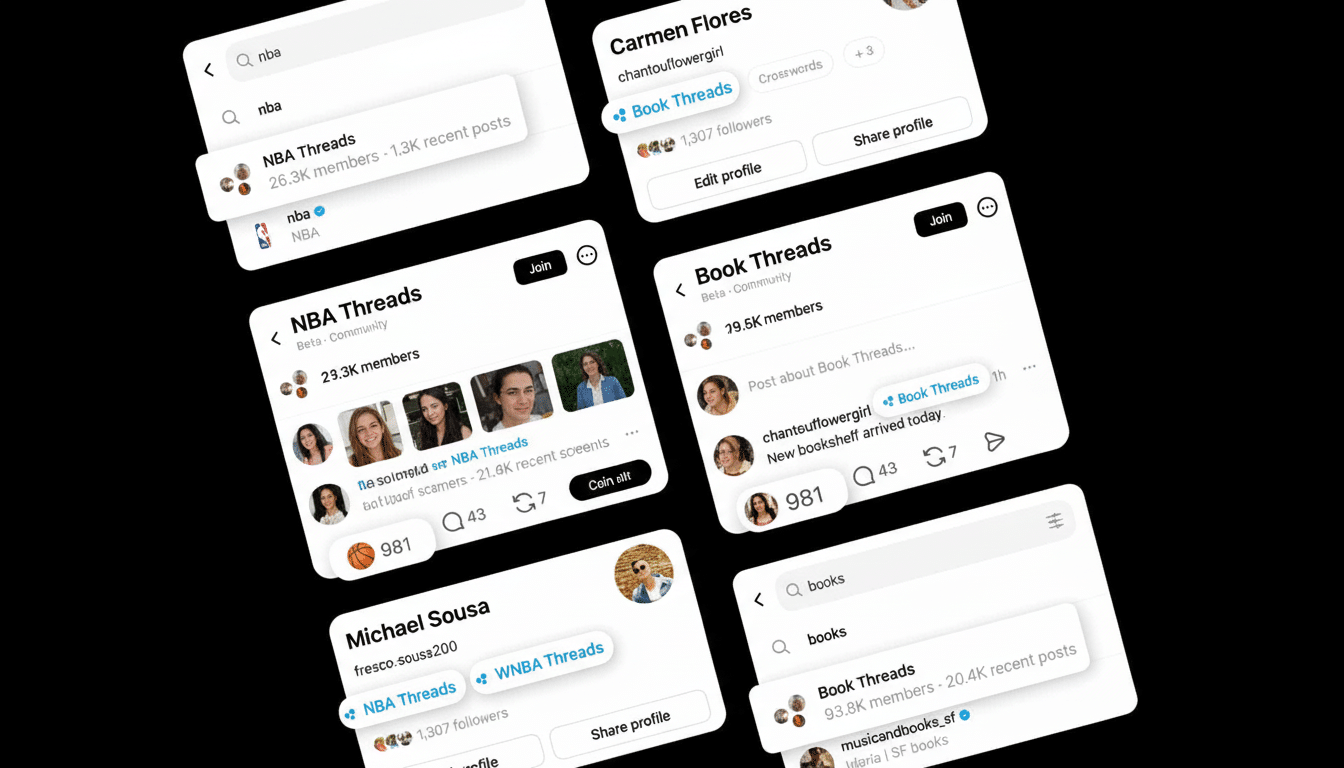
The sign-up process is supposed to be frictionless. If you go to the search icon in the top right, search for a topic that comes up as a community, and then hit Join. One simple way to tell is the three-dot designator on a topic tag, which indicates that tapping through will take you to a community space, not just a regular hashtag-style page. Once you’ve joined, your communities can be found in the app’s main menu, where it’s easy to drop into a focused feed when a game tips off or a season finale drops.
Custom Reactions and Contributor Badges Explained
Each community also gets a special like emoji: instead of the heart emoji that floats on all other posts, you can now react with the custom icon for that theme. Book discussions display a stack of books, WNBA posts have a basketball, and AI threads are marked with a lightbulb. For now, those custom reactions only show up once you’ve joined a community, which seems like a subtle nudge to invite everyone in. Standout contributors — a.k.a. the people who reliably make things better — will also earn special badges, for what it’s worth; it’s yet another lightweight element that aims to help quality voices rise above the noise.
Early Rollout and Real Examples from Threads Communities
At launch, Threads is seeding Communities around its busiest interests, like NBA and WNBA Communities, TV Thread, K-pop Thread (and says there are more than 100 available). Early testers have said community feeds push conversation to be on topic, and it’s far easier to follow a live game or award show without sifting through lots of extraneous chatter. The head of Instagram, Adam Mosseri, has admitted it still needs some work, but he is publicly excited about its potential.
Why Threads Communities Matter for Live Events and TV
Social platforms rise and fall on the quality of their real-time conversation. Communities offer Threads a clear space for second-screen behavior — isolating a play-by-play with other fans or debriefing a plot twist together with an audience that will recognize the stakes of what just happened in Fargo. Research firms like Nielsen have long noted the symbiosis of TV viewing and social media use, especially around sports and tentpole broadcasts, and Meta has embraced that dynamic across its apps. If ranking within Communities and the For You feed do favor relevant, timely posts as promised, Threads could be positioned to become a place to check during game nights and premiere dates.

Moderation and Safety Considerations for Public Communities
Since Communities are public, they will depend heavily on Threads’ already established enforcement tools and policies. Anticipate the standard set — reporting, hiding, and limiting replies — to be in place. Meta has yet to outline granular admin controls or specific moderator roles, so creators and power users alike will be on the lookout for further information around who’s driving the ship when conversations are booming. Ranking and relevance signals will be involved as well; prioritizing helpful posts can also counter some low-quality spam without such a heavy reliance on hard bans.
How Threads Communities Compare to Other Social Platforms
Consider Communities a sort of middle ground between Reddit’s closely controlled subreddits and Facebook’s member-gated Groups. They are public and accessible, like open forums, but specific enough that discussions don’t go wandering off. Relative to X’s Communities and Topics, Threads doubles down on identity through Instagram — your profile, relationships, and norms all transfer over — adding lighter incentives (badges and custom reactions) to reward good behavior. It’s meant to be less about exclusivity and more about now.
Adoption Outlook and the Broader Context of Threads’ Growth
Threads saw around 175 million monthly active users in mid-2024, a substantial share of which can now be pushed into topical rooms. That scale is the feature’s greatest asset, though: a small percentage of fans getting together during marquee moments can make for an atmosphere that instantly feels alive. For creators and brands, Communities offer a clearer signal where they can test real-time content and drive participation without taking over the main feed.
What to Watch Next as Threads Communities Continue to Grow
Not all interests have a Community, and some features are still in the works. Meta says it’s kicking off a refined ranking burn-in within Communities and in the For You feed, surfacing timely, relevant posts first. Pay attention to whether unique emoji reactions spread outside connected rooms, how badges change behavior, and what moderation tools develop as hubs expand. If the experience remains focused and inviting, Communities could be the most compelling reason to open Threads when something big is unfolding.