


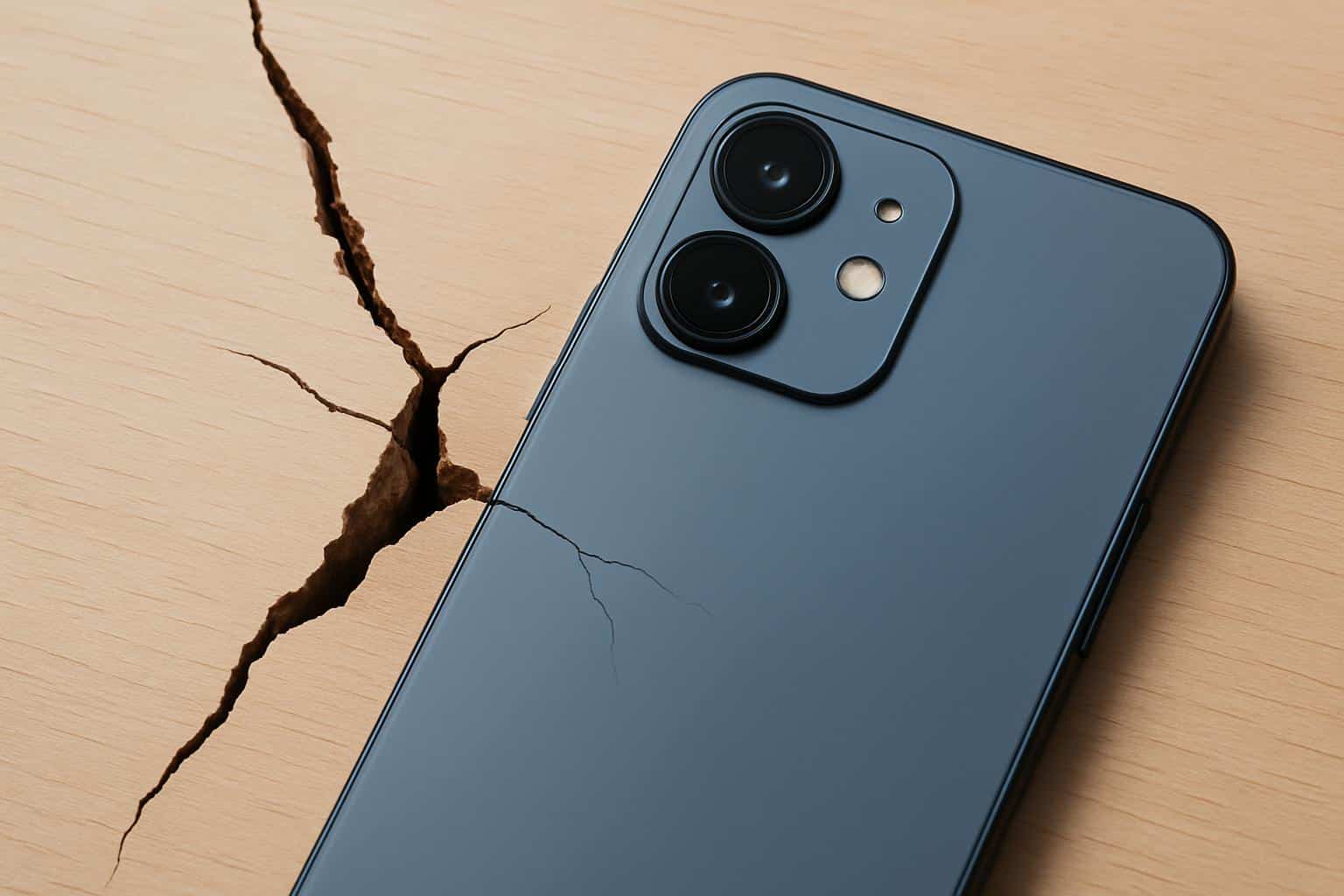
Top-of-the-line camera phone are sensational — until you put them down. As soon as you tap any of their screens with your fingertip, the display on many of today’s sharpest devices wobbles like a table with a short leg. That little wobble, generated by too-large, off-center camera bumps, is that kind of silly problem. It’s also one that intrudes on everyday use far more than it should.
If you keep your phone face-up on a workspace to catch notifications, sign documents or respond to messages, or to check a map while you’re on the phone, you know the feeling: tap, tilt, tap, tilt. The camera island becomes a pivot point for the phone and forces you to pick it up to do little else than mop your forehead. When you see it, you see it everywhere.
Why the wobble is increasing
The short answer is physics. In pursuit of capturing better images, smart phone manufacturers have chased bigger sensors and longer focal lengths. Counterpoint Research notes a month-by-month reduction in the share of cameras under 10 MP with each premium tier, and, according to DxOMark’s lab data, both size counts when it comes to low-light and dynamic range. The trade-off: larger sensors and longer lenses require thicker modules.
Throw in periscope and long telephoto systems — which are also required in order to take ultra-high-quality zoom — and that camera stack is one of the fattest components within a phone. iFixit teardowns have frequently demonstrated camera assemblies that have as much or more vertical space once you factor in lens elements, OIS, and shielding as the battery and the motherboard.
Combine that with the relentless push to make phones thinner. Display Supply Chain Consultants has meticulously charted how flagships and particularly foldables trim fractions of a millimeter per generation through more slimline glass, Oled stacks and improved hinges. The upshot: the body gets slimmer while the camera stack doesn’t, so the bump sticks out more. And since many brands have stopped providing a case in the box (a decision often justified on environmental grounds), there’s no default solution for leveling the rear. The wobble becomes your new default position.
Designs that tip — and those that don’t
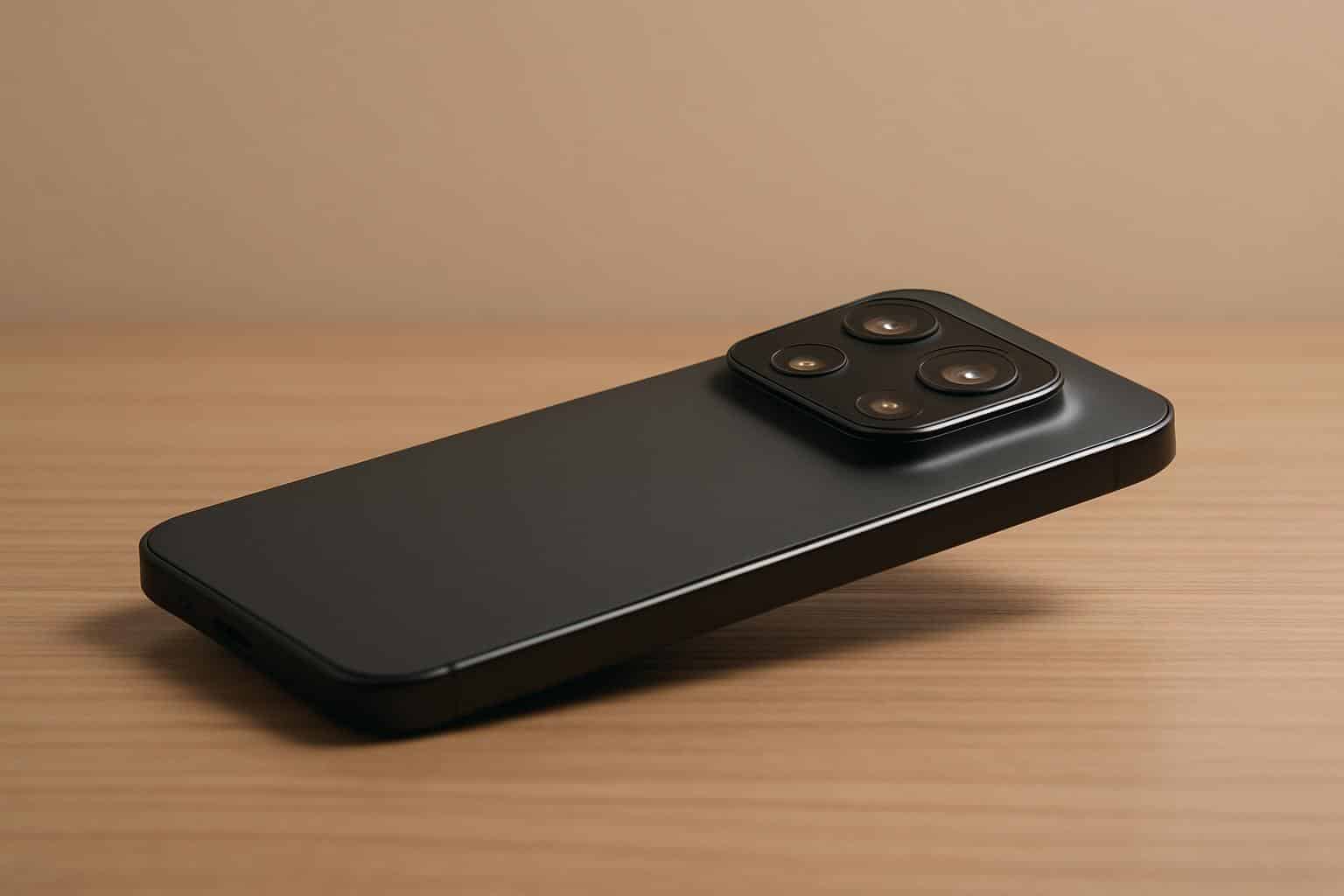
So, the biggest offenders of imagery with a pronounced camera cluster are, um, clusters that are off-center near a corner. It’s a fulcrum, so to speak, turning the back into a seesaw. Tap almost anywhere, and the device teeters atop that little hard metal-and-glass nub. Such a thing becomes even clearer on mega niched slabs or foldables with literally razor-thin halves.
There are, however, smart countermeasures. That weakness is largely nullified by a full-width camera bar, that creates a stable spine. Google’s most recent Pixels have demonstrated how a crosswise bar cuts down on tilt on flat surfaces. And circular, centered housings — as can be found on vivo’s X-series or Xiaomi’s Ultra models — can evenly distribute mass. These can shake loose under the pressure of sharp corners, but the simple tap hasn’t been enough to set them off in the same way the off-center islands have.
It’s not about style; it’s about proportion. Put two phones down on the table — one with a corner island and the other with a centralized bar — then try typing a quick note on them without lifting, and it quickly becomes a potential stress test. The change in stability is obvious then, and I’m shocked how surprisingly freeing it feels.
A small irritant with genuine user costs
Ergonomics research has long shown that micro-frictions compound. The Nielsen Norman Group has written extensively about how small flashes of delay stack up to tangible decreases in satisfaction. A phone that refuses to lay flat on a desk, that nudges you to wrap your digits around it for every interaction, to change where you leave it, or to put off a certain task until you can hold the thing, erodes your experience of flow and comfort.
That matters because on the core metrics shelf, performance, battery life and the quality of the main camera or cameras, premium phones are packed almost disastrously close together. IDC and other market trackers cite increasingly fierce competition at the high end of the market, including a rebound in foldables. When parity is the norm, little UX quirks can influence a sale. If both gadgets take fantastic photos but only one sits steady on a tabletop, then the steady one gets the nod.
What manufacturers can fix—fast
First, center the gravity. Camera bars or center mounted housings significantly reduce wobble with no loss of optical quality. If a corner cluster is the law, perhaps a few discreet “micro-rails” or low-angle skid pads applied to the back glass would level the device without the bulk. A continuous ridge even a millimeter higher opposite the bump can turn a seesaw into a flat plane.
Second, rebalance internals. Some dense components — such as wireless charging coils or graphite heat spreaders — can be moved to help counterbalance the camera mass. This isn’t a silver bullet, but it lessens the pivot effect. Finally, if bundled thick protective covers are not viable because of sustainability objectives, add an ultra-thin leveling sleeve. It’s a low-material accessory that’s on point with eco aims as much as it is with solving a real-world gripe.
How you can alleviate some wobble right now
The easiest is a slim case design that rises just a tad higher than the camera bump; we notice a difference even with 0.5–1.0mm of lift. A soft desk mat or mousepad also helps dampen movement and vibrations from taps. If you’re shopping, try stability in the store by typing on the demo unit lying flat, not just pixel-peeping the viewfinder. If you’re the type to use your phone on desks more often, then there’s a camera bar or a centered circular housing favored.
None of this is to erase the incredible advances in mobile imaging, of course. But the world-class cameras shouldn’t be making the basic on-desk use so clumsy. This is a balance problem and an industrial design problem, not a fundamenal physics problem. The phone that’s nailed it will win quiet loyalty with every single tap.