


You know that feeling. You are merging onto I-81 or maybe navigating the tighter turns of the President Biden Expressway. The traffic is thick, the winter potholes are jarring, and then you see it in your rearview mirror. A massive grille. Chrome and steel bearing down on you. It is a daily reality in Scranton. We live in a hub. A crossroads. The logic of logistics makes this area a heartbeat for commerce, but it also means we share our lanes with machines that weigh twenty times more than a family sedan.
It is not just about the highways either. These rigs have to get off the interstate to make deliveries. They rumble down Moosic Street or navigate the squeeze of downtown. The physics are terrifying when you stop to think about them. But we usually don’t. We just turn up the radio and hope they stay in their lane. Until they don’t.
When Metal Meets Reality
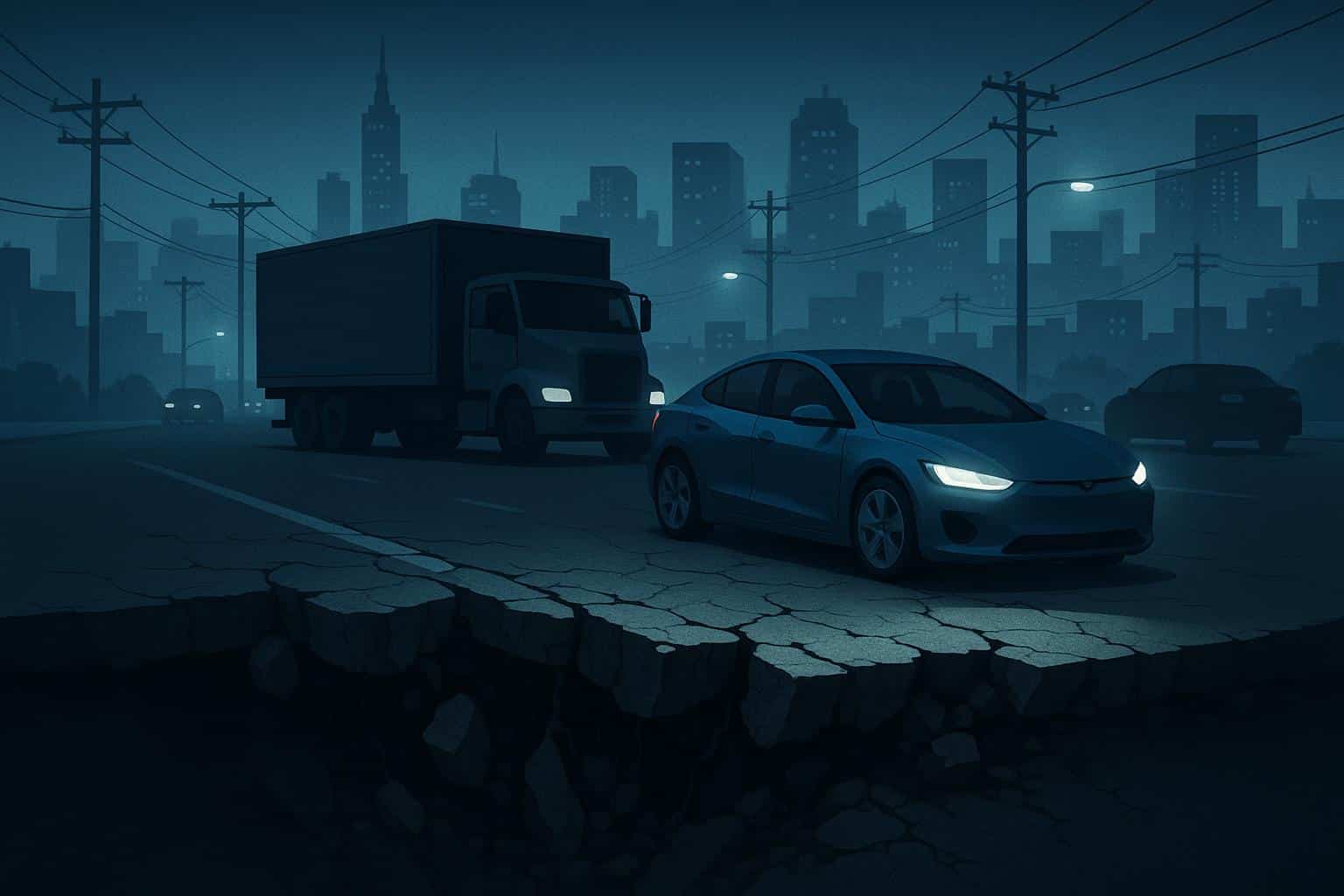
The moment of impact is noise and violence. Glass shatters. Metal screams. But then comes the silence. That is the part nobody warns you about. The dust settles, and you are left with a reality that has shifted on its axis. You might be okay, or you might be hurting in ways you can’t even name yet. The police show up. Lights flash. It feels like a movie set, but the script is missing.
Then the phone calls start. Insurance adjusters sound nice. They ask how you are doing. They sound like they care. But make no mistake, they are working from a playbook designed to minimize what they owe you. They know the confusion is their best ally. It is a game of chess, and they have been playing it for decades. You? You are just trying to figure out how to get your car fixed or who is going to pay for the MRI.
This is usually the point where the weight of the situation lands. It is not just a fender bender. The trucking company has a team. They have investigators on the scene before the tow truck even hooks up your vehicle. They are securing data, taking photos, and building a wall around their liability. Leveling that playing field requires help. You might find yourself looking for a Scranton truck accident lawyer to step in and decipher the noise. Someone who understands that a crash on the Central Scranton Expressway isn’t the same as a fender bender in a parking lot. It requires a specific kind of knowledge to push back against a corporate defense team that is ready to bury you in paperwork.
The Hidden Web of Responsibility
Most people think a truck crash is simple. Driver A hit Driver B. End of story. But in the commercial trucking world, that is almost never the case. It is an onion. You peel back one layer and find three more. Was the driver actually employed by the company, or were they an independent contractor? That distinction alone changes the entire legal landscape.
Then you have to look at the truck itself. Who owns the cab? Who owns the trailer? Often, they are different entities. The person driving might be leasing the rig from one company while hauling goods for another. It gets messy fast. And we haven’t even talked about the cargo yet.
If a truck tips over on a curve near the Steamtown Mall, was it because the driver took the turn too fast? Maybe. But what if the pallets inside were stacked wrong? What if the loading crew in Ohio didn’t secure the weight properly, causing the center of gravity to shift mid-turn? Suddenly, you aren’t just looking at the driver. You are looking at a third-party logistics company. You are looking at a warehouse manager three states away.
This is what experts often refer to as the legal chain reaction that complicates these cases. One failure in the system—a skipped safety check, a rushed loading job, a dispatcher pushing for an impossible deadline—sets off a domino effect that ends with a collision in Lackawanna County. Unraveling that chain takes time. It takes subpoenas. It takes digging into logs that most people don’t even know exist.
The Physics of Catastrophe
Let’s talk about energy. Kinetic energy. A fully loaded tractor-trailer can weigh 80,000 pounds. A Honda Civic weighs about 3,000. You don’t need a degree in physics to understand who loses that fight. But it is not just about weight. It is about stopping distance.
At 65 miles per hour, a passenger car can stop in about 300 feet. A truck? It needs nearly the length of two football fields. And that is on dry pavement with good brakes. Throw in a little NEPA snow or slick rain, and that truck becomes a missile that cannot be recalled.
Brakes on these beasts are air-powered. They don’t work like the hydraulic brakes in your car. If they are not adjusted perfectly—and inspections show they often aren’t—they can fail or fade when they are needed most. We see this on the steep grades around here. You can smell it sometimes. That acrid, burning scent of brake pads fighting gravity. When that fight is lost, the runaway truck ramp is the only option if there is one nearby. If not? It is a disaster waiting to happen.
The Black Box Witness
Here is something else most people don’t realize. Modern trucks are rolling computers. They have Electronic Control Modules (ECMs) that track everything. Speed. Throttle position. Brake application. Engine RPM.
When a crash happens, that data is frozen in time. It is the silent witness that can’t be intimidated or confused. But getting to it is a race. Trucking companies can sometimes legally reset or destroy that data if it isn’t preserved quickly. They might swap the rig back into service, overwriting the critical seconds before the impact.
That little black box can tell you if the driver was speeding up when they should have been slowing down. It can tell you if they never even touched the brakes. It paints a picture that contradicts the driver’s statement. “I was only going 45,” they say. The data says 68. End of argument. But you have to know how to ask for it. You have to send the spoliation letters to stop them from wiping the drive. It is technical, digital forensics applied to twisted metal.
The Human Cost
We can talk about steel and data all day. But the real story is flesh and bone. The injuries from these wrecks are rarely minor. We are talking about forces that the human body wasn’t designed to withstand.
Traumatic brain injuries are common. The head snaps forward and back with such violence that the brain strikes the inside of the skull. It doesn’t always bleed, but the damage is there. Memory loss. Mood swings. The inability to focus. It steals a person’s future by degrees.
Then there are the spinal injuries. A crushed vertebra. A severed cord. Life in a wheelchair is a different life. It requires retrofitting a home. It requires a van with a lift. It requires a lifetime of medical supplies. The cost is astronomical. Millions of dollars over a lifetime. Insurance policies have limits, but the cost of care doesn’t. Bridging that gap is where the battle is fought.
The Clock is Ticking
There is another factor at play here. Time. In Pennsylvania, the statute of limitations gives you two years to file a lawsuit. That sounds like a long time. It isn’t. Not when you are recovering from surgery. Not when you are relearning how to walk.
The investigation alone can take months. Experts have to be hired to reconstruct the accident. Doctors have to determine if your injuries are permanent. Economic experts have to calculate what you would have earned if you could still work your old job. If you wait a year to start, you are already behind.
And while you wait, evidence disappears. Skid marks fade. Witnesses move away or forget details. Surveillance footage from a nearby gas station gets taped over. The promptness of the response dictates the strength of the case. It is unfair, perhaps. You should be allowed to just heal. But the system demands action while the wounds are still fresh.
The Federal Rulebook
Trucking isn’t the Wild West, even if some drivers act like it. It is heavily regulated by the Federal Motor Carrier Safety Administration (FMCSA). They have a book of rules thick enough to stop a bullet.
Hours of Service is the big one. Drivers can only drive for so many hours before they must rest. They have to log it. Electronic logging devices (ELDs) are mandatory now to stop drivers from keeping two sets of books—one for the cops, one for the boss. But cheating still happens. Pressure from dispatchers to “get it there by morning” leads to bad decisions.
There are rules about drug testing. Rules about cargo securement. Rules about reflective tape on the trailer. Every single violation is a potential pivot point in a case. If a company didn’t background check a driver who had three DUIs in another state, that is negligence. If they didn’t fix a known issue with the steering, that is negligence.
Navigating the Aftermath
Living in Scranton means accepting the trucks. They bring our food, our clothes, our packages. They are vital. But they are dangerous. The balance between commerce and safety is delicate, and it tips every day.
If you are on the road, give them space. Don’t hang out in the “No Zone” on their right side. If you can’t see their mirrors, they can’t see you. Pass quickly or stay back. It is defensive driving 101, but it saves lives.
And if the worst happens? Breathe. Don’t sign anything the insurance company shoves in front of you at the hospital. Don’t give a recorded statement while you are on pain medication. Protect yourself. The road is shared, but the risk is not. The truck driver walks away from collisions that send families to the ER. Understanding that disparity is the first step in protecting your rights in a city that runs on wheels.
It is a complex world of regulations, physics, and corporate maneuvering. But it is one you can navigate if you keep your eyes open and refuse to be bullied. The road goes on. Make sure you are still on it.