


Having spent time with Amazon’s new pair of Kindle Scribe models (the color-capable Kindle Scribe Colorsoft sibling), the increase in fit and finish is immediately noticeable. These e-readers finally feel as premium as the prices imply, combining an elegant chassis with speedier inking, paper-like display surfaces, and considered software that embraces reading, annotation, and long-form work.
Design and build quality finally feel truly high-end
The hardware feels custom-built for hardcore reading and writing. Thin and light, we balanced the 5.4mm Scribe like a sturdy notebook—enough so that one could read or click with one hand, but substantial enough to remain grounded on a desk. It has an 11-inch panel for annotations and PDFs to breathe, a bezel that misses your fingers so you grip without fear of an accidental tap.
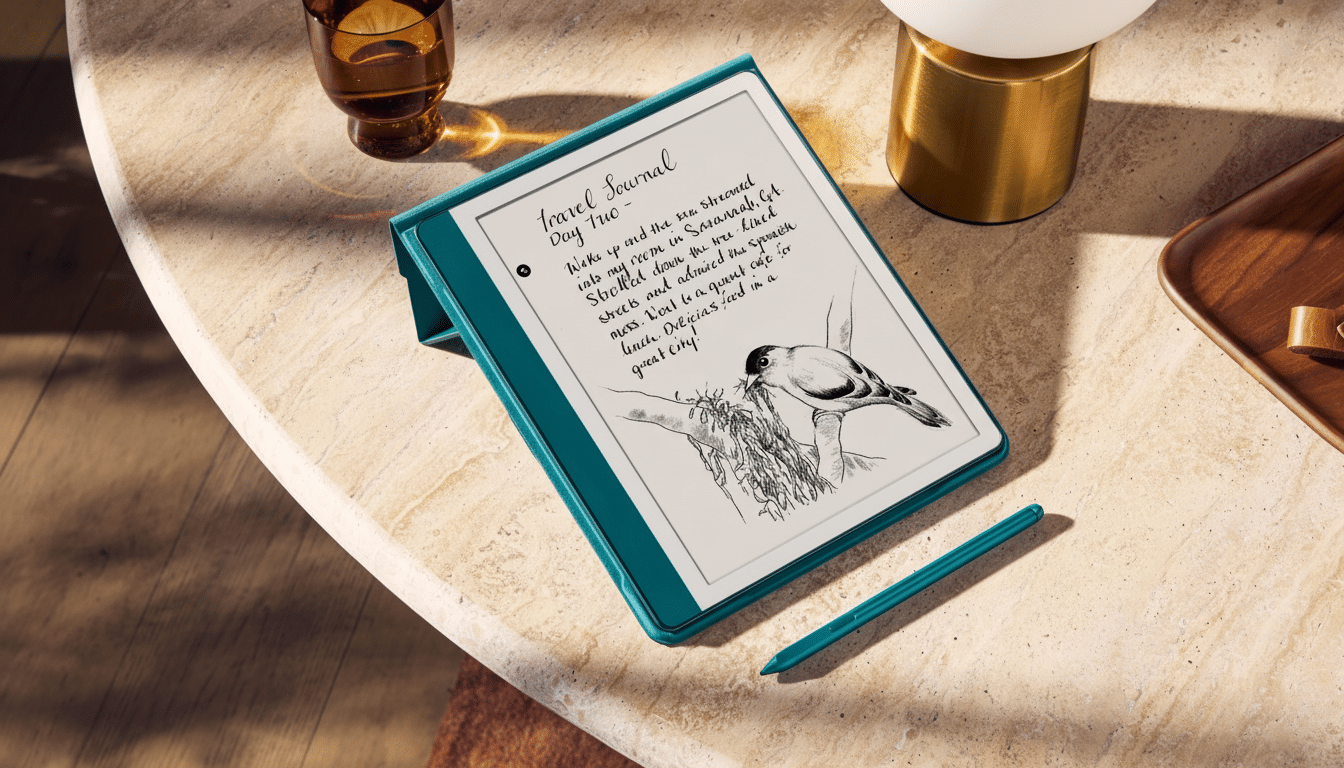
Materials and machining are a cut above previous Kindles. The chassis is solid with clean lines, the pen docks securely, and there’s no creaking under torsion. This is the first Kindle family in which the premium claim feels earned through your hands. It’s the sort of device you won’t be afraid to lay on a conference room table or set down next to a laptop—it doesn’t feel like a child’s toy.
Display and writing experience feel remarkably natural
Amazon’s textured, molded glass gives each pen stroke a satisfying resilience—you feel friction but not drag. Parallax is barely perceptible, so dashed lines or lengthy curves land exactly as planned. Scribe exhibits less writing latency this year and a cleaner page update pipeline, resulting in less of the rubber-band sensation so frequent with e-paper. This year, the Colorsoft model sports new ink shading, thanks to E Ink’s most up-to-date color film that gives richer hues while still being legible in full sunshine. Colorsoft boasts ten drawing colors and five highlight colors, and while the palette is kept to a minimum, the pen’s execution is sharp and will withstand close scrutiny on dense markups. The coloring mechanism, which lays down literal pigment layers for watercolor-style depth, will be popular with sketchers but is more than the average note-taker requires. The frontlight is fully even and the anti-reflective surface makes it simple to parse text under office fluorescents and slung beside a window. As always, the color e-paper has significantly less robust saturation than a tablet but is more comfortable throughout a full day of work and offers far superior battery life. What sets these Scribes apart is the productivity layer; the Home screen’s new Quick Notes tab opens a blank page fast enough that typing feels like summoning a genie on a shortcut. Native import and export with Google Drive and Microsoft OneDrive slash another annoyance for pupils and office workers who live in shared folders and PDFs.
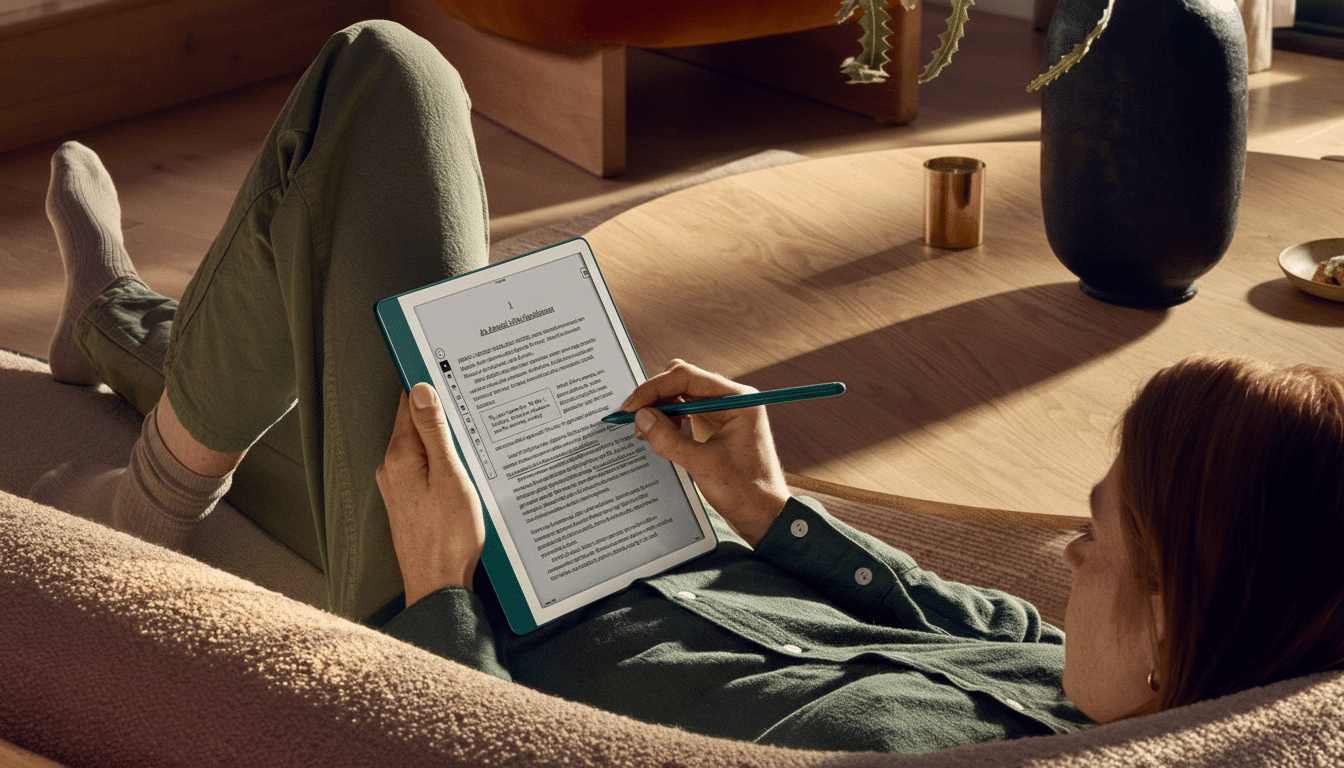
Searchable, AI-assisted notes are the headline addition. You are able to search across notebooks, bring up references, and have it generate short summaries for you to reread later. Amazon also teased sending notes to “Alexa+,” which makes sense—be it during study or meeting prep, for example, this could be a godsend. It’s AI done right: lean on its strength when connected, but continue leveraging e-paper’s offline benefits. Amazon has yet to publish official battery life promises, but based on the prior Scribe a month of reading and several weeks of steady note-taking per charge is what you can expect, depending on how much brightness and sync you use. The new models are snappier to navigate, and bulky PDFs that used to stick and lag now scroll and zoom with less lag, signaling more memory overhead and optimization. Color e-paper is now developed enough to serve not just hobbyists but everyone who reads and annotates. E Ink’s forward developments have enhanced behavior and stability without decimating the battery. Against monochrome rivals like the reMarkable 2 or Kobo Elipsa series, Colorsoft’s color cohort makes textbooks, slide decks, and web articles where highlights actually seem like highlights, adjusting an LCD’s disruptive reading for conference sessions. If your business includes markups, legitimate reviews, research, or STEM studies, the large canvas, precise pen tracking, and cloud integration work well. For artists who require accurate, full-gamut colors, a traditional tablet is still the better option, but these Kindles are for users who put reading first by focusing on endurance and focus.
Pricing and early verdict on the new Kindle Scribes
The regular Kindle Scribe starts at $500, while the Kindle Scribe Colorsoft starts at $630. That places them fairly high in the price stratosphere for e-readers, more or less price-wise nearer to productivity tablets than casual e-book devices. However, the value of these products is promised to be the ease of reading, longevity, and focus on work rather than the performance itself and a wide range of app ecosystems.
From my brief experience, the new refinement is obvious: the design is truly at the executive level, and writing is faster and more precise. Moreover, the software is actually tailored for people who do a lot of reading and annotating for work, and not for web browsing and gaming. Although I would prefer a wider palette of colors and assume that the shading effect might appeal to many people, generally, the fundamentals are strong. If the reader waited for a Kindle product that truly deserves to be called premium, this is it.