


The global financial system is undergoing the biggest transformation since the online banking revolution. For decades, traditional finance has been confined to centralized silos that charge excessive transaction fees and process cross-border payments at a glacial pace. Moreover, consumers are relegated to being mere spectators while their hard-earned cash accumulates in bank accounts, earning next to nothing in interest.
Although many different cryptocurrencies have gained popularity recently, there is still a huge gap between people holding digital currencies and people using them on a daily basis. This is especially true for merchants and service providers that don’t have the technical knowledge to handle blockchain transactions. Moreover, most people are concerned about volatility of their investments, time it takes for a transaction to be confirmed by the network and complexities of accounting such transactions.
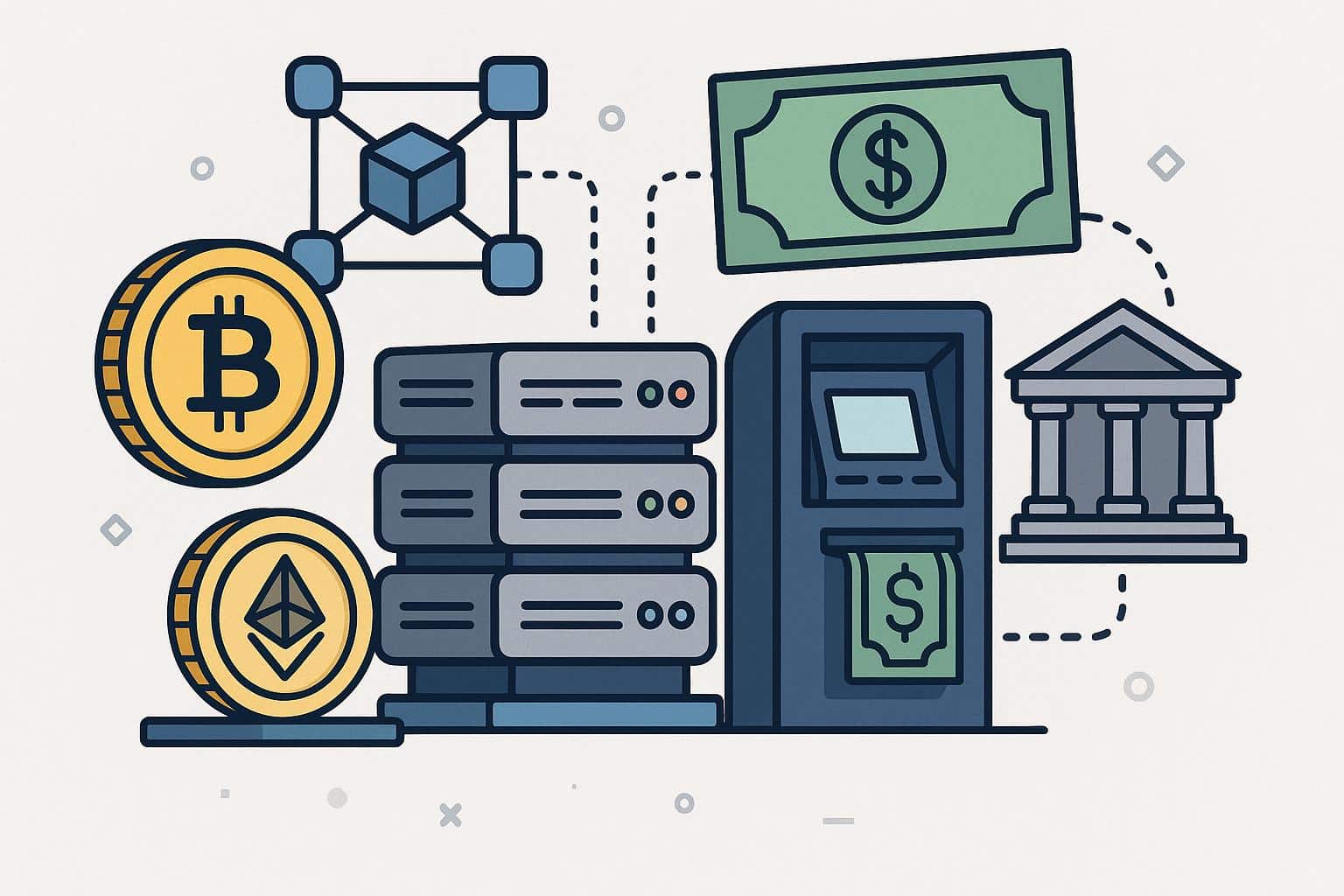
The Infrastructure Behind Crypto-to-Fiat Conversion
Until recently, when people sold their cryptocurrency in order to spend the funds in real life, they had to list a sell order for the asset, wait for the order to be executed, and then send an ACH or wire transfer to their traditional bank account, often waiting days to receive the funds and then be able to spend them.
Real-time liquidity protocols enable spending crypto-holdings by converting them into fiat currency in real time.
- Real-time Liquidity: Instantly convert between cryptocurrencies and fiat currencies on the go via real-time APIs to unlock purchases immediately with API-activated debit card spends.
- Dual Network Processing: While the transaction is processed as a normal debit/credit card transaction over the point of sale’s existing debit/credit card infrastructure, the underlying crypto collateral is simultaneously settled via smart contracts and automated market makers on the back-end.
- Options for Virtual and Physical Use: Users can create virtual cards instantly for repeat payments online, while physical cards with chip-and-PIN and contactless payments are issued and managed within the app as well.
Expanding Utility in Everyday Life
The fact that these new financial instruments are now being used in order to manage a person’s liquid assets and store of value means that they are slowly but surely maturing and becoming more suitable for everyday use. A crypto card, for instance, can now be used to purchase goods and services online and in store without first selling your crypto: some cards let you spend against assets held as collateral, so your holdings stay in place.
Key advantages of integrating these tools into a daily financial routine include:
- Greater Purchasing Power Across Geographical Frontiers: More favorable wholesale exchange rates as opposed to those traditionally charged by online credit card companies (on foreign transactions of up to 2% to 3% in additional charges) for the very same cross-border transactions that their digital counterparts are so optimally suited to facilitate on an on-going basis.
- Tiered Loyalty and Yield Systems: Traditionally bank issued debit cards do not provide the same returns for cardholders. A wide variety of crypto payment solutions offer various rewards for spend, including cashback in the form of cryptocurrency, staking yields, and even rebates on crypto subscriptions and services.
- Off-Ramping without Friction: Many freelancers, independent contractors and Web3 workers are paid in StableCoins or native Cryptographic Tokens of blockchains. They can immediately use these to pay for goods and services and thereby instantly off-load their receivables.
Security, Compliance, and User Control
The security of financial transactions facilitated by crypto-based payment solutions has evolved significantly while retaining the transparency of blockchain solutions. In terms of anti-fraud and loss, providers can now utilize multi-factor authentication (MFA) such as biometric data, as well as enable immediate locking of cards via mobile applications. Payment services incorporating crypto into the everyday lives of consumers utilize traditional Know Your Customer (KYC) and Anti-Money Laundering (AML) solutions to combat fraud within the Web3 space.
The Horizon of Web3 Integration
The future of spending DeFi-generate yield in real life will likely involve further integration with debit and credit payment systems to facilitate spending online and off-line at millions of merchants worldwide using millions of point-of-sale terminals.
Thus, the bridge of digital value to physical purchasing power at millions of merchants worldwide can now be crossed instantly. The digital assets of Web3 users are no longer mere assets to be held, but currency that is used on a daily basis. For that, the crypto payment solutions are crucial for the still evolving mainstream adoption of Web3.