


Nursing schools rejected a record 93,176 qualified applicants during the 2025-2026 academic year. That’s not a typo, and it’s not because interest in nursing is fading. Applications are up. Enrollment numbers remain strong. The problem sits somewhere less visible: schools simply can’t find enough hospital beds, clinics, and supervising nurses to train the students they’d otherwise accept.
For years, coverage of the nursing shortage has focused on RN vacancy rates, burnout, and pay. Those factors matter, but they miss the mechanism quietly choking the pipeline before it even starts. Nursing programs aren’t short on applicants. They’re short on places to put them once they’re admitted.
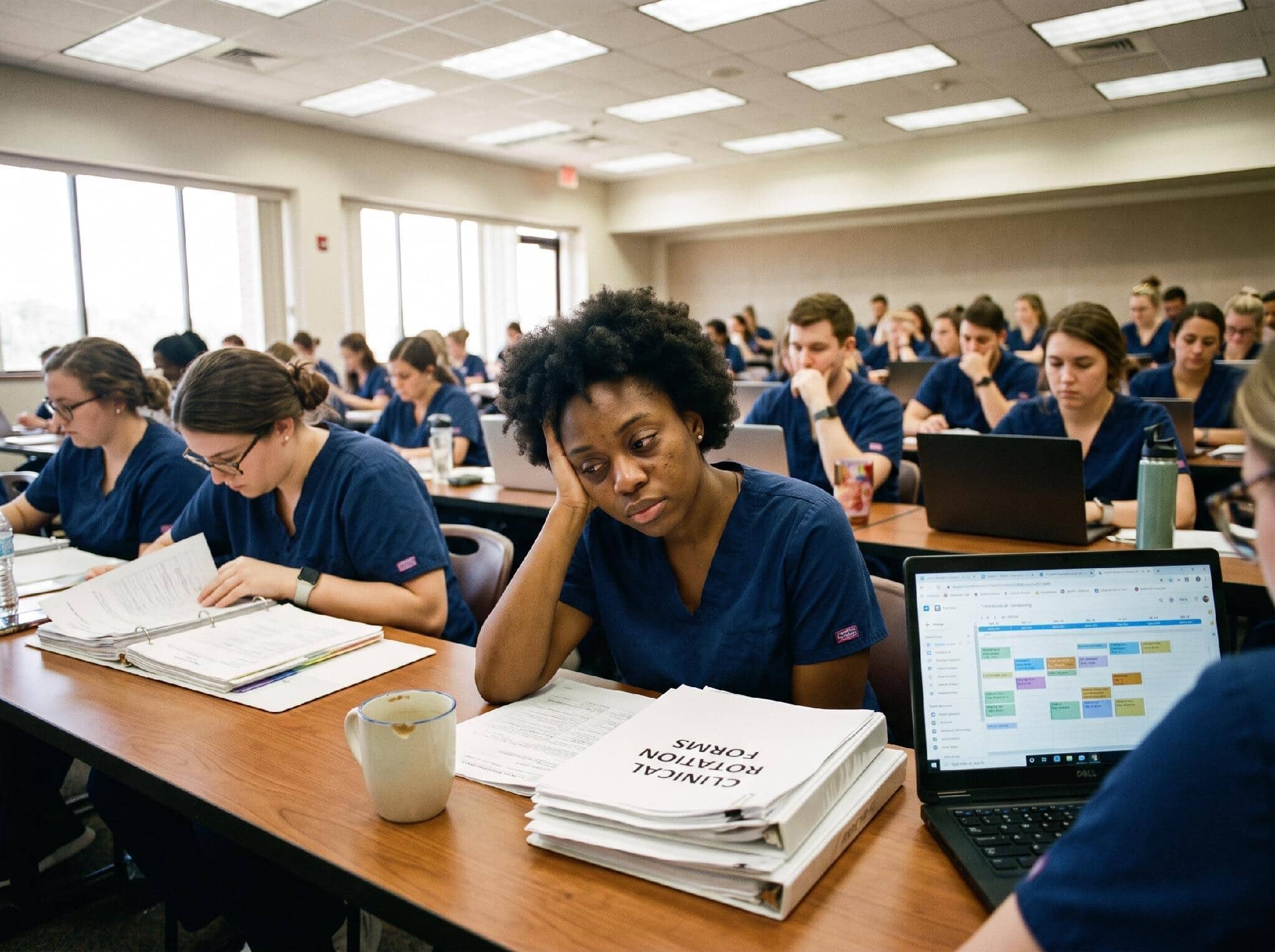
This piece breaks down why that gap exists, who it hurts, and what schools and hospitals are doing to close it.
The Record Number of Rejected Nursing Applicants, Explained
According to the American Association of Colleges of Nursing (AACN), U.S. nursing schools turned away 93,176 qualified applicants in the 2025-2026 academic year, an increase of nearly 30,000 in just two years. Entry-level BSN programs accounted for 75,255 of those rejections alone.
The applicants weren’t unqualified. AACN’s data shows most had the grades and prerequisites schools look for. They were turned away because programs ran out of capacity, not because demand cooled. That distinction matters. A demand problem gets fixed with better marketing or lower tuition. A capacity problem requires more clinical rotation slots, more supervising faculty, and better coordination between schools and the hospitals willing to host students.
That coordination gap is exactly why many nursing programs now rely on a clinical placement platform to match limited rotation slots across hospitals and clinics with the students who need them, rather than juggling the process through spreadsheets, phone calls, and email chains with individual clinical sites. When placement staff matches hundreds of students against a shrinking pool of available slots by hand, seats go unused simply because nobody has time to fill them.
Root Cause #1: A Shrinking Nursing Faculty Pipeline
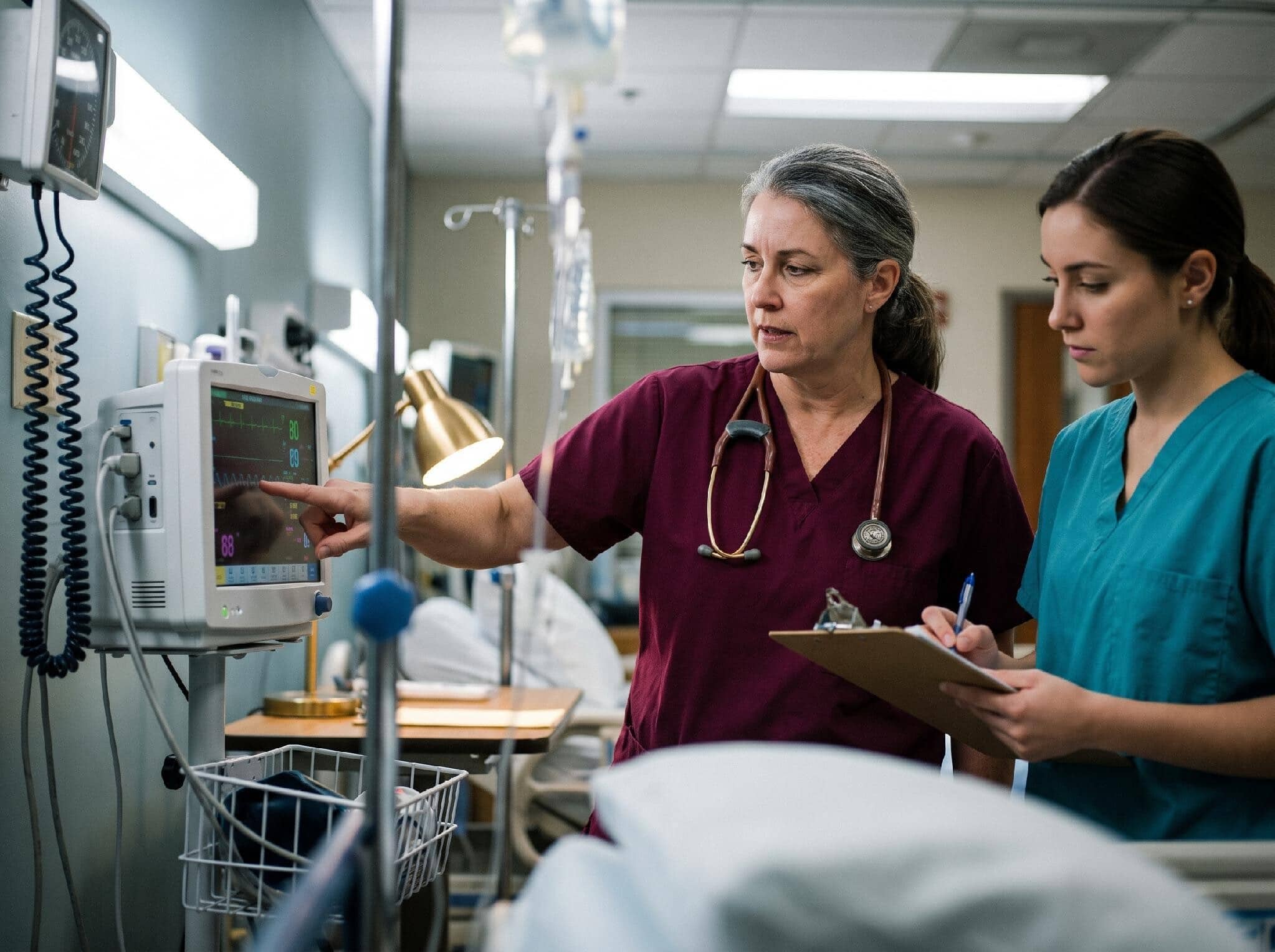
You can’t run a clinical rotation without qualified faculty to supervise it, and that’s where the second bottleneck shows up. AACN’s national data shows 863 surveyed nursing schools reported 1,588 vacant full-time faculty positions nationwide, a 7.2% vacancy rate. That’s down slightly from 7.9% in 2024, but it’s still high enough to force programs to cap enrollment regardless of how many rotation sites they can secure.
The credentialing system itself partly creates the vacancy problem. Roughly 80.9% of those open faculty positions require or strongly prefer a doctoral degree, a bar that shrinks the applicant pool considerably. Meanwhile, an experienced nurse can often earn more working a clinical floor than teaching one. Programs compete with hospital salaries for the same small group of advanced-degree nurses, and hospitals usually win that bidding war.
Root Cause #2: Not Enough Clinical Rotation Slots
Even with enough faculty, a school still needs hospitals and clinics willing to host students, and that’s its own separate constraint. A clinical rotation means a real patient floor, a real preceptor giving up part of their shift to supervise a learner, and a hospital accepting the liability and slowdown that comes with training someone new. High patient acuity, thin staffing ratios, and preceptor burnout all make hospitals more cautious about how many students they’ll take on at once.
The 2026 Clinical Placement Benchmark Report, published by Cisive, found that more than 90% of nursing programs say placement difficulty affects their operations, and 30% call it their single biggest inefficiency. Some programs are leaning on simulation labs to fill part of the gap. The National Council of State Boards of Nursing (NCSBN) permits a portion of clinical hours to be substituted with high-fidelity simulation, which helps, but simulation was never meant to replace hands-on patient care entirely. It’s a stopgap, not a solution.
We’ve covered similar workforce-technology gaps in our piece on seamless EMR integration, where staffing tools and clinical software are reshaping day-to-day hospital operations.
How the Placement Bottleneck Feeds the Broader Nursing Shortage
This is a two-sided problem, and each side makes the other worse. Hospitals need more nurses right now. The 2025 NSI National Health Care Retention & RN Staffing Report found RN turnover hit 16.4% in 2024, with more than 287,000 staff RNs leaving their positions and hospitals hiring nearly 385,000 RNs just to backfill and grow their teams. At the same time, schools can’t train enough new nurses to replace the ones leaving, because they can’t secure enough clinical placements to expand their programs.
Federal funding hasn’t closed the gap either. Title VIII Nursing Workforce Development funding was set at $305.47 million for fiscal year 2026, well below the roughly $530 million nursing advocates say is needed to expand faculty hiring and clinical placement capacity. The Health Resources and Services Administration (HRSA) oversees that funding stream through its Bureau of Health Workforce, and its own projections point to continued shortages in several states through the end of the decade unless capacity expands faster than it currently is. Hospitals and health systems planning ahead for these shortfalls may also find our international hiring checklist for 2026 useful for mapping out where to source talent once domestic pipelines fall short.
What’s Being Done: Technology, Policy, and Partnerships
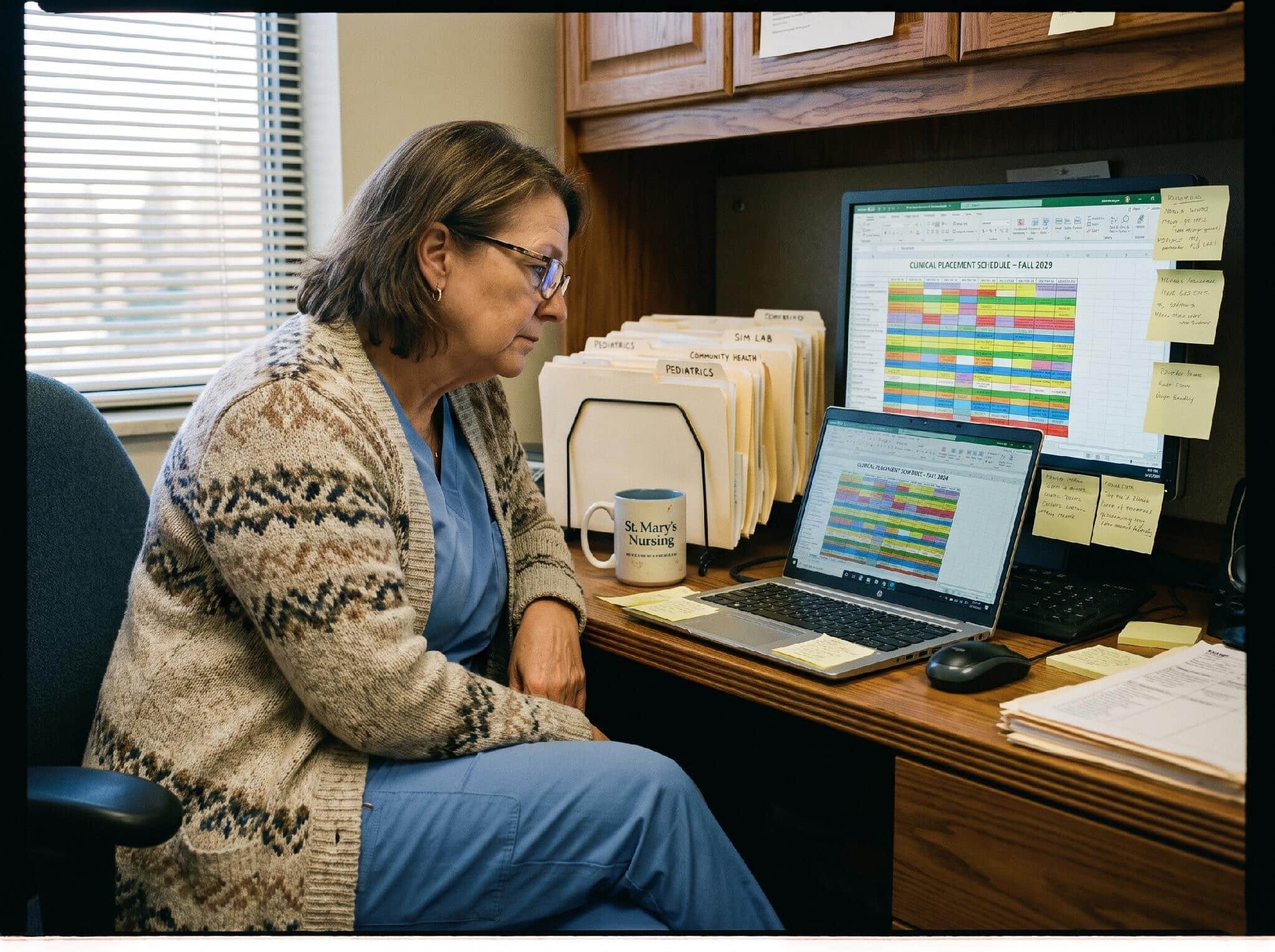
Schools and hospitals aren’t standing still. The Cisive benchmark report found 59% of nursing program administrators want easier integration between their systems and clinical placement platforms, and 85% of students said a single platform for screening, scheduling, and compliance documentation would reduce errors and delays. That’s a meaningful shift from the manual, fragmented process most programs relied on for decades.
States are experimenting too. Several boards of nursing have expanded simulation-hour allowances, while a handful of legislatures are funding new pathways for experienced clinicians to earn teaching credentials without giving up their clinical income entirely. None of these fixes alone solves the shortage. Technology can match students to open slots faster, but it can’t create rotation capacity that doesn’t exist, and policy changes take years to show up in enrollment numbers. Progress here looks incremental rather than dramatic, and anyone claiming a single fix will resolve the pipeline problem overnight isn’t being straight with you.
The Bottom Line
The nursing shortage story usually starts and ends with hospital staffing numbers. That’s incomplete. Behind every unfilled RN position sits a nursing school that had to turn away a qualified applicant because it couldn’t find a place to train them.
Closing that gap means investing in faculty pay and pipelines, building deeper partnerships between schools and hospitals, and using better coordination tools to stop wasting the rotation slots that already exist. None of it happens overnight, but the schools and hospitals moving on all three fronts at once are the ones most likely to expand their 2027 admissions numbers instead of shrinking them again.