


Samsung’s daring Galaxy Z TriFold is taking a tablet-in-your-pocket 10-inch screen with it to market, but quietly excludes a feature that longtime Galaxy foldable owners have gotten used to. Tech reviewer SuperSaf clarified in a hands-on that the TriFold does not support Flex Mode, the semi-folded, hands-free experience made popular by the Galaxy Z Flip and Z Fold series.
What Flex Mode Delivers to Today’s Foldables
Debuting on the original Galaxy Z Flip in 2020, Flex Mode lets the device hold at different angles so the screen can divide into control and content areas. It provides the convenience of a clutch: propping up the phone to make video calls, taking hands-free photos and time-lapses, and watching videos without a stand. Samsung has fine-tuned its camera UI, video apps, and multitasking capabilities, so Flex Mode doesn’t feel like a gimmick.
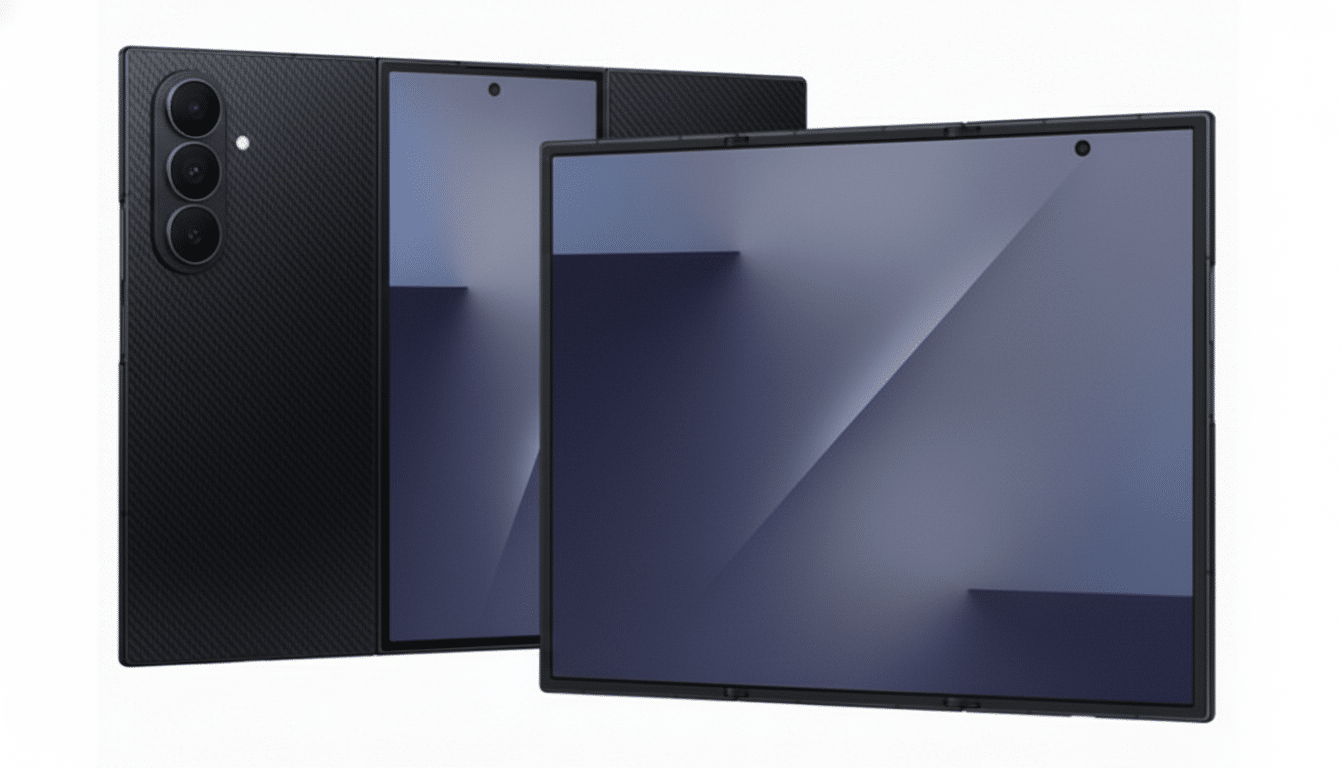
Its absence on the TriFold is not simply a lost checkbox—it changes everyday use cases. The omission will land on creators who depend on quick impromptu tripod angles, frequent fliers who perch the device on a tray table, or work-from-homers turning a foldable into a mini laptop during calls.
Why the TriFold Might Not Be Able to Support It
Samsung hasn’t explained, but the engineering trade-offs are not difficult to surmise. The TriFold’s two in-folding hinges and three display segments also make torque management and stability at partial angles more complex. Flex Mode relies on accurate hinge resistance, with software that identifies and maps the UI to half the display. Doing that over two hinge axes would mean introducing awkward edge cases—unbalanced angles, changing centers of weight, and unpredictable touch targets—that could have an adverse impact on durability and user experience.
In other words, Samsung could have favored structural rigidity and panel protection over a mature hinge posture that would require extensive tuning across the hardware and software stack.
Partially Folded Use and a Notable Rival
SuperSaf’s video also demonstrates that when the TriFold has been folded once, the screen segment on the inside is fuzzy and unusable. In practical terms, that nudges you toward making the 6.5-inch cover screen your go-to for brief interactions rather than thinking of a single interior panel as a miniature tablet.
In contrast, Huawei’s Mate XT uses both: an in-folding and out-folding hinge type, leading to a partially folded 7.9-inch display—but not so much a Flex Mode–featuring setup; rather, you have, like the Samsung flip cover screen, which is used as the kickstand, for example. The catch is that with an out-folding design, the flexible display remains partially exposed to potential durability issues that Samsung has managed to neatly sideline on its devices. Essentially, it comes down to different risk-reward equations the two brands have prioritized: Samsung favoring protection, and Huawei leaning into posture versatility.
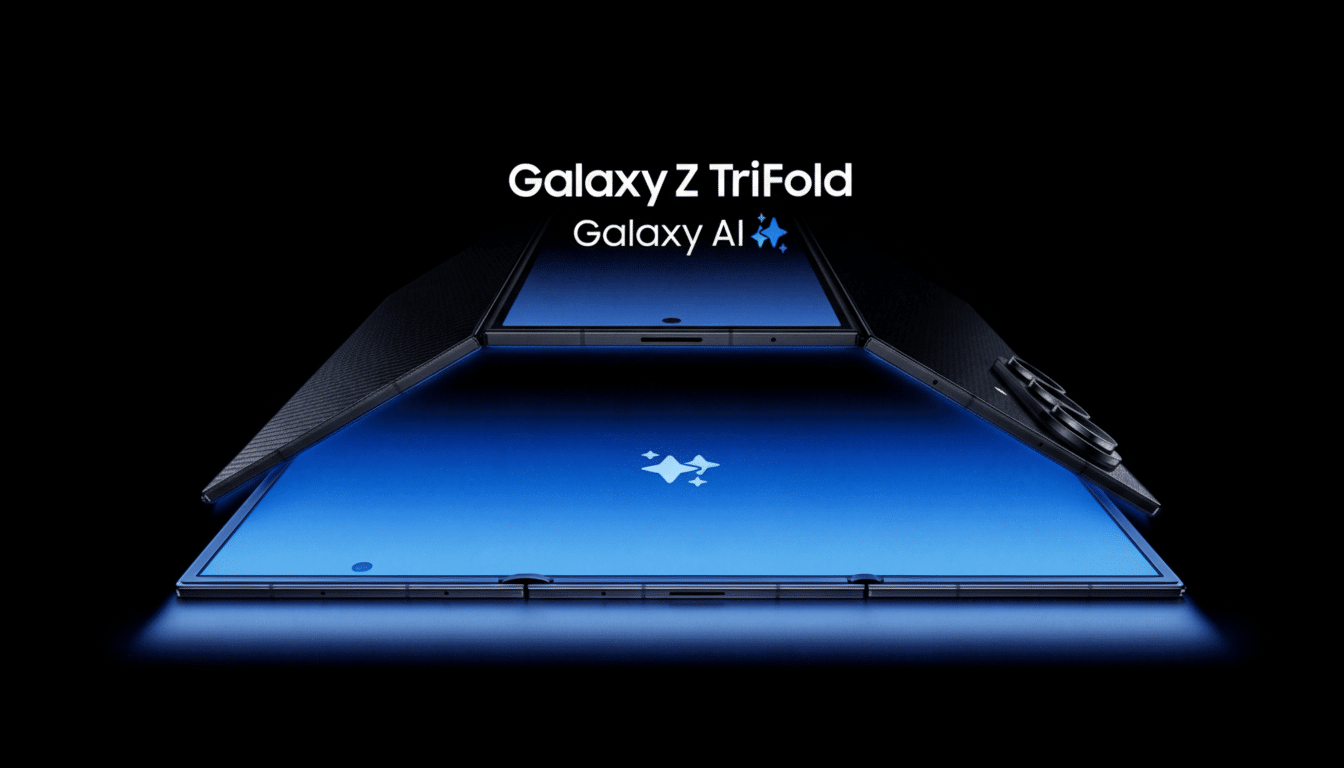
Specs and Availability Snapshot for Galaxy Z TriFold
It’s a dual-folding 10-inch internal canvas with that 6.5-inch cover display, and it runs on the Snapdragon 8 Gen 1 Elite. It has a 5,600 mAh battery to provide power for both 45W wired and 15W wireless charging capabilities. Camera hardware mostly matches what’s found in the Galaxy Z Fold 7, suggesting that Samsung is looking to maintain imaging parity with its high-end foldable lineup.
Samsung is planning to bring the TriFold to Korea first and then to China, Singapore, the UAE, and the United States. The Korean sticker starts at about $2,445, and pricing for the US has yet to be announced.
What the Lack of Flex Mode Means for Prospective Buyers
If you depend on Flex Mode workflows—hands-free photos, tabletop video calls, or dual-pane app layouts—the TriFold’s absence is a significant limitation. Accessories can help: a compact kickstand case or a foldable tripod should recreate many of those situations, with the added stability of not relying on an awkwardly folded device. But it also adds cost and heft to a phone that already pushes the definition of pocketable.
From a market point of view, the global foldable volume exceeded 15 million units in 2023, and it is expected that competition will also become fierce, as Counterpoint Research pointed out. In the same context, Samsung’s decision is a clear statement of intent for its first tri-fold: to make big-screen action robust and polished, even if it means that a popular feature has been omitted at launch.
The TriFold is still one of the boldest mobile form factors we’ve ever seen. For power users who crave maximum screen real estate with Samsung’s ecosystem sheen, it’s a compelling choice. For Flex Mode die-hards, however, the most versatile foldable in Samsung’s lineup may still be the one that bends only once.