


The wowza handheld renaissance is finally in full swing on Android. From high-end portables that gobble up Switch-level workloads to pocket marvels of time-shifting nostalgia for 16-bit classics, the 2025 lineup is pretty deep and shockingly affordable in price. We spent weeks testing in emulators, native Android games and cloud offerings to come up with the best choices for every budget before finally validating thermals, battery life and sustained performance with repeatable benchmarks and long play sessions.
One disclaimer up front: for emulation, the maturity of drivers count as much as raw silicon. This is why some SBCs with Snapdragon can perform beyond their typical class, due to the ongoing improvements and optimizations from emulator communities on Mesa’s Turnip driver. Without further ado, here’s what cut through the clutter and earned its spot in my day-to-day rotation.
- Best Overall Android Handheld for Most Players in 2025
- Best Value Android Gaming Handhelds You Can Buy Now
- Best Truly Pocketable Android Gaming Handheld This Year
- Best Android Handheld for Retro Purists and CRT Feel
- Best Small All-Rounder Android Handheld for Versatility
- Best Vertical Form-Factor Android Handheld for Retro
- Best Android Gaming Handheld You Can Get Under $150
- How We Tested Android Handhelds and Why Drivers Matter
- Buyer’s Guide: What to Look for in Android Handhelds
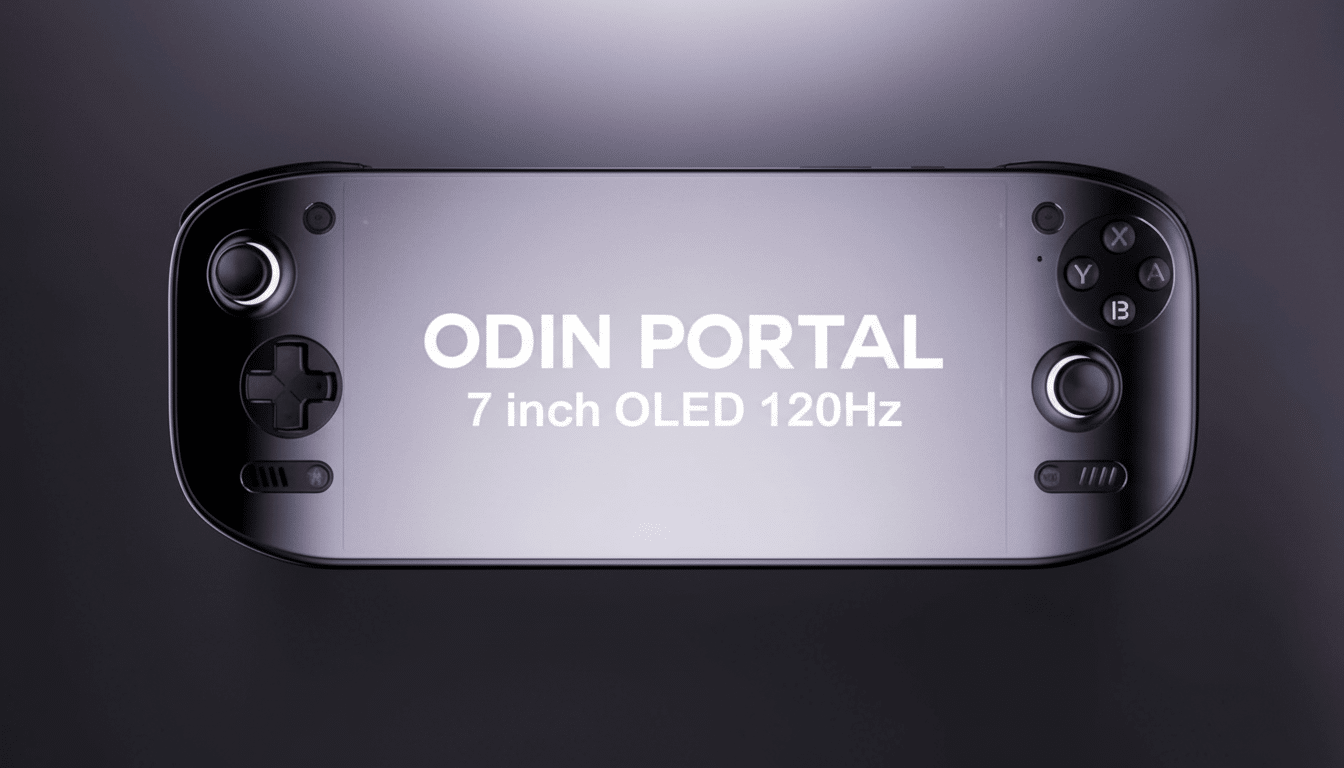
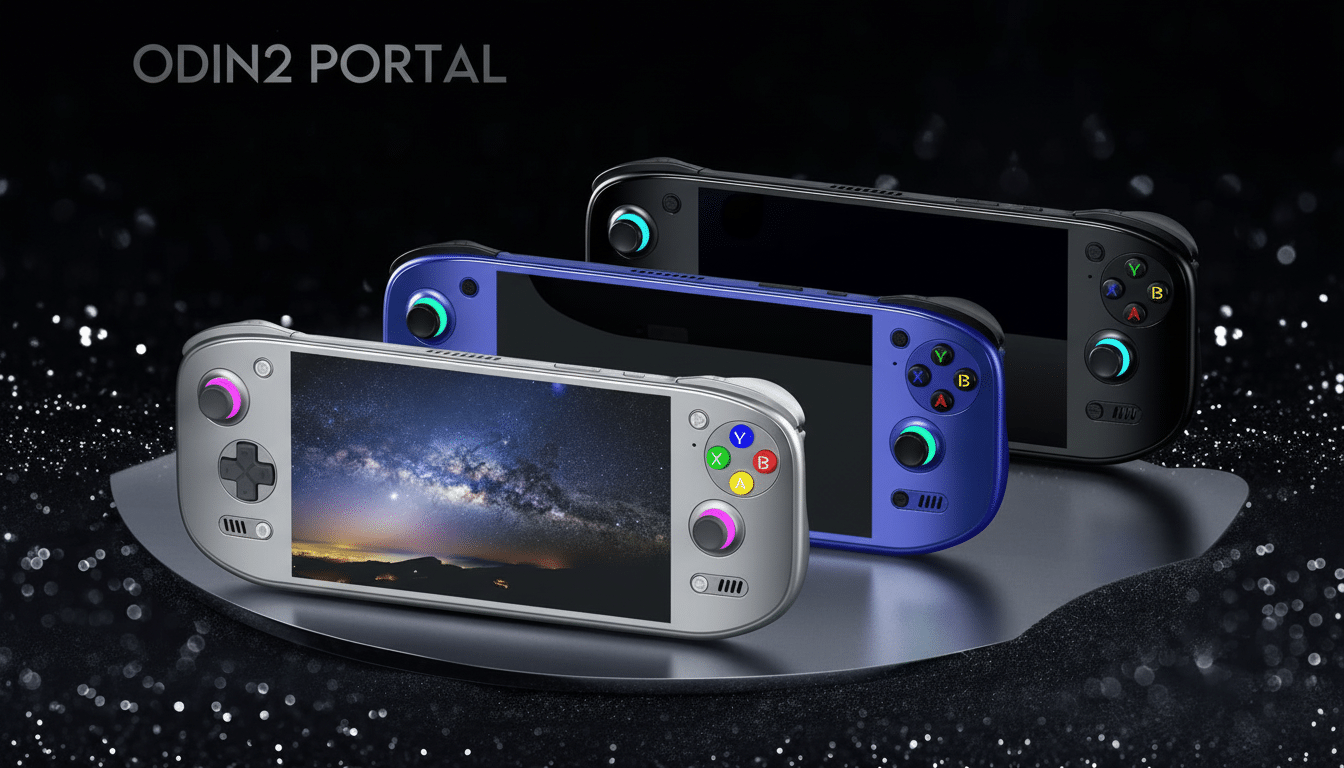
Best Overall Android Handheld for Most Players in 2025
AYN Odin 2 Portal: 7-inch 120Hz AMOLED panel, Snapdragon 8 Gen 2, and an 8,000 mAh battery earn it the title of most complete Android handheld for most people. It can run any 2D consoles up to demanding Android titles and complex emulation, with a bit in reserve for higher resolutions and shaders. Drawbacks include size and ergonomics — most players will crave a grip — but performance per dollar and driver stability remain excellent. Its performance is relatively consistent even under sustained load, thanks to the maturity of Qualcomm’s GPU drivers from community testing.
Best Value Android Gaming Handhelds You Can Buy Now
Retroid Pocket 5 and Retroid Pocket Flip 2: Both run the venerable Snapdragon 865 alongside a lovely 5.5-inch AMOLED, and both impressed in testing with PS1, Dreamcast, and solid PS2/GameCube performance in lighter games.
The Pocket 5 is a classic horizontal handheld with an optional clip-on dual-screen accessory for DS/3DS, and the Flip 2 folds up into a backpack-friendly clamshell. They’re not perfect for the most demanding emulation or twin-stick shooters, but for the price they’re surprisingly competent and easy to grab from high-street retailers.
Best Truly Pocketable Android Gaming Handheld This Year
AYANEO Pocket Micro Classic: If you’ve been hankering for a legitimate pocket-sized fit, this metallurgic mini nails it. Its 3.5-inch 3:2 IPS display yields ideal 4x integer scaling for Game Boy Advance, and the Helio G99 is burly enough for retro systems with fancy shaders in them. Construction quality is stellar — glass front, machined frame, tactile buttons — but battery life is just average and it’s more expensive than your average tiny handheld. Consider it the connoisseur’s micro-console.
Best Android Handheld for Retro Purists and CRT Feel
ANBERNIC RG 477M: With this handheld, it’s all about the little things. In combination with accurate shaders, its 4:3 120Hz display with BFI gives motion clarity comparable to that of a good CRT. Power-wise, up to PS2 levels, the Dimensity 8300 has a lot of power, though Mali GPU driver support is still behind Snapdragon for latest-gen emulators. The CNC metal chassis is delicious, the D-pad glorious, and although shoulder buttons are a little clacky, it’s pretty much all you’d expect if you were a retro nutter like me.
Best Small All-Rounder Android Handheld for Versatility
AYANEO Pocket ACE: Consider this the shrunken powerhouse. The Snapdragon G3x Gen 2 is effectively a dialed-down 8 Gen 2 made for handheld gaming, and it’s a snappy performer with stout efficiency. Classic consoles were also a breeze to keep running, and fast top-offs came thanks to 40W charging. The IPS screen is bright and colour-accurate if not OLED, the compact sticks are perfectly serviceable but low-slung — great when you’re playing a platformer, not so much an FPS. It’s not cheap, but it covers just about any use case for a compact handheld.
Best Vertical Form-Factor Android Handheld for Retro
AYANEO Pocket DMG: With a bold AMOLED display, B&O speakers, and the same G3x Gen 2 platform (with keyboard locomotion) found in the latter two devices, this vertical handheld with NES-style controls is too much of a good thing — but in the best possible way.
The control scheme doesn’t cater to a simple tradition of handheld play — while there’s a stick and a nifty touchpad, modern 3D games used to dual analogs get the raw end of the deal. If you want a luxe vertical portable for retro and Android indies, it’s unmatched — just be prepared to pay extra for that feeling of luxury.
Best Android Gaming Handheld You Can Get Under $150
Retroid Pocket Classic review: The unlikeliest of budget rockets. With Qualcomm’s Snapdragon G1 Gen 2 and a vibrant 3.92-inch AMOLED, it trumps most competitors for sub-$150 and even dabbles in lighter PS2 titles — if you’re willing to put up with the occasional dip. There are two face-button layouts (either four or six); the six-button one is good for Sega libraries of games, while I find the four-button version more comfortable. There is no video-out, but the battery life, value and quality of the display are standout at this price.
How We Tested Android Handhelds and Why Drivers Matter
We complemented hours-long play sessions in popular emulators with synthetic tests such as 3DMark Wild Life to evaluate burst and sustained performance, as well as thermal thresholds. We timed charging and recorded runtime at a fixed brightness level with Wi-Fi on, then checked input feel and latency using gameplay. Industry sources like UL Benchmarks and Qualcomm developer documentation guided our approach, with insight from the Mesa Turnip devs explaining performance deltas not born of raw specs.
When it comes to displays, 120Hz panels slash frame persistence to roughly 8.3ms instead of the already-twice-shorter 16.7ms time at 60Hz — a reduction that lessens perceived blur even when emulating content at either a true or faux 30 or 60fps. OLED’s well-documented response times and contrast are a particular advantage for dark pixel art and scanline masks, but a tuned IPS with BFI also looks quite authentic in its own right at three-quarters the cost. Controller quality — particularly D-pad diagonals and shoulder travel — proved as, if not more, important than the choice of chipset for a great experience.
Buyer’s Guide: What to Look for in Android Handhelds
- Chipset and drivers: Snapdragon-based handhelds usually have better emulator optimizations and Turnip driver improvements, which will deliver performance wins over time.
- Screen and aspect ratio: 4:3 is perfect for retro consoles; 16:9 is great for Android games and streaming; the middle ground of 3:2 is an acceptable compromise, which also happens to be a good screen-wise fit for GBA.
- Controls and comfort: Try the D-pads, stick height and shoulder feel. In longer sessions, good ergonomics beat raw specs.
- Battery and charging: If you need power on the road or in the car, look for 5,000mAh+; if you’re required to maintain contact at all times, many support fast charging.
- Software: A crisp launcher, easy key mapping and good firmware updates save you hours of tinkering.
- Ports and storage: MicroSD expansion is a necessity onboard with all of your e-books, but streaming video is the future, so video-out is a nice-to-have if you plan to dock.
There is no one “perfect” Android handheld, but the above picks should satisfy just about any kind of gaming you can think of in 2025 — ranging from budget-friendly nostalgia to premium performance.
Choose the form factor you’ll actually carry, the screen you don’t mind staring at — for reading or games — and a platform with drivers that will age as well as your library.