


Tesla says its Robotaxi service is now operating in Austin with no human safety monitor in the driver’s seat. That’s technically true based on what the company and Elon Musk have shared. But early test rides suggest there may still be people nearby—just not in the front left seat.
What Tesla Claims About Its Austin Robotaxi Pilot
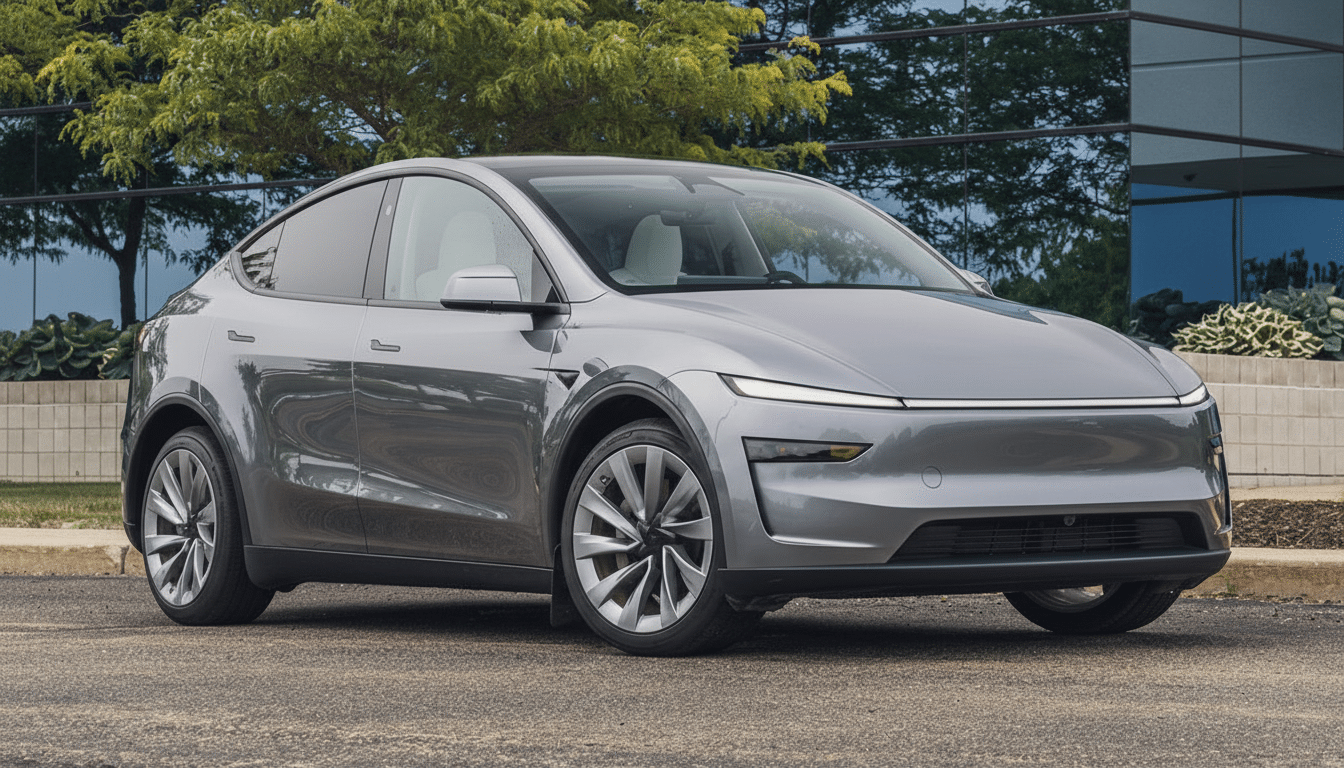
Elon Musk announced that Tesla began Robotaxi drives in Austin without an in‑car safety monitor, and the company amplified the message by describing the rides as fully unsupervised. The pilot vehicles appear to be standard Model Y units outfitted with Tesla’s latest autonomy stack, rather than a dedicated “robotaxi” body style.
- What Tesla Claims About Its Austin Robotaxi Pilot
- The Chase Car Question Behind Tesla’s Austin Rides
- What Counts As Unsupervised in Autonomous Driving
- Texas Rules and Austin Streets for Autonomous Vehicles
- How Tesla’s Austin Pilot Stacks Up to Driverless Rivals
- What to Watch Next as Tesla Expands Austin Robotaxis
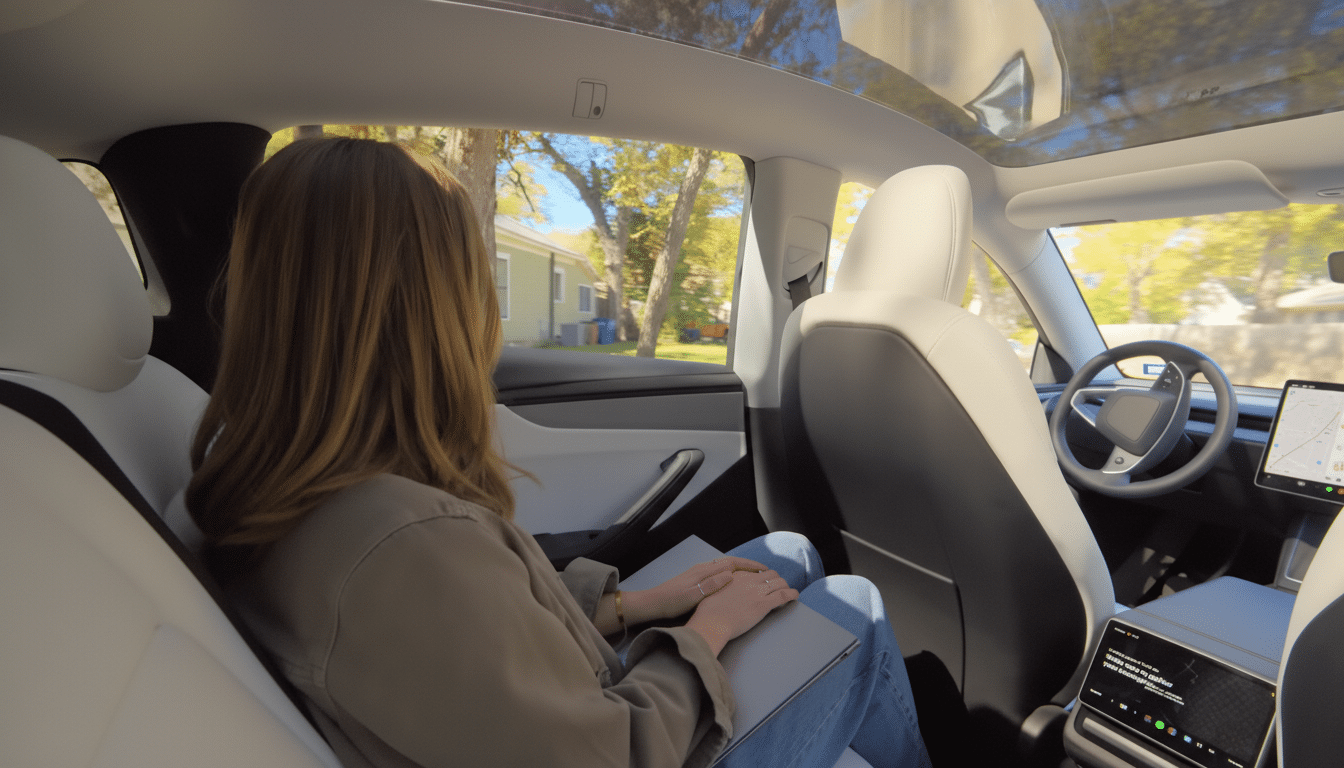
That’s a meaningful milestone for Tesla, which has spent years positioning its vision-only approach as a path to scalable autonomy. Removing the on-board human is the moment many consider the crossing from supervised testing to actual driverless service.
The Chase Car Question Behind Tesla’s Austin Rides
A widely viewed ride video from Austin shows a black Model Y trailing the driverless car for the entire trip. The videographer suggested it served as a validation or chase vehicle. Tesla hasn’t explained the trailing car’s role, but in the autonomy world chase cars often carry engineers who observe behavior, collect diagnostics, and stand ready to intervene if something goes wrong—by issuing a stop, blocking traffic, or terminating the run.
If that’s what’s happening here, Tesla has moved the safety function from the driver’s seat to another vehicle. That’s still progress, but it is not the same as a truly unaccompanied, production-grade driverless service operating without nearby human babysitting.
What Counts As Unsupervised in Autonomous Driving
In autonomy, terms matter. A ride can be “driverless” (no one behind the wheel) and still be “supervised” through remote assistance or a chase team. Many companies use teleoperations centers to provide high-level guidance in unusual situations, even when no remote operator can directly drive the vehicle. The industry standard for mature deployments—often called SAE Level 4—uses heavy geofencing, extensive pre-mapping, and safety cases reviewed by regulators and third‑party assessors.
Tesla’s approach differs. It leans on fleet learning, end-to-end neural networks, and camera-only perception. The company argues this will generalize better and scale faster. Skeptics counter that lack of high-definition mapping and limited disclosure of safety metrics make it hard to verify readiness outside handpicked routes and conditions.
Texas Rules and Austin Streets for Autonomous Vehicles
Texas is among the most permissive states for autonomous vehicles. Legislation passed years ago allows AVs to operate on public roads without a human driver if they comply with traffic laws, carry insurance, and meet basic equipment requirements. Unlike California, Texas does not require public reporting of disengagements or detailed safety performance, which means outside observers must rely on company statements and third-party sightings to assess progress.
That regulatory posture helps companies move quickly but can leave residents and city leaders asking for more transparency—especially after high-profile AV incidents elsewhere prompted federal scrutiny. The National Highway Traffic Safety Administration has repeatedly investigated Tesla’s driver-assistance features and previously compelled a broad software recall touching roughly 2 million vehicles to add safeguards. Those actions don’t directly decide whether Tesla can run Robotaxis in Austin, but they shape the safety context around any new deployment.
How Tesla’s Austin Pilot Stacks Up to Driverless Rivals
Competitors have taken a slower, more heavily instrumented route. Waymo, for instance, has accumulated millions of rider-only miles and publishes detailed safety analyses comparing crash rates to human baselines. Its driverless operations run daily in multiple U.S. cities with no chase vehicles shadowing as a rule, and the company shares methods for remote assistance, incident response, and operational design domains. The contrast highlights Tesla’s unusual strategy: move fast in new markets, iterate in public, and let the fleet learn.
Whether Tesla can match or surpass rivals’ safety records without the same mapping, sensors, and disclosures remains the central question. The Austin pilot will provide early signals—particularly if Tesla removes the chase car, expands service hours, and handles complex scenarios like downtown events, heavy rain, and nighttime pedestrian traffic.
What to Watch Next as Tesla Expands Austin Robotaxis
Three milestones will show how real this deployment is: unaccompanied routes with no chase or spotter vehicles, transparent reporting about incidents and remote assistance, and broader geographic coverage beyond curated corridors. If Tesla clears those bars, “no safety monitor in the car” will mean what most people think it means.
For now, Austin appears to be a proving ground where Tesla is edging toward true driverless operations, with a safety net rolling a few car lengths behind. That’s still newsworthy progress—but the final verdict on “unsupervised” will depend on what’s just out of frame.