


First-trimester doxycycline prescriptions were associated with a higher risk of pregnancy loss than prescriptions for alternative treatments in a large study of U.S. insurance claims, researchers reported in Annals of Internal Medicine. The finding was most consistent among pregnancies associated with respiratory tract infections, where elevated risks appeared in both a commercial-insurance database and Medicaid claims.
The study does not show that doxycycline caused miscarriages or stillbirths. But its design offers a more targeted comparison than studies that contrast antibiotic users with people receiving no treatment at all: it compared doxycycline with drugs used for the same medical problem. That approach helps address an important concern in pregnancy-drug research, because the infection or condition prompting treatment can itself be related to health outcomes.

What the study found
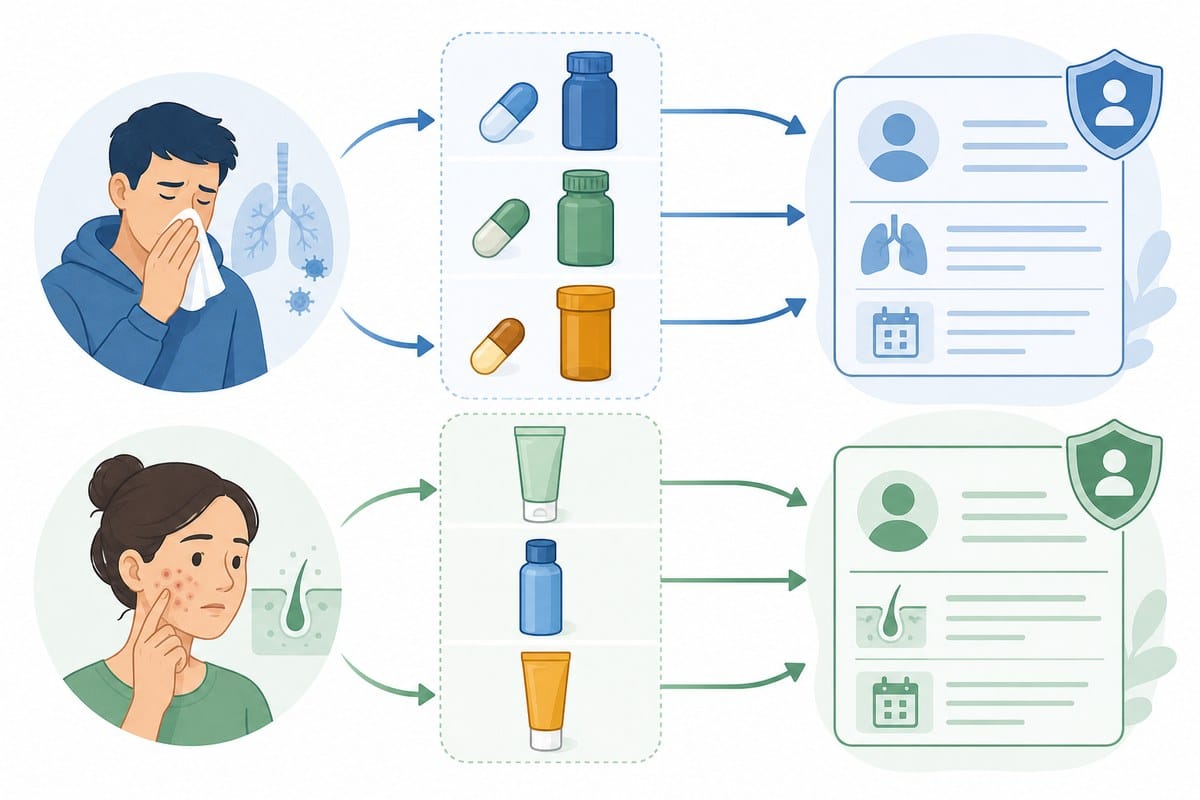
The retrospective cohort study included 224,870 pregnancies among people ages 12 to 55. Of those, 218,234 were linked to respiratory tract infections and 6,636 to acne. Researchers identified 4,385 pregnancies with a first-trimester doxycycline prescription: 2,949 in the respiratory-infection group and 1,436 in the acne group.
For respiratory infections, the researchers compared doxycycline with amoxicillin and with macrolide antibiotics, another commonly used class. For acne, they compared doxycycline with topical clindamycin. The indication-specific comparisons are important because these medicines are not interchangeable across every diagnosis.
In the respiratory-infection analysis, doxycycline was associated with more pregnancy losses than amoxicillin in both data sources. The adjusted risk ratio was 1.54 in MarketScan, a commercial-claims database, and 1.40 in Medicaid. In plain terms, those estimates correspond to relative risks 54% and 40% higher, respectively, after the study’s statistical adjustments. Relative risk is not the same as the chance that any individual pregnancy will end in loss.
The researchers also reported adjusted absolute risk differences versus amoxicillin: 11.07 percentage points in MarketScan and 7.72 percentage points in Medicaid. The analysis likewise found higher risk estimates for doxycycline than for macrolides in both respiratory-infection datasets. A detailed summary of the study’s results and methods reported the adjusted estimates and eligibility criteria.
The acne findings were less uniform. In MarketScan, doxycycline was associated with a higher risk of pregnancy loss than topical clindamycin, with an adjusted risk ratio of 1.49 and an adjusted risk difference of 8.95 percentage points. In Medicaid, however, the estimated risk ratio was 1.03 and the adjusted risk difference was 0.65 percentage points; the confidence interval included the possibility of no difference. The smaller acne cohort, especially in Medicaid, means that result was less precise.
Why the comparisons help, but do not settle cause
Administrative claims databases can assemble very large populations and capture prescriptions, diagnoses and health-care encounters. They cannot show whether a patient swallowed every dispensed pill, how severe an infection was, or all of the reasons a clinician selected one treatment rather than another. Pregnancy losses may also be incompletely or inaccurately recorded in claims.
Using active comparators—amoxicillin or macrolides for respiratory infection and topical clindamycin for acne—reduces some potential bias from comparing treated patients with untreated patients. Someone prescribed an antibiotic may differ from someone who receives none in ways that affect pregnancy outcomes, including the presence and severity of infection. Comparing treatments for a similar indication narrows that gap, but cannot eliminate it.
For example, doctors may choose doxycycline for a particular clinical presentation, a suspected pathogen, medication allergies or a history not fully measured in billing records. Those treatment-selection factors, along with differences in underlying illness, could account for part or all of an observed association. The investigators conducted adjustments and sensitivity analyses, but residual confounding remains a limitation of any nonrandomized claims study.
The study excluded multiple-gestation pregnancies, known exposure to drugs considered teratogenic, chromosomal anomalies and cancer diagnoses. Such exclusions can make comparison groups more alike, yet they also mean the results should not be generalized automatically to every pregnancy or every reason doxycycline might be prescribed.
What the findings mean for care
Doxycycline is used for acne and several bacterial infections. It can also be necessary in circumstances where treatment options are limited or where delaying effective therapy carries risks. The new findings therefore are not a basis for people to stop a prescribed medicine on their own or for a blanket conclusion about all tetracycline antibiotics, all uses of doxycycline or exposures later in pregnancy.
Rather, the study adds evidence for clinicians weighing options for patients who are pregnant, planning pregnancy or could become pregnant. Live Science’s reporting on the paper noted that the study’s lead author urged careful consideration of benefits and risks in those prescribing decisions. Potential biological explanations, including effects suggested in animal research, remain unproven in humans.
The inconsistent acne result is a major qualification. A signal that appears in one database but not another may reflect chance, differences between commercially insured and Medicaid populations, variation in clinical practice or incomplete control of confounding. It does not support describing the acne finding as established across populations.
Independent coverage from Medical Xpress similarly distinguished the respiratory-infection results from the less certain acne analysis. Further research with clinical records that better capture infection severity, actual medication use and pregnancy outcomes would be needed to test whether the association reflects a drug effect, differences in the patients receiving doxycycline, or both.