


Stranger Things fans are sparking a fresh controversy, alleging that creators Matt and Ross Duffer leaned on ChatGPT while shaping the show’s long-awaited finale. The claims surged after viewers combed through a new behind-the-scenes documentary and claimed they spotted a telltale AI tab on a laptop screen—reigniting the broader debate over AI in Hollywood writing rooms.
Why Some Fans Think AI Was Involved in the Finale
The speculation stems from frames in NetfliX’s One Last Adventure: The Making of Stranger Things 5 that show the Duffers’ laptops mid-script session. A few blurred browser tabs appeared to feature round, monochrome icons—close enough to ChatGPT’s knot-like logo for some to call foul. The documentary also acknowledged that not every page of Season 5 was locked before cameras rolled, a common industry reality that some fans interpreted as a motive to speed-write with generative tools.
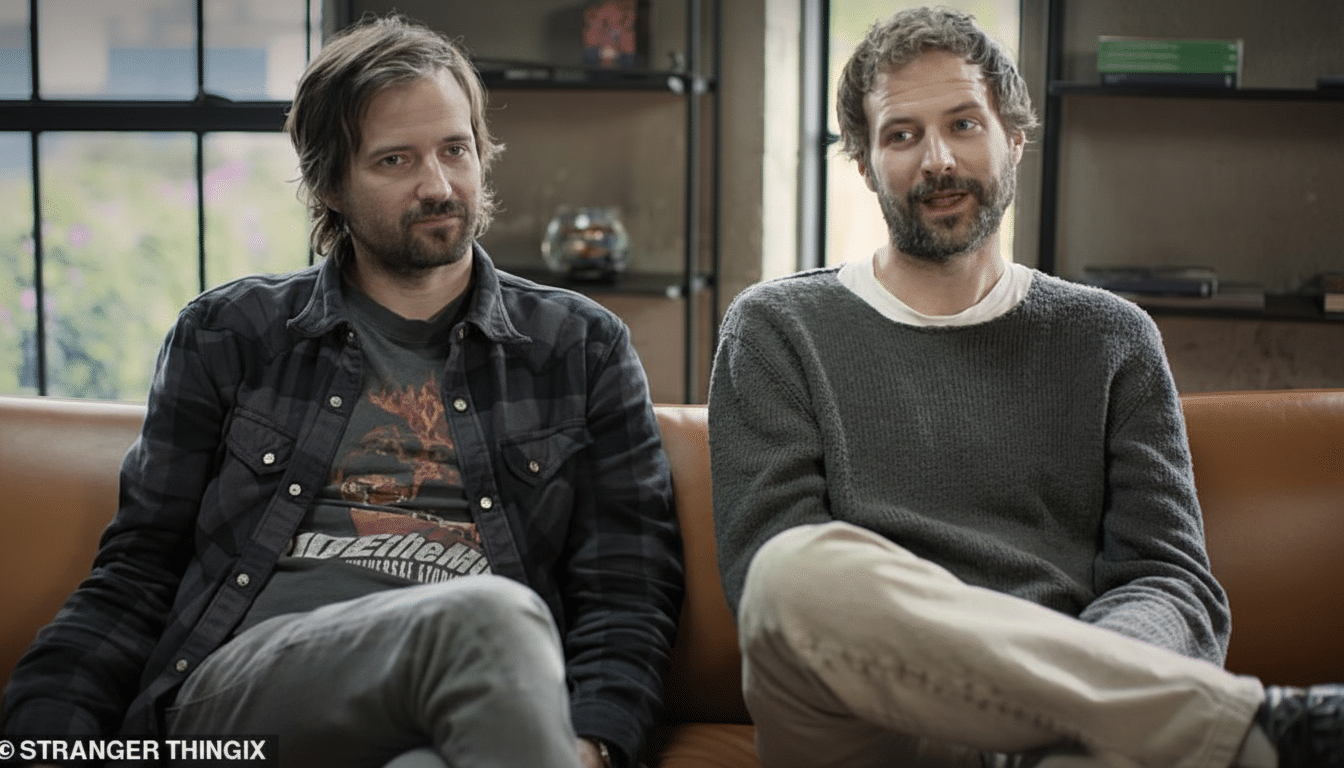
The finale itself divided audiences, and that dissatisfaction has clearly colored the reactions. Across Reddit and X, users circulated screenshots, parsed pixels, and floated theories: if the ending felt thin, maybe it was machine-made. Others countered that the evidence is circumstantial at best—and that many apps, from Notion to browser extensions, use minimalist circular icons that can look similar in a quick cut.
What The Documentary Shows And What It Doesn’t
One Last Adventure’s director, Martina Radwan, poured cold water on the theory in remarks to The Hollywood Reporter, noting that no one has demonstrated the tab was ChatGPT. Radwan said she didn’t witness the writers using AI in ways she considered unethical and suggested that creatives often keep research tools open while multitasking. In other words: a blurred favicon is not a smoking gun, and the footage offers no direct proof that AI wrote or rewrote the show’s scripts.
It’s also worth remembering that big productions routinely revise scripts during filming. Television writers’ rooms are built for iteration—breaking scenes, testing dialogue, and course-correcting in real time. The idea that pages were still in motion when production began may be less an AI red flag and more business as usual for a premium series under tight timelines.
The Industry Rulebook on AI in Film and Television
The broader backdrop is crucial. The 2023 Writers Guild of America agreement set clear boundaries: AI can’t be credited as a writer and can’t be assigned to write or rewrite literary material. A human writer must be paid and retain credit. Writers may use AI tools if they choose and if the company agrees, and companies must disclose if provided material includes AI-generated content. Meanwhile, the union preserved its right to challenge the use of writers’ work for AI training. SAG-AFTRA’s contract added similar guardrails for performers’ likeness and voice.

Stranger Things’ production was delayed during the WGA strike, a fact fans have resurfaced as they debate the ethics of AI on set. For some, the mere possibility that a chatbot informed brainstorming feels at odds with the spirit of those labor wins—even if such use could fall within the rules when clearly disclosed and kept under human control.
Audience Sensitivity After Recent AI Flashpoints
Viewers are primed to scrutinize AI after a string of high-profile incidents. Marvel’s Secret Invasion drew backlash for an AI-assisted title sequence. South Park openly credited ChatGPT in a satirical episode about automated writing. Even outside TV, AI voice and image mimicry has stirred controversies around consent and creative integrity. Against that climate, a split-second icon on a laptop is enough to set off alarms—fairly or not.
What’s At Stake For Netflix And The Duffers
Stranger Things is one of Netflix’s crown jewels. Earlier seasons set platform records, with Season 4 surpassing a billion hours viewed in its initial window according to Netflix’s own reporting—a benchmark few series have matched. That scale raises the stakes for any perception that the show cut corners. Fans expect hand-crafted storytelling; if they suspect machine-made shortcuts, trust can erode quickly, regardless of what the rules technically allow.
There’s also a practical dimension: creative teams across the industry are experimenting with AI for research, summarization, and beat-sheet drafting. The dividing line is whether the tool informs a human writer’s process—or replaces it. For showrunners, being explicit about boundaries may be the only way to keep audience confidence while leveraging new tech responsibly.
What We Still Don’t Know About AI and Stranger Things
At this point, there’s no verified evidence that ChatGPT wrote any portion of the Stranger Things finale. The documentary footage is inconclusive, and the director disputes the interpretation. Until the Duffers or Netflix address the issue directly, the debate will remain a Rorschach test for how viewers feel about AI in storytelling—shaped as much by broader industry anxiety as by anything visible on-screen.