


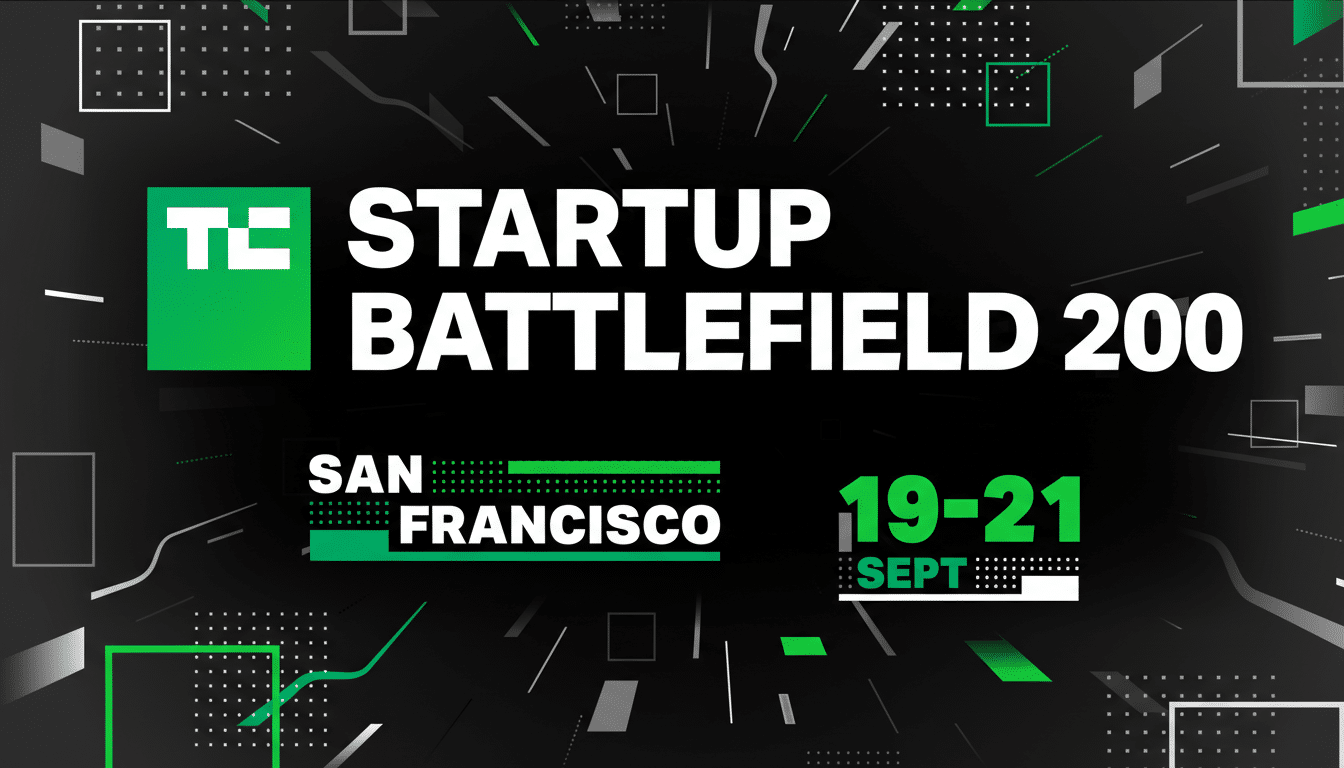
Nominations are officially open for Startup Battlefield 200, the highly watched arena for early-stage founders aiming to break out on a global stage. The program spotlights 200 bold teams, with a select group advancing to pitch live in San Francisco for $100,000 in equity-free funding and a shot at industry-defining visibility.
What Startup Battlefield 200 Offers Founders
Startup Battlefield 200 isn’t just a showcase; it’s an accelerator in disguise. Selected founders receive hands-on pitch coaching, access to investor matchmaking, and prominent exhibition placement among peers building frontier tech. The program culminates with a main-stage pitch competition where the winning startup takes home $100,000 with no equity strings attached.
- What Startup Battlefield 200 Offers Founders
- Who Should Apply to Startup Battlefield 200
- How Selection Typically Works for Startup Battlefield 200
- Why This Stage Matters Now for Early-Stage Founders
- Tips to Strengthen Your Startup Battlefield 200 Nomination
- Bottom Line for Founders Considering Startup Battlefield 200
Alumni who first took the stage here include Trello, Mint, Dropbox, Discord, and Fitbit — founders who used the spotlight to validate product-market fit, shorten fundraising cycles, and recruit early teams. Organizers report that past Battlefield cohorts have collectively raised many billions in follow-on capital, a signal that the platform converts attention into traction when teams execute well.
Who Should Apply to Startup Battlefield 200
The sweet spot is pre-seed and seed-stage startups with a working MVP and credible evidence of demand. Bootstrapped teams are welcome, and Series A companies in capital-intensive arenas such as hardware, biotech, or climate may also qualify. The cohort is sector-agnostic — expect AI agents and infrastructure, fintech and compliance, health tech, climate and industrial robotics, as well as novel consumer products with clear retention mechanics.
The bar is high, but not exclusive. Reviewers look for focused problem statements, scrappy execution, and a clear why-now. A well-crafted nomination shows more than vision; it shows traction, whether that’s revenue, engaged pilots, a growing waitlist, or technical breakthroughs validated by early customers.
How Selection Typically Works for Startup Battlefield 200
Two hundred startups are chosen for the cohort, and from there a smaller subset is traditionally elevated to the main-stage pitch round. Finalists face a panel of veteran investors, operators, and subject-matter experts who press on fundamentals: market size, defensibility, team advantage, go-to-market efficiency, and early unit economics. The format rewards clarity, not theatrics — founders win by demonstrating real signals and a repeatable plan.
Expect diligence on the basics. Judges often seek evidence like net revenue retention above early benchmarks, month-over-month growth with improving payback periods, or regulatory pathways mapped for sensitive categories. Hardware and deep tech teams should detail cost curves and milestones, while software ventures benefit from transparent engagement and churn metrics.
Why This Stage Matters Now for Early-Stage Founders
In a funding climate that remains selective, high-signal platforms can compress the time it takes to meet the right investors and customers. Reports from CB Insights and PitchBook have shown uneven recovery across stages, with disciplined check-writing and sharper diligence. That environment favors founders who can articulate traction and capital efficiency, making an equity-free prize and concentrated exposure especially valuable.
Beyond the cash, the compounding advantage is credibility. A strong showing on this stage often correlates with faster follow-on rounds, richer partnership pipelines, and recruiting leverage — intangible gains that outlast any single check.
Tips to Strengthen Your Startup Battlefield 200 Nomination
Lead with the user pain and quantify it. Replace vague promises with concrete proof: pilot LOIs, signed customers, or usage cohorts with improving retention. Share the one metric you’re optimizing now — activation rate, conversion to paid, or payback — and explain what you’ve learned.
Show your moat early. For AI teams, specify proprietary data access, model choices, and measurable accuracy or latency gains. For climate and hardware, include unit cost trajectories, certification progress, and supply chain readiness. Outline your go-to-market motion with CAC assumptions tied to actual channels, not wish lists.
Keep the demo crisp. A two-minute walkthrough that proves the core loop beats a feature tour. If you have regulatory or security needs, flag compliance posture and audits. And don’t bury the team — highlight founder-market fit and prior outcomes that de-risk execution.
Bottom Line for Founders Considering Startup Battlefield 200
Startup Battlefield 200 is open, competitive, and worth the shot for teams with a real product and momentum. If you can demonstrate traction, a path to defensibility, and a plan to scale efficiently, this platform can accelerate your trajectory — whether you leave with $100,000 or with the investor meetings that change your company’s slope.