


A large Australian trial has found that atorvastatin, a commonly prescribed cholesterol-lowering drug, reduced major cardiovascular events among adults 70 and older who had no known cardiovascular disease, diabetes or dementia. But the treatment did not significantly improve the study’s other main outcome: survival without dementia or persistent physical disability.
The results from the STAREE trial offer unusually direct randomized evidence for a question that has long been unsettled in primary care: whether to start a statin in older people who have not had a heart attack, stroke or other clinical cardiovascular event. The findings support a cardiovascular benefit for the selected population studied, while stopping short of showing that the drug helps people live longer without disability.

Fewer cardiovascular events, but no clear disability-free survival benefit
STAREE enrolled 9,971 Australians through general practices and randomly assigned them, under double-blind conditions, to take 40 milligrams of atorvastatin daily or a placebo. Participants’ mean age was 74.7, and 52% were women. The median follow-up was 5.9 years, according to the European Society of Cardiology’s report on the trial, released August 28 ahead of its presentation at ESC Congress 2026.
Major cardiovascular events occurred in 6.0% of people assigned atorvastatin, compared with 8.3% of those assigned placebo. That is an absolute difference of 2.3 percentage points over the trial period — about 23 fewer participants with such an event for every 1,000 assigned atorvastatin — and a 30% relative reduction based on the trial’s hazard ratio of 0.70. The result was statistically significant, with a 95% confidence interval of 0.61 to 0.82.
The endpoint was a composite, meaning it counted several different outcomes together: cardiovascular death, nonfatal heart attack, stroke and coronary revascularisation. The reported results establish a reduction in the combined outcome, not necessarily the same degree of benefit for each individual component. Still, because participants were randomly allocated to drug or placebo, the comparison can support a causal effect of atorvastatin on that composite outcome in this trial population.
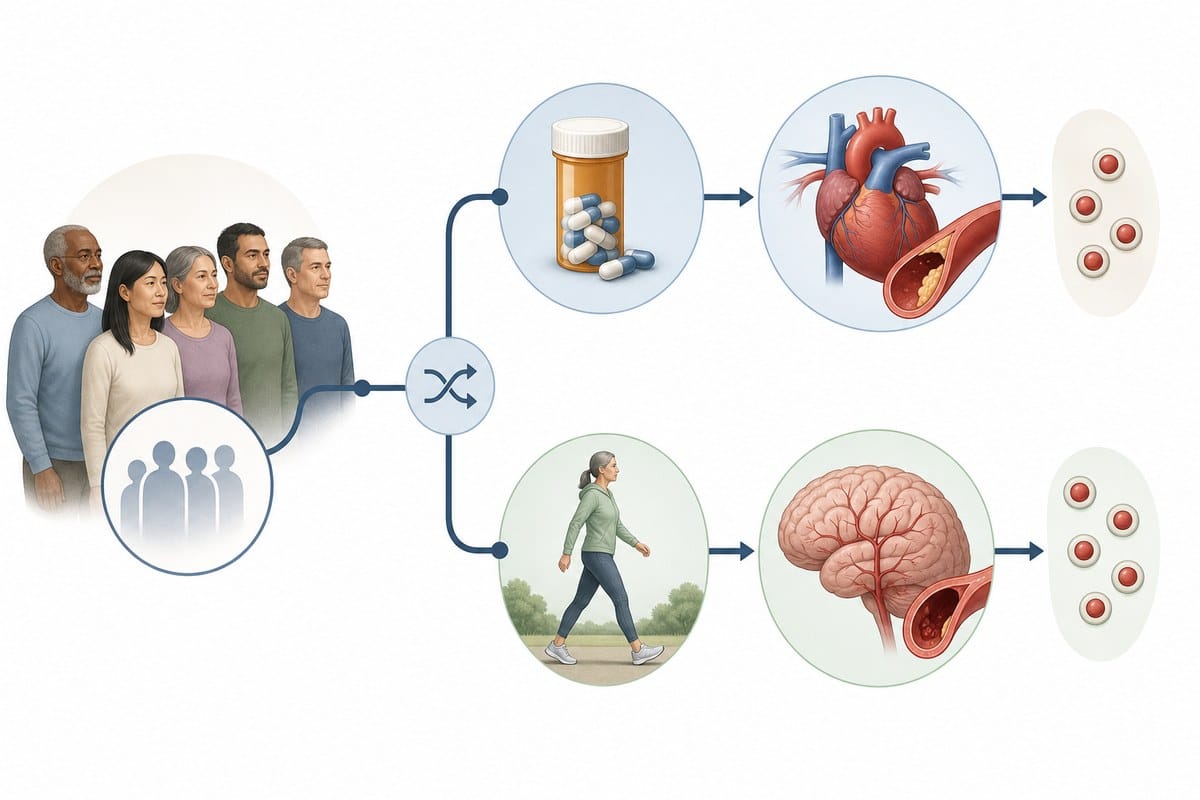
The second co-primary endpoint produced a different result. Disability-free survival — defined as survival without dementia or persistent physical disability — was reached as an event by 12.8% of participants in the atorvastatin group and 13.6% in the placebo group. The hazard ratio was 0.94, with a 95% confidence interval of 0.84 to 1.05 and a p value of 0.25, so the difference was not statistically significant.
Those two outcomes should not be blended together. The trial found fewer major cardiovascular events, but it did not demonstrate that atorvastatin prevented dementia, reduced persistent disability or extended disability-free life. The results were reported as being published simultaneously in the New England Journal of Medicine.
Why STAREE addresses an evidence gap
Statins have a well-established role for many people with existing cardiovascular disease and for some younger adults at elevated risk. STAREE instead tested primary prevention: trying to avert a first major event. Older adults, especially those over 75, have often been underrepresented in the pivotal randomized trials that shaped statin practice.
A peer-reviewed review of cholesterol guidelines and evidence, published before STAREE reported results, described limited randomized evidence for beginning statins for primary prevention at older ages. Guidelines have therefore generally required clinicians to weigh cardiovascular risk alongside life expectancy, other illnesses, concurrent medicines and an individual patient’s preferences rather than applying a single age-based rule.
STAREE was designed to fill part of that gap. Public reporting when the project began in 2015 described its aim as testing whether a statin could help older Australians maintain good health, an ambition that made disability-free survival a co-primary outcome alongside cardiovascular events. The newly reported result suggests that preventing first cardiovascular events and preserving broader function are related but distinct goals — and that a benefit in one does not automatically establish a benefit in the other.
Safety, adherence and limits on who the results cover
The ESC report said muscle-, liver- and diabetes-related adverse events were more frequent among participants receiving atorvastatin. Serious adverse events were uncommon and occurred in 2.7% of each group. Equal rates of serious adverse events do not mean every side effect was equally common; the treatment-related categories were reported more often with the drug.
Long-term use was also imperfect. The Guardian reported that more than 15% of participants discontinued their assigned medication. Such discontinuation resembles a practical challenge in routine care, but it can also reduce the contrast between the drug and placebo groups over time. The trial’s findings describe the effect of assignment to atorvastatin in this setting, not a guarantee of benefit for every person who starts and continuously takes it.
The participants were Australians without diagnosed cardiovascular disease, diabetes or dementia, and the study population was almost entirely white, according to the Guardian’s reporting. The results therefore should not be automatically extended to people with those excluded conditions, to more diverse populations or to frailer adults with substantially different health circumstances. They also do not alter the separate evidence base for statin treatment after a heart attack or stroke.
For clinicians and patients considering a first statin after 70, the new evidence adds a measurable potential reduction in major cardiovascular events to the conversation. It does not make the choice automatic. The likely absolute benefit depends on a person’s baseline cardiovascular risk, while potential adverse effects, other medications and priorities about preventive treatment remain relevant to an individualized decision. Patients should not start or stop a prescribed statin on the basis of one trial result without discussing it with their clinician.