


Spotify is giving listeners new steering power with Prompted Playlist, a tool that lets you describe the vibe you want and watch a bespoke playlist take shape in real time. Instead of passively accepting recommendations, users can now micromanage the algorithm with context, intent, and ongoing tweaks—without starting from a blank slate.
The feature is rolling out to users in the U.S. and sits between manual curation and fully automated mixes, turning your listening history into raw material that can be sculpted by natural-language prompts and gentle constraints.
- What Spotify’s Prompted Playlist actually does for you
- How Prompted Playlist differs from Spotify’s AI Playlist
- Why this matters for music discovery and listener control
- How to use Prompted Playlist to shape your listening
- Data use and user control considerations to keep in mind
- The bottom line: a more intentional way to discover music
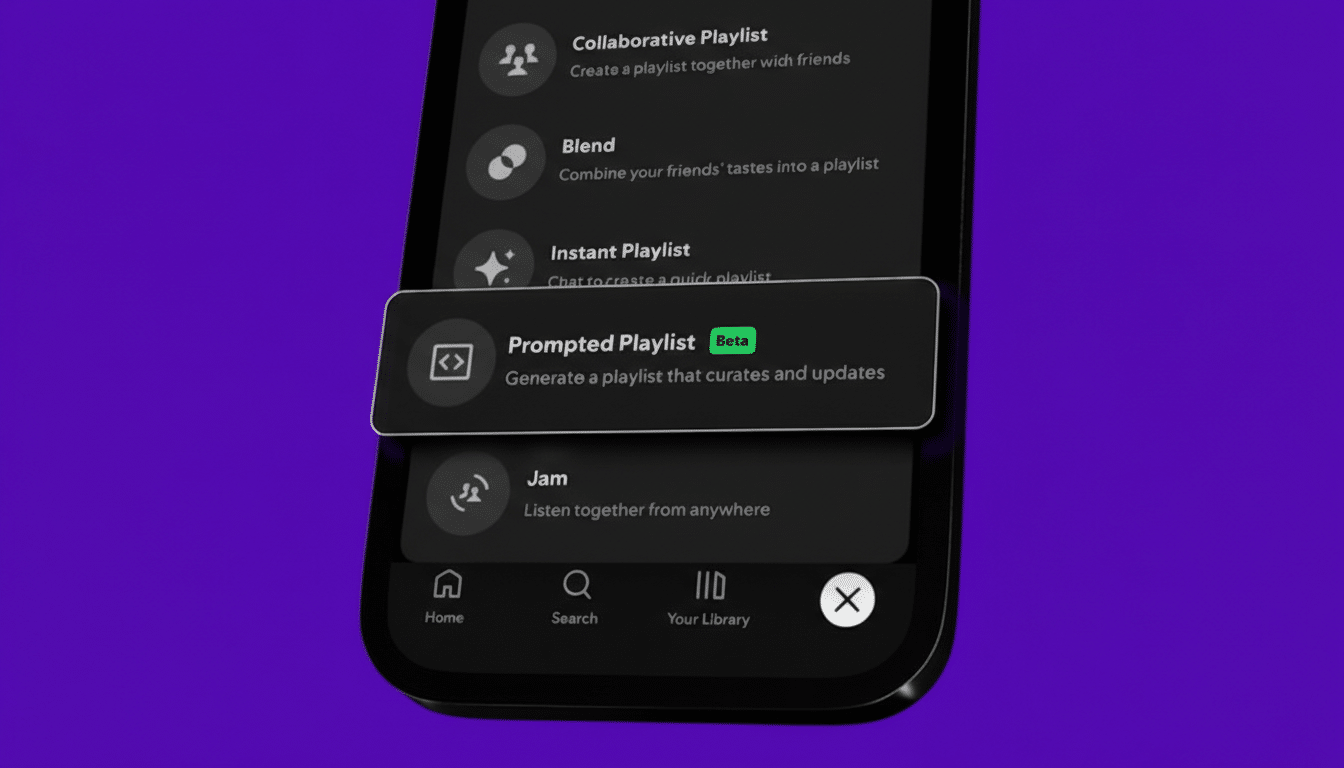
What Spotify’s Prompted Playlist actually does for you
Type a prompt—anything from “moody indie for a rainy Sunday” to “quiet, mystical instrumentals for reading”—and Spotify generates a playlist on the fly. As it builds, the app surfaces brief notes about how it’s interpreting your request, signaling factors like mood, instrumentation, era, and cultural cues.
Under the hood, Prompted Playlist draws on your full listening history, not just recent plays. That means throwback phases, niche obsessions, and long-ignored favorites can all influence the results. You can also set the playlist to refresh daily or weekly so it evolves with new releases and shifting tastes.
In practice, this feels surprisingly personal. Ask for a reading mix that leans on Slavic folk textures and minimal vocals, and you’ll see atmospheric instrumentals and classical selections rise to the top. Ask for the first 25 songs you ever played on Spotify, in chronological order, and it can surface that deeply specific nostalgia trip from your own archive.
How Prompted Playlist differs from Spotify’s AI Playlist
Spotify already offers AI Playlist, which also accepts text prompts. The difference is intent and lifecycle. AI Playlist is geared for instant, one-off generation; Prompted Playlist is designed to live with you, update on a cadence, and respond to your edits over time.
Think of it as a middle lane between algorithmic staples like Discover Weekly or Release Radar and the meticulously hand-built playlist. You set the rules of engagement; the system fills in the edges, informed by your history and broader cultural context.
Why this matters for music discovery and listener control
Streaming recommendations are enormously influential in what people hear next. Industry groups such as IFPI report that streaming now accounts for well over 60% of global recorded music revenue, making the shape of recommendations a high-stakes issue for artists and listeners alike.
Research into recommender systems—from academic forums like ACM CHI to consumer advocacy work by the Mozilla Foundation—suggests that transparency and user control increase trust and satisfaction. Prompted Playlist leans into that: lightweight explainability (“what the system thinks you want”) plus adjustable constraints (“refresh weekly,” “lean instrumental,” “focus on older favorites”).
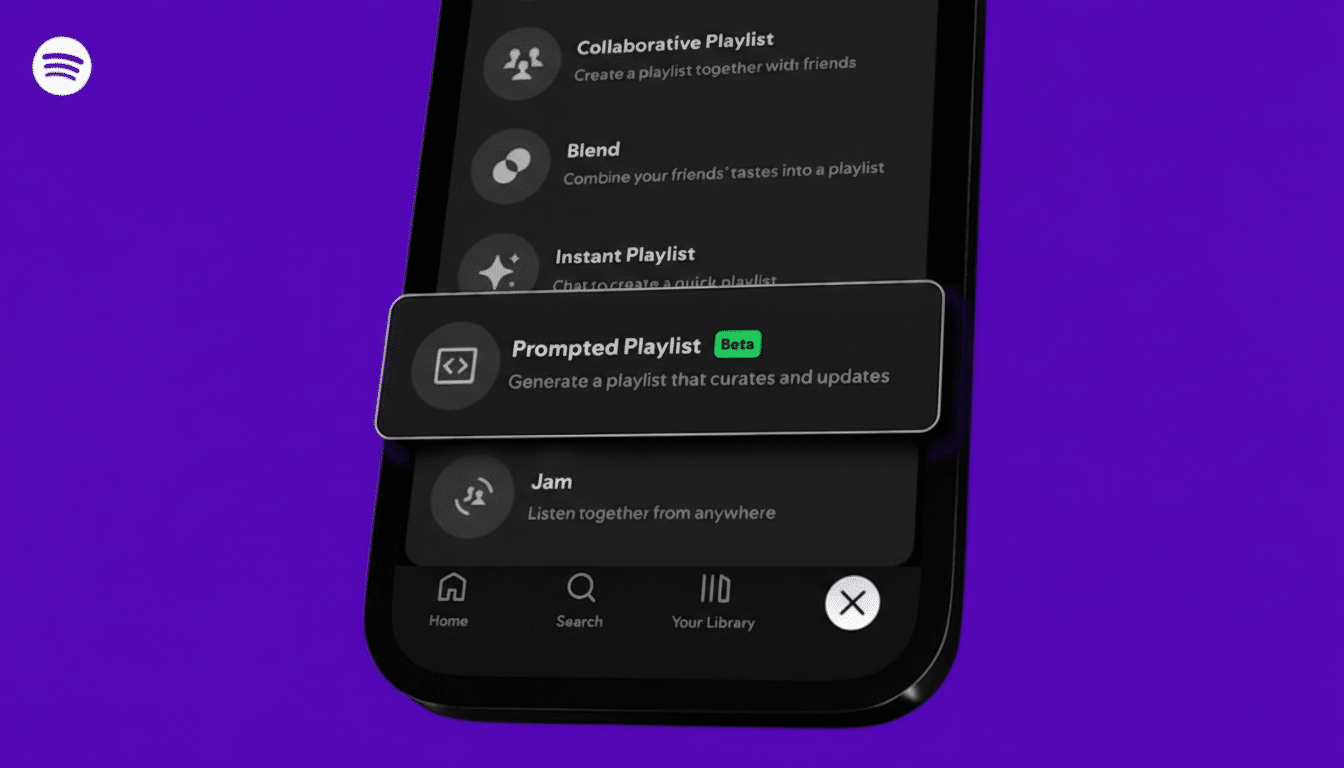
The upshot is agency. You still benefit from machine-scale discovery, but you can course-correct when the algorithm gets too comfortable or narrow. That’s especially useful for listeners whose moods and contexts shift across work, workouts, commutes, and deep-focus sessions.
How to use Prompted Playlist to shape your listening
In the Spotify app, choose Create Playlist and select Prompted Playlist. Describe what you’re after—mood, activity, aesthetic, region, time period, or a specific listening context.
Review the real-time notes as it builds. Once generated, you can set the playlist to auto-refresh daily or weekly. Edit freely: remove tracks, reorder, save favorites. Those interactions act as feedback that fine-tunes future updates.
A few prompts that work well:
- “Late-night ambient with no lyrics”
- “Guitar-forward pop for a sunny walk”
- “Latin alt and indie from the last five years”
- “My earliest Spotify plays in order”
Data use and user control considerations to keep in mind
Because Prompted Playlist leverages your full listening history, the results are only as personal as the data it can draw from. If you often listen on shared devices, consider pruning saved tracks or separating profiles to avoid cross-contamination. You can also review privacy and personalization settings in your account to adjust how Spotify uses your activity.
For artists, features like this may reward catalog depth and context-friendly tracks (instrumentals, alternate versions, mood-specific cuts) that slot into highly tailored scenarios. For labels and marketers, the refresh cadence creates a recurring surface for new releases without relying solely on editorial slots.
The bottom line: a more intentional way to discover music
Prompted Playlist reframes Spotify’s algorithm from a black box into a collaborator. You provide the brief; the system supplies the options; your edits shape the next round. It’s not manual crate-digging, and it’s not fully hands-off—it’s a feedback loop that makes discovery feel intentional again.