


Spotify is adding a new social layer to its app with the rollout of group chats, letting listeners share and discuss what they’re playing with small circles directly inside the streaming service. The feature builds on Spotify’s in-app messaging, introduced last August, and is designed for tight-knit conversations around podcasts, playlists, and audiobooks.
What Spotify’s new group chats enable for listeners
Group chats bring up to 10 people into a single conversation where users can drop albums, episodes, or entire playlists and keep the discussion in one place. Think of it as a listening companion: a podcast club that lives next to your queue, a playlist planning thread for a road trip, or an audiobook chapter debate without leaving the app.
- What Spotify’s new group chats enable for listeners
- How it works and who you can message within Spotify
- A new step in Spotify’s evolving social strategy
- Privacy and safety trade-offs in Spotify group chats
- Why it matters for creators and fans across Spotify
- How Spotify’s approach compares across competitors
- What to watch next as Spotify tests group chats
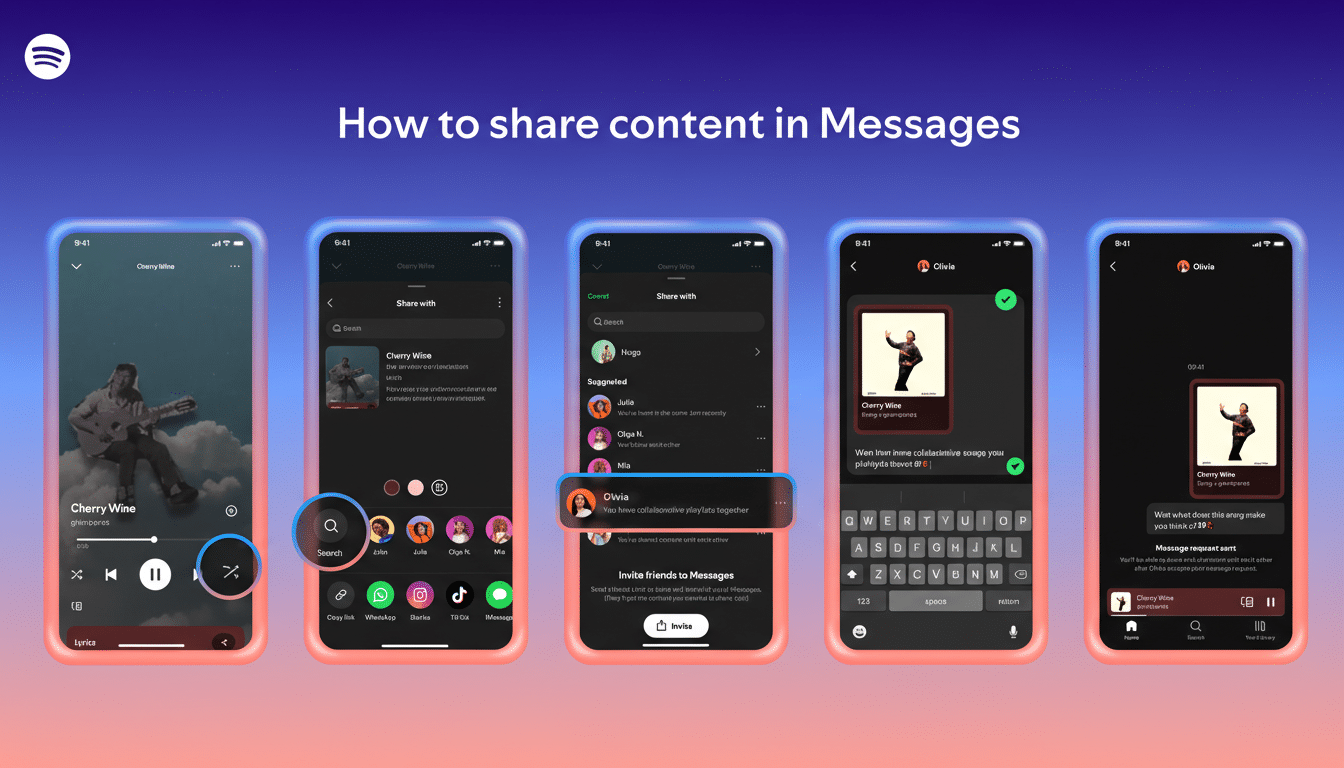
By keeping chat native to the player, Spotify reduces the friction of sharing across apps. It’s a strategic move to keep discovery, feedback, and engagement within the same ecosystem that handles playback and curation.
How it works and who you can message within Spotify
There’s an important guardrail: you can start a chat only with people you’ve previously shared content with on Spotify. If you’ve built a collaborative playlist together, joined a Jam, or created a Blend, you’re eligible to spin up a conversation with those contacts.
That constraint helps curb spam and grounds chats in existing listening relationships. It also nudges users toward collaborative features—Jams for real-time queueing, Blends for algorithmic taste-mixing—as on-ramps to conversation.
A new step in Spotify’s evolving social strategy
The launch is the latest in a series of social additions, including comments on podcasts, the ability to follow friends, and real-time activity views. For Spotify, which reports a global audience of well over 600 million monthly active users, even small gains in social stickiness can translate into large engagement lifts.
Industry analysts at MIDiA Research have noted that “fandom features” inside streaming apps—comments, communities, and co-listening—correlate with retention and time spent. IFPI’s Engaging with Music research has likewise highlighted the growing role of social interactions in music discovery, especially among younger listeners who expect conversation around content, not just passive consumption.
Privacy and safety trade-offs in Spotify group chats
Spotify says messages are encrypted at rest and in transit, but they are not end-to-end encrypted. That sets a different privacy posture from messaging-first apps like Signal or WhatsApp, which default to E2EE. The tradeoff enables moderation and abuse reporting but may give privacy purists pause.
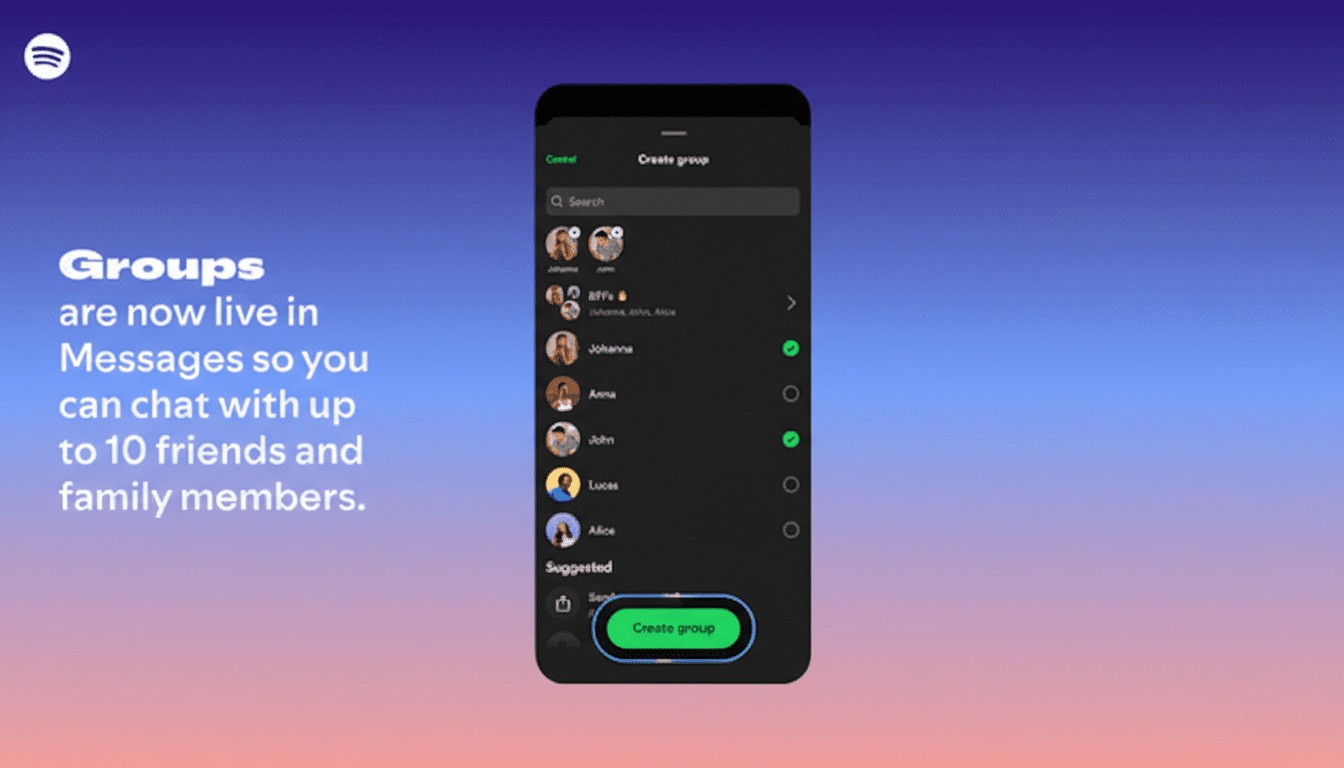
The 10-person cap is notable. Small groups tend to be easier to manage and less prone to broadcast-style spam than large communities. Combined with the prerequisite of prior sharing, the design suggests a focus on intimate, interest-based threads rather than open chats.
Why it matters for creators and fans across Spotify
For podcasters, group chats could extend the lifecycle of an episode. Fans can drop highlights, timestamps, and reactions in context, producing a feedback loop creators can observe through existing analytics and comments tools. For musicians and labels, the feature formalizes what already happens across texting and social DMs—friends recommending tracks—inside the place where playback and saves occur.
Expect to see creators encourage listeners to “take it to the group” for song drops, after-show discussions, or audiobook reading schedules. Even without large community features, a patchwork of small groups can meaningfully drive saves, playlist adds, and repeat plays—the metrics that underpin recommendation algorithms.
How Spotify’s approach compares across competitors
Rivals have flirted with social listening but stop short of native group chat. Apple Music leans on SharePlay and shared playlists, while YouTube Music relies on the broader Google and YouTube ecosystem for conversation. By hosting chat next to content, Spotify is making a bid to own not just what people listen to, but how they talk about it.
If the feature drives higher session lengths and more collaborative behavior, it could become a differentiator—especially for genres like podcasts and long-form audiobooks where discussion boosts engagement.
What to watch next as Spotify tests group chats
Key signals to monitor:
- How quickly group chats are adopted among existing Blend and Jam users.
- Whether creators begin prompting listeners into chats as a call to action.
- If Spotify adds tools like content pinning, moderation controls, or integration with collaborative playlists to deepen the experience.
For now, group chats reinforce Spotify’s push to make listening more social without turning the app into a general-purpose messenger. It’s a deliberately scoped step—small groups, existing connections, and content-centric sharing—that keeps conversation close to the play button.