


Solid-state batteries promise safer charging, longer life, and more energy in the same tiny footprint. So why isn’t your iPhone running on one already? The short answer is that physics, factories, and finance haven’t lined up—yet. The long answer reveals how moving from lab breakthroughs to a thin, mass-produced phone battery is one of the toughest scale-up challenges in modern manufacturing.
What Solid-State Promises And What Ships Today
In a solid-state battery, the flammable liquid electrolyte used in today’s lithium-ion cells is replaced with a solid—often a ceramic or polymer. That change can unlock higher energy density, better safety margins, and faster charge capability because lithium can be paired with a pure metal anode without the same risks of runaway reactions.
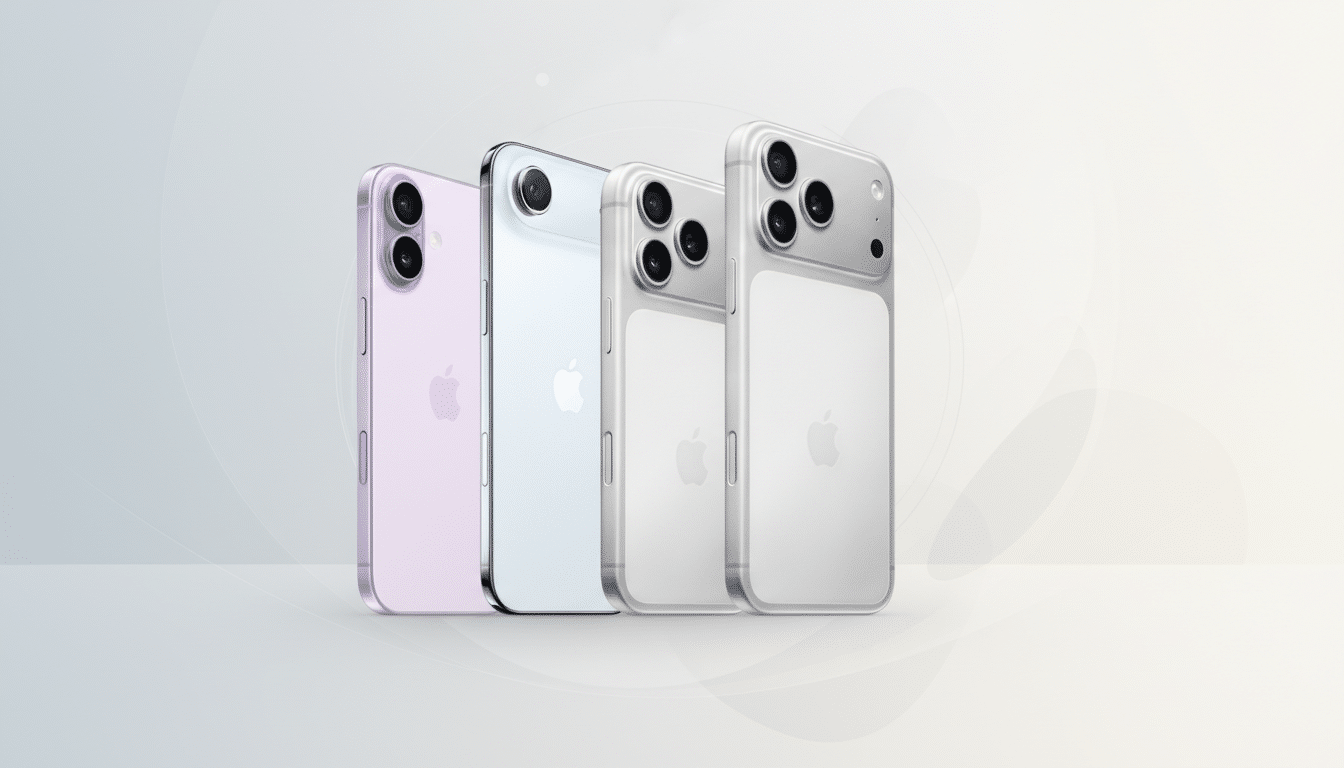
Some consumer accessories already advertise “solid-state” or “semi-solid” designs. Many of these use gelled or partially solid electrolytes that improve safety but aren’t the dense, fully ceramic architectures battery researchers target for step-change performance. True solid-state cells that pair a lithium-metal anode with a rigid electrolyte remain in pilot phases, where they look great in controlled tests but aren’t ready for the thin, bend-prone confines of a smartphone.
The Manufacturing Wall Blocking Solid-State Phone Batteries
Even if every technical problem were solved tomorrow, the iPhone supply chain demands staggering volume. Apple ships hundreds of millions of phones per year, and the global smartphone market moves more than a billion units annually, according to IDC and Counterpoint Research. Each device needs a cell that is cheap, consistent, and produced with yields high enough to hit razor-thin timelines.
Solid-state production is not there yet. Ceramic electrolytes are made with tape-casting and sintering steps more akin to semiconductor ceramics than to the roll-to-roll lines that crank out today’s lithium-ion cells. Early yields are low because microscopic voids or interfacial flaws can doom a cell. Every defect scrapped is cost added. BloombergNEF’s battery price survey pegs average lithium-ion pack prices around $139 per kWh recently; pilot solid-state cells can cost multiples of that, even before you add the premium engineering required to package them in a phone.
Then there’s the factory itself. Many solid-state chemistries need ultra-dry environments and tight tolerances, ratcheting up capital costs. Scaling from pilot lines measured in megawatt-hours to phone-scale gigawatt-hours is not a trivial copy-and-paste.
The Physics Problems Still Being Solved for Phones
Solid-state was long touted as “dendrite-proof,” but reality is subtler. Lithium can still form needle-like structures that bridge the solid electrolyte under fast charge, cold temperatures, or poor interfaces. Researchers at national labs and companies like QuantumScape, Solid Power, and ProLogium are attacking this with new materials and stack designs, but consistency at consumer scale is unresolved.
Contact pressure is another issue. Many solid electrolytes need sustained mechanical pressure to keep interfaces tight and resistance low. That’s doable inside a rigid EV pack sled; it’s trickier in a 7 mm phone that’s dropped, twisted, and thermally cycled every day. Ceramics can be brittle, and even slight swelling or vibration can cause microcracks that grow over time.
Thermal behavior matters, too. Polymer-based solid electrolytes often deliver best-in-class performance at moderately elevated temperatures, not at the chilly conditions where a phone is expected to fast-charge on a winter morning. To pass UN 38.3 transport safety, UL, and IEC 62133 certifications, the battery has to be predictable across environments, charge rates, and thousands of cycles.
Why Apple Will Not Be First to Gamble on Solid-State
Apple pushes the envelope on custom silicon and displays, but it tends to be conservative on batteries. That’s not a lack of ambition; it’s risk calculus. A single recall can cost billions and damage trust. The company works with a web of suppliers—including CATL, Amperex Technology, and Sunwoda—to tune lithium-ion cells that already meet stringent reliability targets.
Switching to solid-state would ripple through the entire device: mechanical design for pressure and protection, redesigned battery management electronics, thermal strategies, and new service procedures. Apple would need not one, but multiple high-yield suppliers to guarantee continuity. Until yields rise and costs fall, squeezing a few extra hours of battery life from mature lithium-ion, packaging tweaks, and smarter power management is simply the lower-risk path.
So When Does It Happen for iPhones and Smartphones?
Automakers and battery startups project limited runs of solid-state cells later this decade, with broader adoption following as production learning curves come down. The IEA and BloombergNEF both expect cost and scale benefits to arrive incrementally, not in one big bang. History suggests phones will adopt the technology after EVs prove out core manufacturing and reliability, because cars can accommodate thicker cells, higher stack pressures, and more robust packaging.
The likeliest path for phones is a gradual migration: more semi-solid and hybrid electrolytes first, then true solid-state in small devices like wearables, and finally widespread smartphone use once cost hits parity and supply is resilient. If you’re hoping the next iPhone suddenly doubles its battery life thanks to solid-state magic, temper expectations. The breakthrough is real—but getting it from white paper to your pocket takes more than hype.