


Qualcomm has announced two new laptop processors — the Snapdragon X2 Elite and Snapdragon X2 Elite Extreme — designed to push Windows on ARM firmly into the high‑performance space. Based on a 3nm process and with third‑generation Oryon CPU cores, the standout in the flagship Extreme tier is clear‑cut: an ARM‑compatible prime core that’s somehow been pushed up to 5.0GHz. Qualcomm is promising up to 75% faster CPU performance than Windows rivals, as well as substantial gains in graphics efficiency and an NPU optimized for on‑the‑ball, on‑device AI.
What’s new in Qualcomm’s X2 architecture
At the heart of its X2 line is a redesigned Oryon CPU complex which can be scaled up to 18 cores in the Extreme guise. Qualcomm claims the platform provides 31% higher performance at ISO power and 43% lower power at like‑for‑like performance compared with the previous Snapdragon X Elite. That’s a significant move for sustained performance in thin‑and‑light designs, where the thermals are typically the limiter.
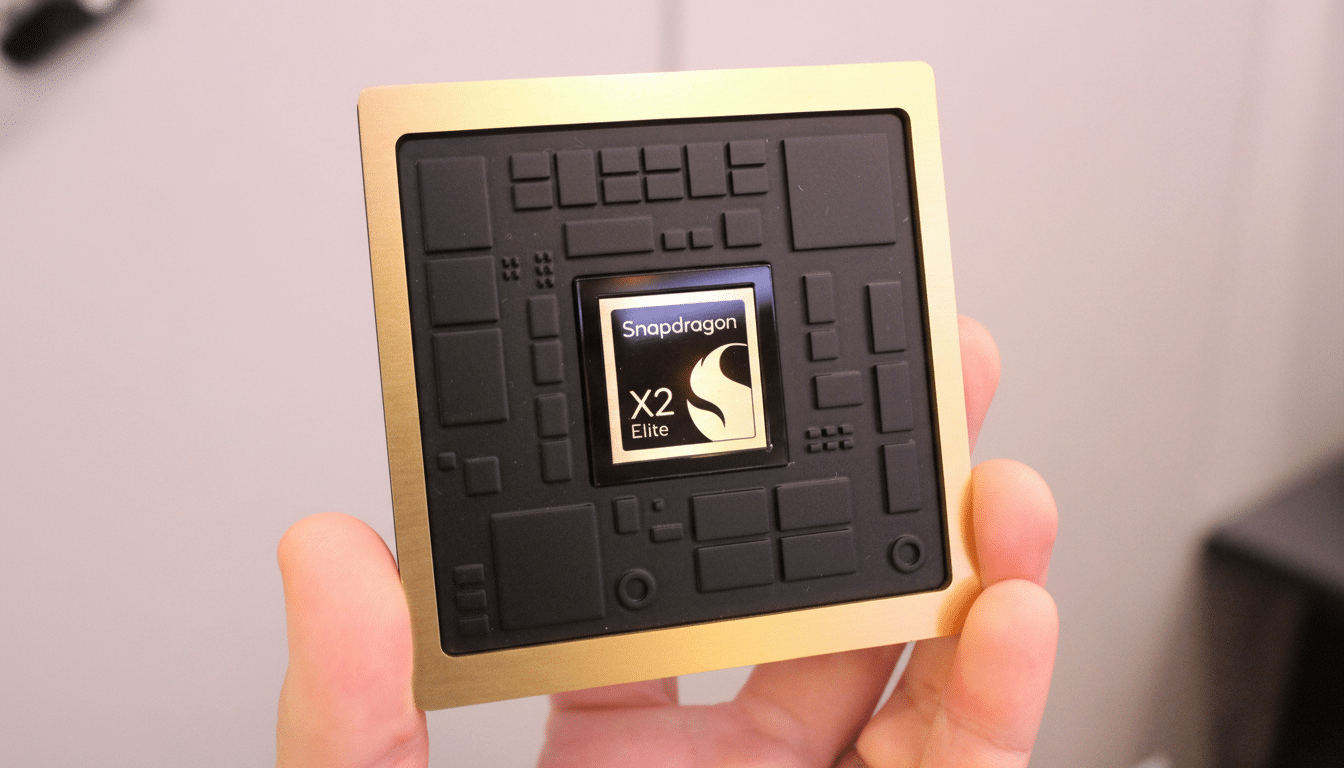
The eye‑catcher is that 5.0GHz prime core in the Extreme part, but the real story here is efficiency per watt.
Well, if Qualcomm’s assertions prove true for independent benchmarking reviewers — I’m thinking SPEC Workloads, Geekbench and Procyon workloads here — the X2 family might set new limits on what an ARM PC can do without fans screeching or batteries dying faster than a Ferrari’s. As always in the case of Qualcomm performance claims, they are internal measurements and we will be counting on third‑party verification.
AI hardware designed for the Copilot+ PC
AI is the other pillar. The new Hexagon NPU provides a rated 80 TOPS of AI compute, the fastest in its class, according to Qualcomm. That capability is designed to handle simultaneous tasks, such as live transcription while rendering images on the fly, without spiking the CPU/GPU load. It sets a high bar for local AI acceleration, and on paper the X2 clears it comfortably.
As with all TOPS metrics, the numbers are situational — vendors usually quote INT8 performance and there’s no standard method for how to perform the measurement. Still, the trajectory is clear. Anticipate real‑world improvements in creative applications, where generative models can be run locally, media applications with background object removal, and office applications that leverage on‑device model details to summarize content or provide assistance without sending data to the cloud. Apples‑to‑apples comparisons will be interesting for UL Solutions’ Procyon AI and MLCommons inference tests.
Graphics, connectivity, and camera pipeline
A brand‑new Adreno GPU delivers up to 2.3x performance per watt compared with the original X Elite, which will mean smoother frame rates when gaming for extended periods and longer battery life when creating using a GPU.
“If the TFLOP numbers coming out are thick and juicy, who am I to treat that as a sin?” No, raw TFLOP wasn’t exactly what was being discussed, but the story on efficiency does sync with Qualcomm’s historical advantage in mobile graphics.
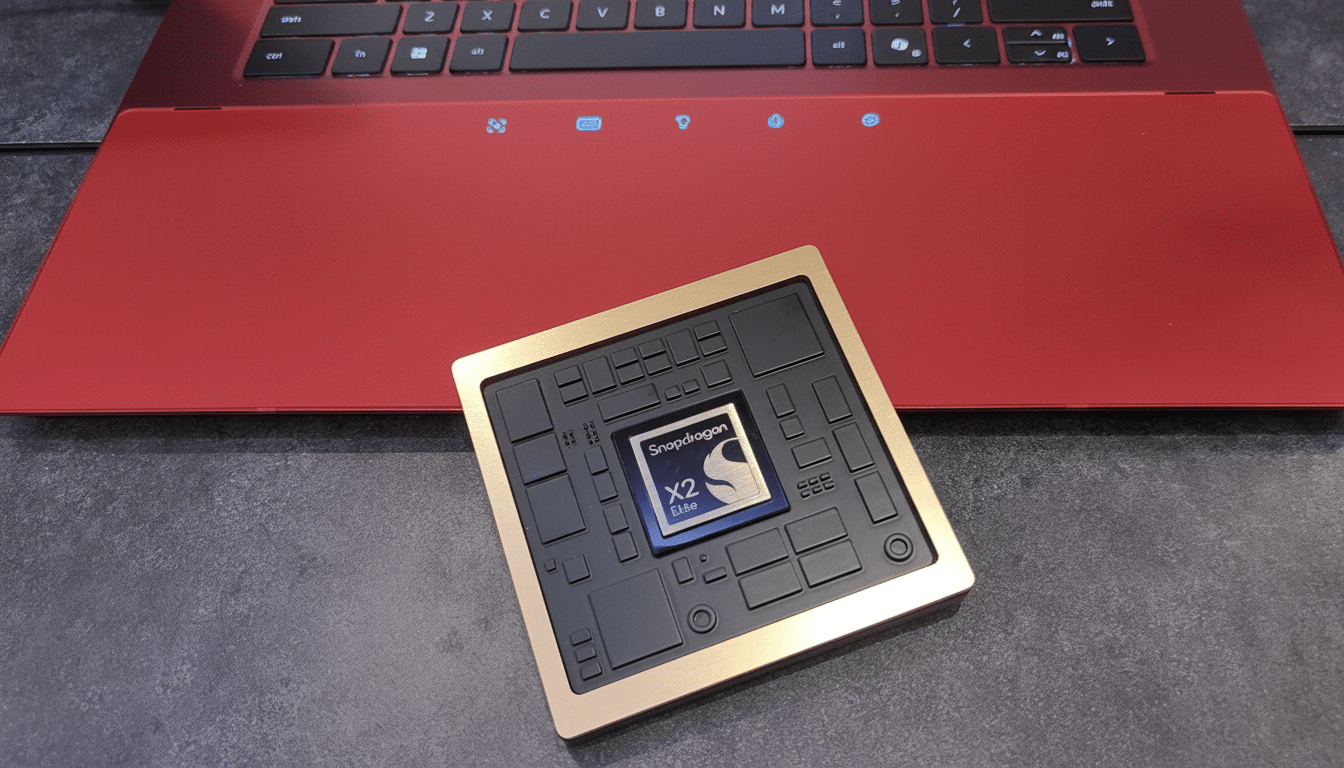
Connectivity and I/O receive a boost as well. Platform support consists of the Snapdragon X75 5G modem for always‑connected laptops and FastConnect 7800 for Wi‑Fi 7 with High Band Simultaneous Multi‑Link, as well as Bluetooth 5.4 with LE Audio. The integrated Spectra ISP provides headroom for high‑bandwidth MIPI cameras, multi‑exposure HDR and 10‑bit color that are capable of high‑quality premium webcams and computational video in hybrid work setups.
Security and device management features for enterprises
New to the platform is Snapdragon Guardian Technology, a hardware‑software‑cloud security and manageability layer. Qualcomm says it will allow users and IT to find, lock and erase devices remotely using both Wi‑Fi networks as well as cellular ones. The approach is an addition to the Windows security stack, and may appeal to enterprises that need greater control over their data than they can get in a pure cloud environment, without sacrificing mobile productivity.
Elite vs. Extreme: what we know so far on specs
Qualcomm has yet to fully detail all of the SKUs, but a few signposts are clear. The Extreme edition is aimed at ultra‑premium machines and features the 5.0GHz prime core, supporting up to 18 CPU cores. They both have the third‑gen Oryon architecture, accelerated Adreno GPU and the 80‑TOPS Hexagon NPU in common. Expect differentiations through core counts, clocks and power envelopes with OEMs tuning their configurations to match ultrathin designs or beefier performance notebooks.
As always, true performance will turn on thermals and software. Native ARM64 apps are growing and Microsoft’s emulation layer has gotten better, but creatives and developers will have the best experience with native tools. Look for information from vendors about cooling solutions and sustained clock behavior; a well‑cooled 30‑minute render tells you more than a 30‑second burst benchmark does.
Market impact and what to watch in the months ahead
The X2 family is designed to elevate Windows on ARM from “efficient and capable” to “undeniably fast.” If Qualcomm’s performance‑per‑watt increases pan out, that exerts pressure on x86 incumbents to have the battery benchmark and AI acceleration be competitive as well. This, on the back of Microsoft’s Copilot+ push and recent IDC findings that forecast AI features will drive premium‑notebook growth, paves the way for snappy OEM adoption across ultraportables and creator‑class machines.
Three remaining questions are more direct ones: finalized SKUs and thermal targets, independent CPU/GPU/NPU scores — the three‑legged stool for most SoC vendors — and how quickly critical creative and enterprise applications adopt custom ARM builds. When the chips from those land (not literally, but we’ll get into that — each company’s manufacturing process and schedule are different and always changing), we’ll know if Snapdragon X2 Elite and X2 Elite Extreme nudge the category forward — or represent the point Qualcomm has been chasing.