


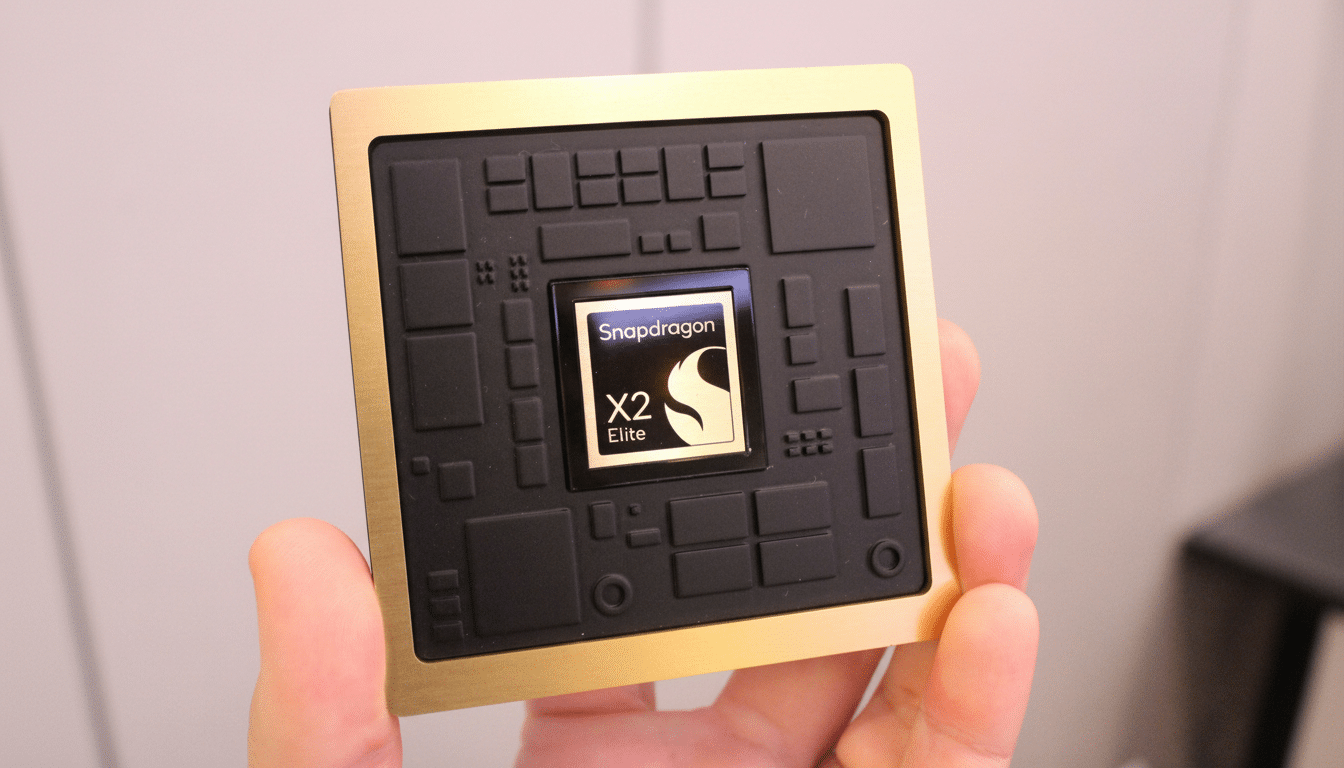
Qualcomm just set a new bar for Windows laptops with its announcement of the Snapdragon X2 Elite family, including a souped-up flagship X2 Elite Extreme. On paper, these ARM-based chips are supposed to deliver big jumps in performance, crisper power efficiency—and the beefiest neural hardware yet in a Windows notebook—all aimed squarely at the next smartphone-controlling fleet of Copilot+ PCs.
The timing matters. The initial Snapdragon X laptops showed that thin-and-light Windows machines could, at last, deliver swift performance and long battery life without the bulk or fan noise many had begrudgingly accepted as the tradeoff. Reviewers from publications including PCWorld and AnandTech reported that the original X Elite-powered systems’ battery life compared favorably to comparable x86 notebooks—with good responsiveness to boot. The X2 generation is an attempt to increase that distance.
Why These Chips Are Important For Windows PCs
Windows on ARM has passed a threshold of credibility. With the previous X series, Microsoft and Qualcomm already proved that most of what you’re doing day to day — web, productivity work, conferencing, media consumption, even light creative work — runs just fine and the modern apps are coming natively. Microsoft 365, Teams, Edge, and Visual Studio Code are all optimized; Google released an ARM64 build of Chrome; and Adobe’s been rolling out native Creative Cloud apps on Windows ARM. That momentum provides the X2 Elite platform a much bigger and better runway than previous ARM attempts.
The appeal here is clear: performance per watt. If Qualcomm’s assertions are true, that means snappier responsiveness for more extended periods when we’re unplugged, as well as quieter, cooler designs. For IT purchasers, that also translates into lower total cost of ownership over the life of a device—an angle IDC or Gartner pedal whenever premium laptops make their way to more efficient platforms.
Detailed Snapdragon X2 Elite specs and performance claims
The Snapdragon X2 Elite series goes up to 18 CPU cores — 6 more than the original X Elite and up to ten more than the X Plus — with a new Adreno GPU architecture and a greatly improved NPU. According to Qualcomm, the X2 Elite Extreme is geared toward heavier workloads that might involve agentic AI, large local models, and complex media timelines.
Headline figures are aggressive. The X2 Elite Extreme offers up to 75 percent more CPU performance compared with unnamed competitors at equivalent power (the “ISO power” measurement), Qualcomm claims. Comparatively speaking, the X2 Elite Extreme is billed as up to 50% quicker at ISO power than its predecessor, and the plain old X2 Elite is just shy of 31% faster. Both chips are said to reduce the platform power by 43 percent versus their predecessors. The updated GPU aims to deliver 2.3 times power efficiency, while the new NPU clocks in at 80 TOPS (trillion operations per second).
Context helps here. Intel’s latest mobile platforms and AMD’s upcoming Strix Point both advertise NPUs in the ~40–50 TOPS range; so does Apple’s current Mac silicon. But on paper this time we are above that number just for the NPU. The 80 TOPS figure from Qualcomm doesn’t tell the whole story — it’s all about software stacks and memory bandwidth — but that’s a sign X2 laptops won’t just meet Microsoft’s Copilot+ baseline (and earlier versions of Altra) but will have a ton of headroom for on-device generative features, real-time transcription, image tools, and background assistants without pushing every hint of data off your hard drive to the cloud.
Real-world impact and early expectations for users
For users, the most palpable results should be consistency and stamina. The initial X generation already established the baseline for “all day” battery life; slashing power draw by more than a third while increasing performance means longer unplugged periods under mixed workloads, not just idle. For creators, that means faster exports and scrubbing in optimized apps; for knowledge workers, it’s instant-on use and cooler laps during video calls.
Compatibility is not as much of a question mark as it once was. Microsoft’s Prism emulation has made big progress, and the ARM-native catalog is expanding. There were some big updates to Microsoft’s Prism emulation, and we are getting close to code complete. Organizations that are heavily reliant on mainstream productivity suites, popular browsers, conferencing, and many creative applications should find deployment significantly smoother than early ARM experiments. There’s still testing needed for niche software and games with anti-cheat middleware, but overall the trend is a positive one.
Competition and availability for Snapdragon X2 laptops
Qualcomm isn’t the only company pursuing AI-focused laptops. Power efficiency and on-device inference are also big focuses for Intel’s upcoming Lunar Lake platform and AMD’s new Ryzen AI chips. The competitive question is whether X2 systems can match or surpass x86 competition not only in battery life but also in bursty, single-thread responsiveness and GPU-accelerated workflows. Independent testing from the likes of UL (3DMark), Geekbench, and Puget Systems will be illuminating here.
The first laptops to come out using Snapdragon X2 Elite processors will be available in the first half of 2026, says Qualcomm. Anticipate the same old OEMs who hedged their bets on the original X series — folks like Microsoft, Lenovo, HP, Asus, Dell, and Samsung — to queue up refreshed models with Copilot+ features leading bait and an aggressive guarantee around battery life claims and peace and quiet.
The bottom line on Qualcomm’s Snapdragon X2 Elite laptops
The Snapdragon X2 Elite family here seems to be more than just a mild refresh. Larger core counts, a much stronger NPU, and significant efficiency gains are exactly what Windows buyers care about: speed, stamina, and AI features that creep along the edge of offline. If independent benchmarks confirm Qualcomm’s numbers, then X2-powered laptops could become the default pick for high-end Windows ultraportables — and the most definitive signal yet that ARM has stuck the landing on PCs.