


A novel wearable focused on fall prevention has gained attention: a “smart” hip belt that deploys an airbag the moment it senses a fall and aims to protect vulnerable older adults from debilitating injuries, specifically fractured hips. The Smart Hip Guardian from Briggs Health Solutions uses on-body sensors and algorithms to detect a fall in progress and inflate cushioning around the hips about 0.2 seconds before impact.
What Is the Smart Belt and How Does It Work
The belt is closed like a standard waist belt and contains an embedded microprocessor connected to inertial sensors. By constantly learning normal gait, velocity, and body angle, the system searches for “non-normal” movement patterns linked with a fall. When it hits its threshold, it deploys a small inflator that encircles the hips in an airbag engineered to soak up impact forces and disperse them over a greater distance.
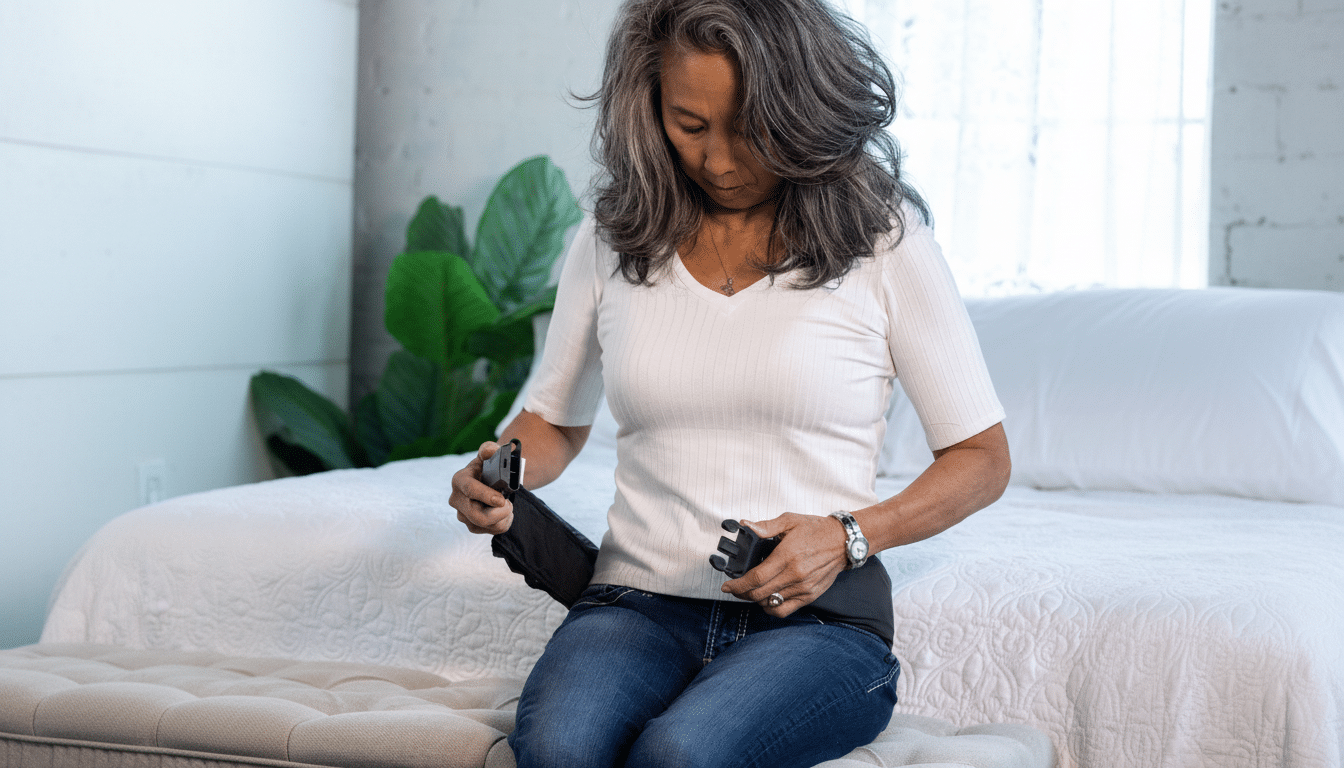
Upon ground contact, the bag automatically vents, thereby diminishing rebound forces that may result in secondary injury. The unit, the company says, charges like a phone and can last up to four days on a single charge, an important consideration for real-world adherence. The experience is intended to feel as close to wearing a normal belt as it can so users won’t take it off during the high-risk moments that count — transfers, bathroom trips, nighttime wandering.
Why Hip Fractures Matter for Older Adults and Caregivers
Falls are the leading cause of injury-related death for older adults, and hip fractures are one of the most devastating results. According to the Centers for Disease Control and Prevention, more than 300,000 older Americans are hospitalized for hip fractures annually, with falls accounting for about 95 percent of those injuries. About three-quarters of hip fractures occur in women, again due to the increased prevalence of osteoporosis.
The implications are much more than just the acute injury. Some studies referred to by the National Institute on Aging have demonstrated that, in the elderly (how any particular study defines elderly varies), those who sustained a broken hip died within a year, with reported 1-year mortality rates between 20% and 30%; many survivors are unable to ever regain their independence. The economic cost is staggering, too: Medical costs for older adults who suffer a fall amount to tens of billions of dollars each year in the United States, according to the CDC.
Early Testing and Claims of Accuracy From Company
Briggs Health Solutions has conducted nine testing protocols on the Smart Hip Guardian, including thousands of controlled falls filmed with assistance from youth athletes to test its detection timing and mechanical reliability, according to the company’s site. The company says it has recorded well over 21,000 falls in those trials, with clean sensor readouts and speedy deployment (in the lab). Wear trials in senior living properties have also been performed to test for comfort and false alarms in daily living.
These are encouraging signs, but independent, peer-reviewed studies in older age groups will be crucial. For any fall-detection system, two metrics are paramount: sensitivity (catching true falls) and specificity (not calling a tumble when someone is just moving about normally). In the world of inflatable hip protection, timing is everything — triggering soon enough to fully inflate, but not so soon that everyday moves set it off. Lab tests for similar designs that have been published show a dramatic decrease in impact forces to the hip, but moving from lab testing to risk reduction at a wide population level requires well-run clinical trials.

Design Elements That Bring About Adoption
One issue that consistently crops up in fall prevention is adherence: the devices work only if people wear them. Smart Hip Guardian, by embracing the familiar form factor of a belt with a front buckle, leans into muscle memory instead of asking people to develop a new habit. The airbag mechanism adds some girth at the back, and early hands-on impressions note a sense of warmth pulsing around your lumbar area. That could make it a feature rather than a bug for some older adults who run cold and have back discomfort.
Equally important in ranking is the deflation profile. The airbags by a person’s hips, for example, should be able to absorb an initial impact without bouncing back and tossing the person off balance. Automatic venting solves that problem, and the company’s focus on controlled deflation follows best practices observed in automotive airbags and industrial safety systems designed to protect against falls.
Price, Availability, and the Wider Market Context
Briggs intends to sell the Smart Hip Guardian in a 2-pack retailing for $799.90, and hopes that it will ship by 2026. At that price point, it matches a small but growing collection of fall-protection airbag belts already available in the U.S. — they currently retail for around $799 — as the category moves from high-tech research prototypes to consumer-ready safety gear.
Beyond cost, there are so far two other factors that will probably dictate uptake: clinical validation and reimbursement. If the company goes on to get the right regulatory clearances and can show a decrease in fracture rates or that it attenuates impact when people fall — on some measures of severity, older adults suffer fractures in falls at twice the rate younger peers do — insurance companies and Medicare Advantage plans might come calling. Operators of long-term care facilities and home health providers, which are sincere in their efforts to prevent costly fall-related injuries, could also become early adopters.
What to Watch Next as Hip Airbag Belts Evolve
Look for more detailed information on how well the algorithms work — false-alarm rates during typical activities such as sitting, standing, or turning quickly. Integration with carer alert systems would be useful — if I fall, and it alerts my family or nurse to an incident automatically, rather than requiring me to press a button, it will improve response times without increasing the complexity for the wearer.
The pitch is simple and inarguable: a discreet wearable that can turn a catastrophic fall into one someone can easily survive. Hip fractures lead to high mortality, loss of mobility, and expense, so any decrease in such injuries would be important. If the Smart Hip Guardian delivers on its early promises in the real world, a simple belt could be the most important safety device for aging.