


A lush, green lawn doesn’t always indicate healthy turf beneath the surface. Many homeowners spend time watering, fertilizing, and mowing regularly, only to find that their grass still looks thin, patchy, or stressed. In many cases, the real issue lies just below the blades in a dense layer of thatch that’s preventing water, air, and nutrients from reaching the soil.
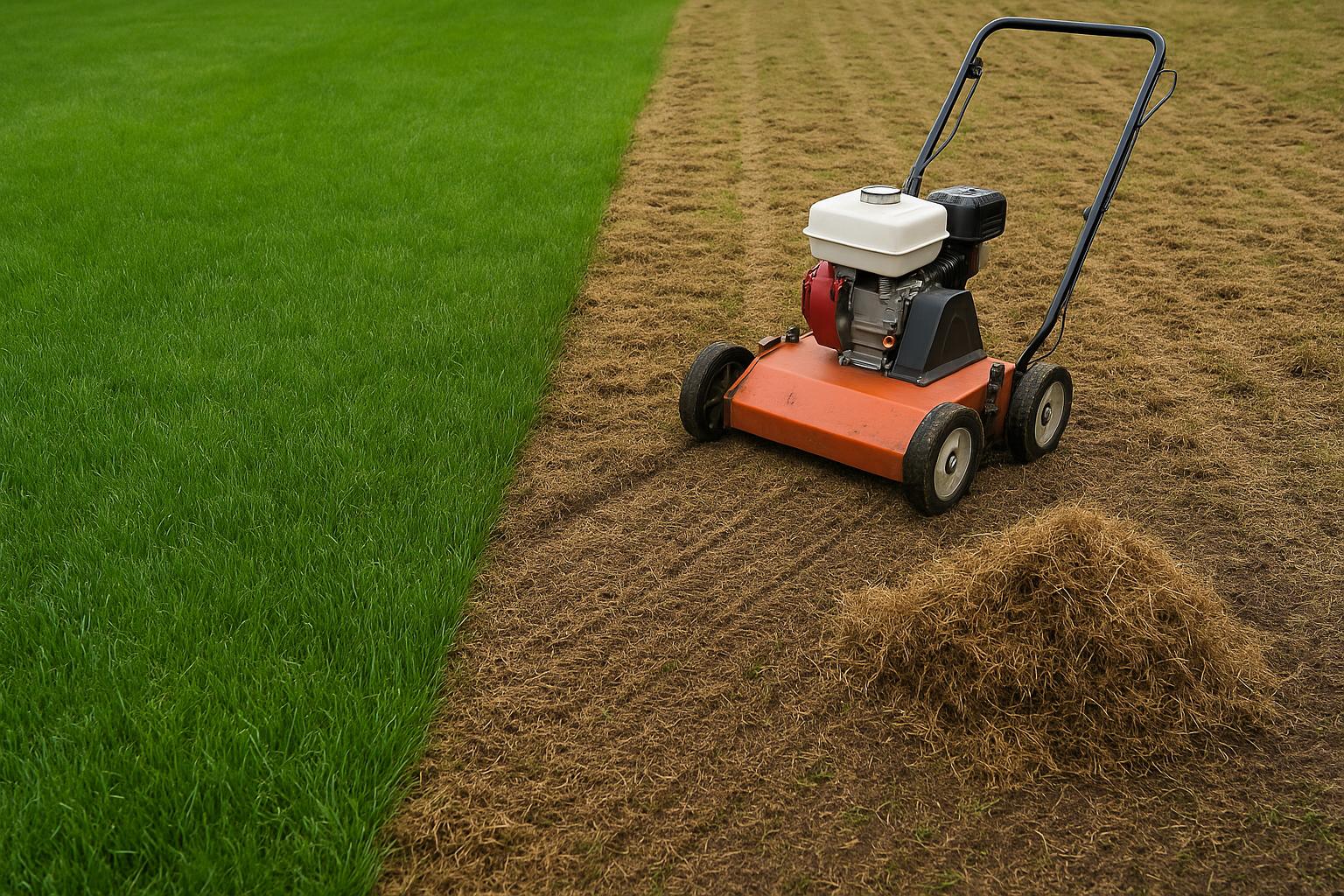
Recognizing the early warning signs can save your lawn from long-term decline. If you’re exploring equipment designed to remove excessive thatch, a quality lawn dethatcher can make the process significantly more effective than relying on manual raking alone. The goal isn’t to remove every bit of organic material but to restore the right balance that encourages stronger root development and healthier grass.
- What Is Thatch and Why Does It Affect Lawn Health?
- The Most Common Signs Your Lawn Needs Dethatching
- Understanding What Causes Excessive Thatch Buildup
- When Is the Best Time to Dethatch Your Lawn?
- How a Lawn Dethatcher Restores Healthy Turf Growth
- Dethatching vs. Aeration: Understanding the Difference
- A Step-by-Step Plan for Restoring Lawn Health After Dethatching
- Common Lawn Care Mistakes That Lead to Recurring Thatch Problems
- Expert Tips for Maintaining a Healthy Lawn Year After Year
- Frequently Asked Questions
- How do I know if my lawn has too much thatch?
- Can dethatching damage healthy grass?
- How often should a lawn be dethatched?
- Should I aerate before or after dethatching?
- What should I do immediately after dethatching?
- Final Thoughts: Healthy Lawns Start Below the Surface
After working with residential lawns and landscape maintenance programs for more than a decade, I’ve found that many turf problems blamed on drought or poor fertilizer are actually symptoms of unmanaged thatch buildup.
What Is Thatch and Why Does It Affect Lawn Health?
Thatch is a layer of partially decomposed grass stems, roots, and organic debris that accumulates between the green grass blades and the soil surface. A thin layer—typically less than half an inch is beneficial because it helps regulate soil temperature and retain moisture.
Problems begin when thatch becomes too thick.
An excessive layer acts like a barrier, limiting the movement of water, oxygen, fertilizer, and beneficial microorganisms into the root zone. Instead of growing deeper into the soil, grass roots often remain shallow, making the lawn more vulnerable to heat, drought, and disease.
According to guidance from the United States Department of Agriculture (USDA), maintaining healthy soil conditions is one of the most important factors in sustaining vigorous turfgrass growth.
The Most Common Signs Your Lawn Needs Dethatching
Many homeowners don’t notice excessive thatch until visible damage appears.
Watch for these warning signs:
- Grass feels spongy or bouncy when you walk across it.
- Water pools on the surface instead of soaking into the soil.
- Fertilizer applications produce little improvement.
- Brown or thin patches continue spreading.
- Grass struggles to recover after mowing.
- Moss begins developing in shaded or damp areas.
One simple test is to remove a small plug of turf using a garden spade. If the brown layer between the grass and soil exceeds about half an inch, dethatching is usually worth considering.
Understanding What Causes Excessive Thatch Buildup
Contrary to popular belief, grass clippings aren’t the primary source of thatch. Most modern mulching mowers leave clippings that decompose quickly and return nutrients to the soil.
The biggest contributors include:
- Overwatering
- Excessive nitrogen fertilization
- Frequent shallow irrigation
- Poor soil microbial activity
- Aggressive grass varieties such as Kentucky bluegrass
- Compacted soil that slows decomposition
Addressing these underlying causes helps prevent the problem from returning after dethatching.
When Is the Best Time to Dethatch Your Lawn?
Timing makes a significant difference in how quickly your lawn recovers.
For cool-season grasses, early fall or early spring provides the ideal growing conditions because temperatures are moderate and root growth is active.
Warm-season grasses generally respond best to late spring or early summer, once they’ve fully emerged from dormancy.
Avoid dethatching during periods of extreme heat or drought, as stressed grass requires more time to recover.
The National Association of Landscape Professionals recommends performing major lawn renovation tasks during active growth periods to encourage faster recovery and stronger root establishment.
How a Lawn Dethatcher Restores Healthy Turf Growth
Removing the Barrier That Restricts Water and Nutrients
A dethatcher uses rotating tines or spring-loaded blades to lift and remove excessive organic material from the lawn surface.
By opening the turf canopy, dethatching improves:
- Water infiltration
- Air circulation
- Nutrient absorption
- Root expansion
- Seed-to-soil contact during overseeding
Many homeowners notice healthier color and improved growth within several weeks when dethatching is combined with proper watering and fertilization.
Dethatching vs. Aeration: Understanding the Difference
These two lawn care practices are often confused, but they solve different problems.
| Dethatching | Aeration |
| Removes excessive organic buildup | Relieves compacted soil |
| Improves nutrient penetration | Increases oxygen movement into soil |
| Best for thick thatch layers | Best for heavy foot traffic |
| Focuses on surface conditions | Focuses on soil structure |
Many mature lawns benefit from both practices, especially when thick thatch and compacted soil occur together.
A Step-by-Step Plan for Restoring Lawn Health After Dethatching
Removing thatch is only the first step.
For the best long-term results:
- Collect and dispose of loosened debris.
- Water the lawn lightly to reduce stress.
- Overseed thin or bare areas if needed.
- Apply a balanced fertilizer appropriate for your grass type.
- Maintain consistent—but not excessive—watering.
- Resume mowing only after new growth becomes established.
Combining these steps encourages quicker recovery and stronger turf density.
Common Lawn Care Mistakes That Lead to Recurring Thatch Problems
Even after dethatching, poor maintenance habits can recreate the same conditions within a few seasons.
Avoid these common mistakes:
- Watering lightly every day instead of deeply and less frequently.
- Applying excessive nitrogen fertilizer throughout the growing season.
- Mowing too short, which weakens root development.
- Ignoring compacted soil.
- Dethatching every year regardless of actual need.
Healthy lawns typically require dethatching only when thatch exceeds recommended levels—not as an annual maintenance routine.
Expert Tips for Maintaining a Healthy Lawn Year After Year
Preventing excessive thatch is easier than removing it repeatedly.
Consider these proven practices:
- Mow at the recommended height for your grass species.
- Water deeply to encourage deeper roots.
- Leave finely mulched grass clippings on the lawn.
- Test soil every few years to identify nutrient imbalances.
- Aerate compacted areas when necessary.
- Monitor thatch thickness annually instead of guessing.
Small adjustments to routine maintenance often eliminate the need for frequent corrective treatments.
Frequently Asked Questions
How do I know if my lawn has too much thatch?
Remove a small section of turf and measure the brown layer between the grass and soil. If it exceeds about half an inch, dethatching is generally recommended.
Can dethatching damage healthy grass?
When performed at the correct time of year and only when needed, dethatching promotes healthier growth rather than harming the lawn. Aggressive dethatching during heat or drought, however, can increase stress.
How often should a lawn be dethatched?
Most lawns require dethatching every few years rather than annually. The frequency depends on grass type, maintenance practices, and the rate of organic matter accumulation.
Should I aerate before or after dethatching?
If both services are needed, dethatching is usually performed first to remove the surface barrier, followed by aeration to relieve soil compaction.
What should I do immediately after dethatching?
Water lightly, remove loose debris, overseed thin areas if necessary, and apply fertilizer to encourage healthy recovery.
Final Thoughts: Healthy Lawns Start Below the Surface
A thriving lawn depends on far more than regular mowing and watering. Excessive thatch quietly limits root growth, blocks essential nutrients, and creates conditions that make grass more susceptible to drought and disease.
By recognizing the warning signs early and addressing the underlying causes not just the visible symptoms you can restore healthier turf that remains greener, denser, and more resilient throughout the growing season. Dethatching, when performed at the right time and combined with sound lawn care practices, becomes an investment in the long-term health of your landscape rather than simply another seasonal chore.