


The Sharge Retractable 3-in-1 Power Bank is the rare charger that makes you smile every time you pick it up, even if it doesn’t always make the most sense to carry. It’s a wall charger, a 10,000mAh power bank, and a retractable cable in one compact block—ingenious on paper, sometimes awkward in practice. If you value clever design and grab-and-go convenience, it’s hard to ignore; if you want pure utility per gram or dollar, it’s a tougher sell.
What This 3-in-1 Actually Does in Daily Use
Sharge’s spin here is simple: keep your backup battery topped off because it lives as your everyday wall charger. Built around a 30W GaN charging module, it pushes power over USB-C either through its integrated retractable cable or a dedicated USB-C port. The dot-matrix readout shows precise remaining capacity, a welcome change from vague four-LED bars.
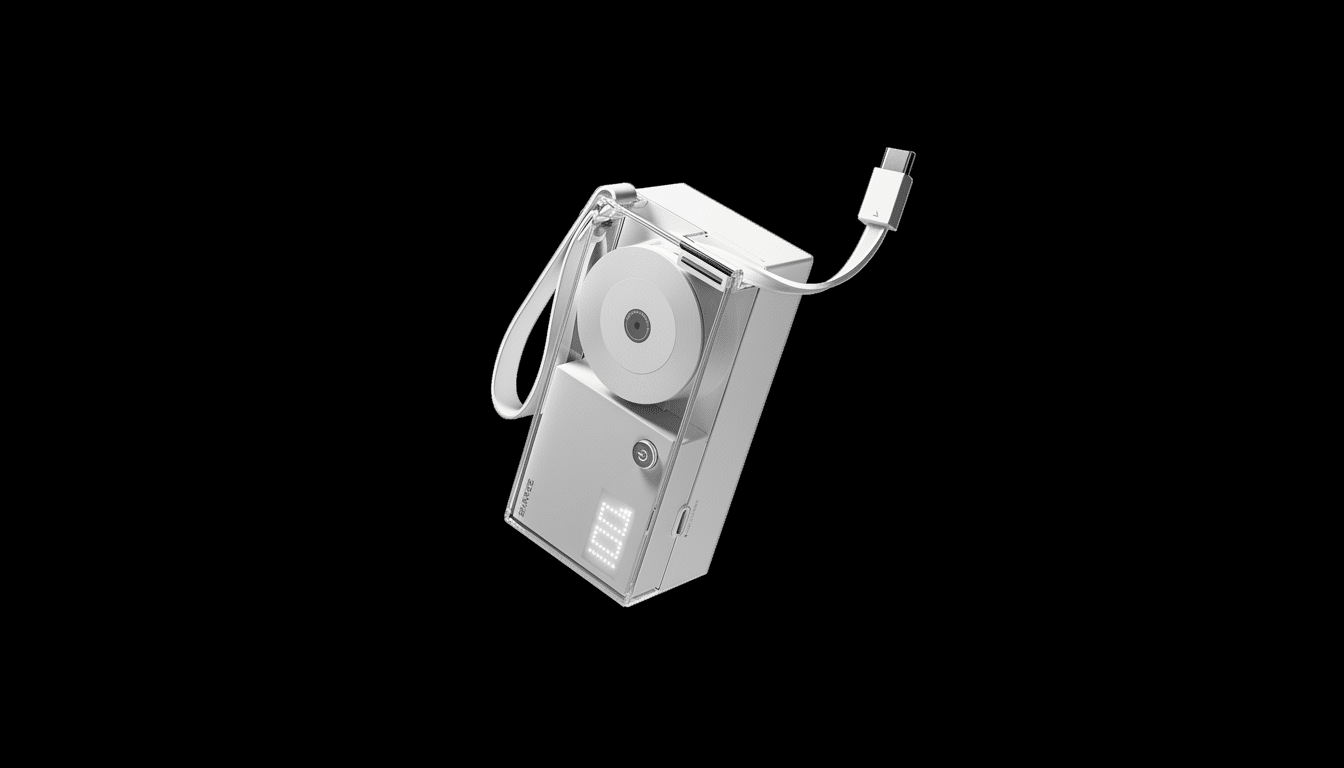
The integrated cable reels out to roughly 68.5cm, long enough for a nightstand or café table without tangles. The chassis is pocketable at 110 x 52 x 40mm and about 300g—denser than most phones but still easy to toss in a bag. For travelers, the 10,000mAh pack equates to roughly 37Wh, comfortably under carry-on limits per TSA guidance capping loose lithium cells at 100Wh.
Performance and Charging Behavior in Real Use
Despite the playful look, the electronics are legit. The unit supports USB Power Delivery 3.1 and PPS, letting it hit the full 30W on most modern phones and many handhelds. In practice, that means fast top-ups for Pixels and Galaxy devices, and enough grunt to maintain a Steam Deck session rather than watching the battery nosedive.
Capacity is right on target for its class. Expect around one and a half charges for a large flagship like an S23 Ultra, or two full refuels for smaller devices. Recharging the bank itself is where things feel less sprightly: we measured approximately 20W inbound, with the pack climbing from 0-25% in about 30 minutes. If you use it as intended—parked in a wall outlet—this isn’t a deal-breaker because it quietly tops itself between uses.
Design Flair Meets Durability in Real Life
The aesthetic is undeniably cool. A clear window exposes the cable reel and internal geometry, lending the kind of gadget appeal usually reserved for transparent game consoles. It’s the charger people at the office ask about.
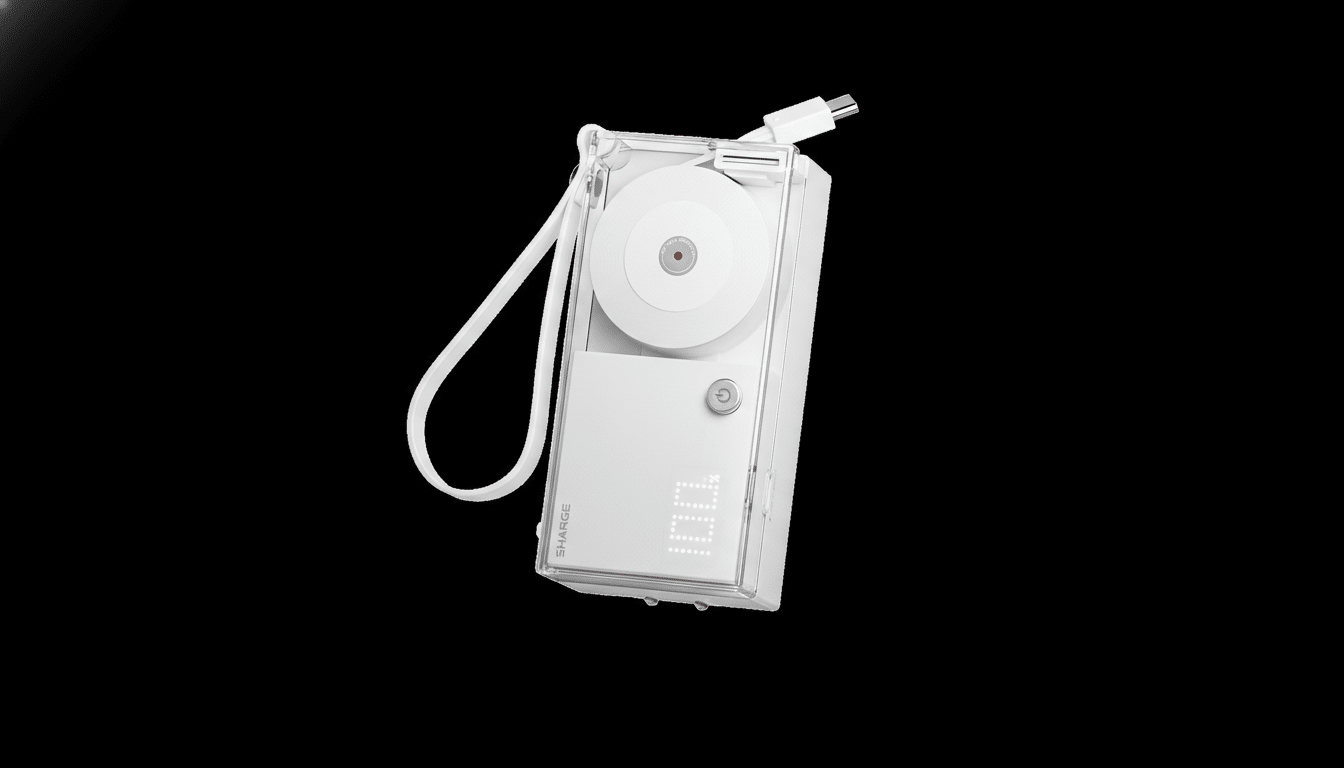
That same showpiece look is also the Achilles’ heel. Clear and white plastics tend to reveal every scuff, and this one picks up swirl marks and discoloration faster than you’d hope. Dust sneaking into the clear section and a fixed soft-plastic strap that discolors quickly don’t help. None of this affects function, but it undercuts the “keep it pristine on the desk” vibe—a darker colorway would mask wear far better.
Compatibility Caveats And Standards Context
One odd miss: US-only wall pins limit the seamless wall-charger experience outside the States. Sharge sells it in multiple markets, but without regional plug variants or a bundled adapter, international users will treat it like a conventional power bank more often than not, which defeats half the concept.
On standards, the fundamentals are strong. According to the USB Implementers Forum, PD 3.1 expands the ceiling to 240W; this device sensibly targets 30W with PPS for stable phone charging and efficient thermal performance. GaN switches are a smart choice too—Navitas Semiconductor cites size and efficiency gains that can make GaN chargers up to 40% smaller versus legacy silicon. Just note that 30W won’t meaningfully charge most ultrabooks under load, so this is a phone-first, handheld-friendly accessory.
Price and Who Should Buy This 3-in-1 Charger
At an MSRP of $49.90, the value proposition hinges on how you use it. If you’re in the US and want a stylish 30W wall charger that doubles as an always-ready backup battery—no spare cable required—it’s a clever, satisfying pick. It’s also frequently discounted by about 20%, which sweetens the deal.
If your priority is maximum capacity or faster output for the same money, you’ll find 20,000mAh or 45-65W options elsewhere. And if you live outside the US, the plug limitation makes this more of a novelty than a daily driver. The bottom line: slightly impractical, extremely cool—and when used as designed, a delightfully low-friction way to keep everything charged.