


Every shadow AI program I’ve seen starts the same way. Someone runs a discovery scan, the number comes back higher than anyone guessed, and the next six weeks go into arguing about which tool to buy.
The buying decision is easier once you notice that shadow AI tools do two separate jobs, and the market sells them as though they do one.
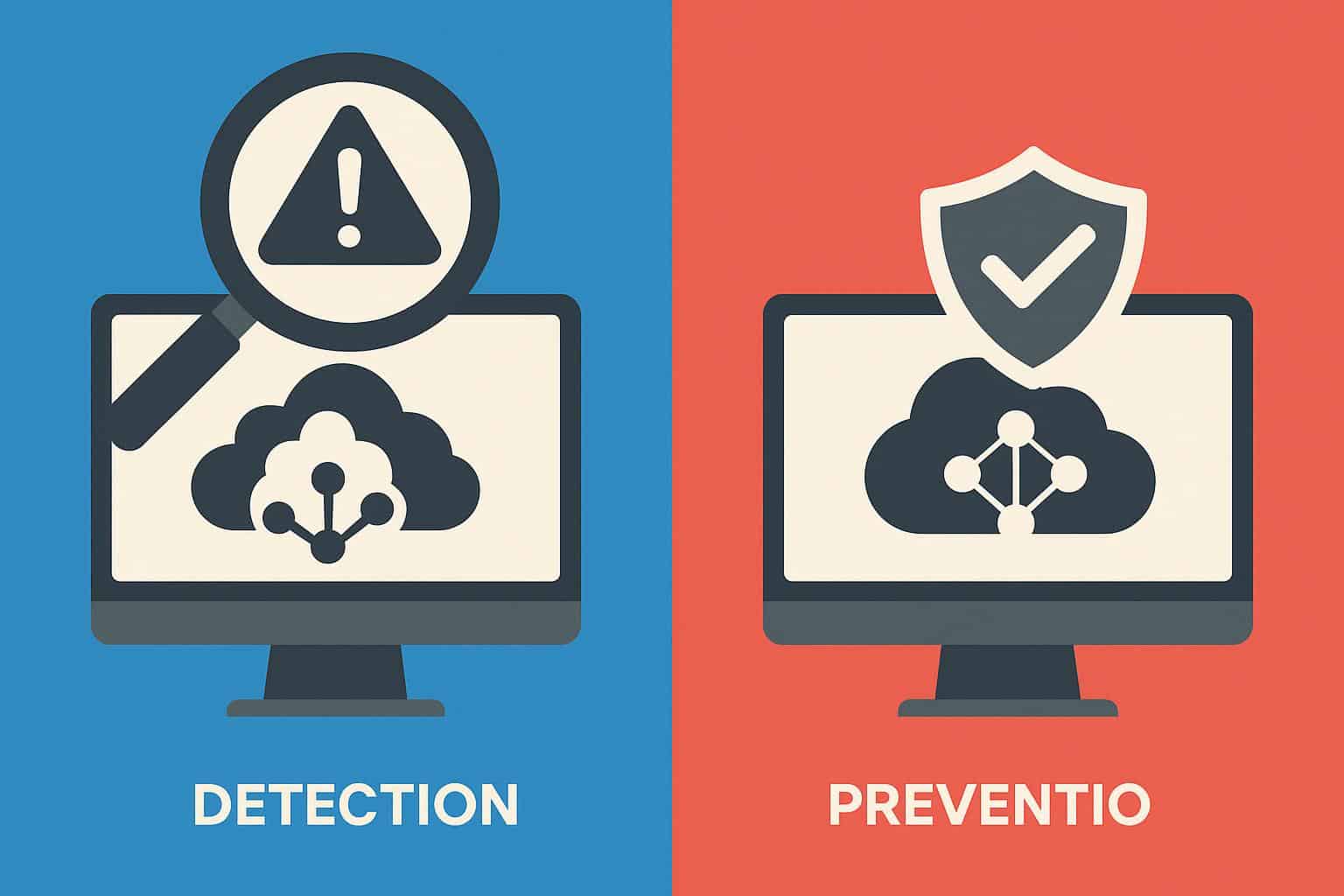
Detection tools find AI use that’s already happening. Prevention tools remove the reason it started, by giving people a sanctioned path that’s faster than the workaround.
Most enterprises need both, and they usually buy only the first. For companies where the shadow AI problem is employees building their own tools, Superblocks is the strongest prevention-side option in 2026, while Nightfall and Cyberhaven lead on the detection side.
What does a shadow AI tool need to see?
Three visibility questions separate the serious platforms from the dashboards.
Which AI services are people using? This is the easy one, and every tool in this category answers it. SaaS discovery and network telemetry both get you a list.
What data went into them? Harder, and much more useful. A list of tools tells you nothing about whether someone pasted a customer table into a chat window.
What did people build with them? Almost nothing in the detection category answers this, and it’s the question that produces audit findings.
That third gap is the reason prevention exists as a separate approach.
Detection: finding what’s already running
Nightfall is the strongest option when your concern is data leaving with the prompt. It does AI-driven data classification and lineage, covering data in motion and at rest, so the finding you get is specific about what was exposed.
Where it’s limited: classification quality depends on how well your sensitive data is defined. Vague policies produce vague alerts, and teams tune those out fast.
Cyberhaven takes a wider view, tracking the full data journey across apps and endpoints. The lineage view earns its keep during an incident, because you can follow a file directly and skip the reconstruction job across three log sources.
The cost is deployment weight. Endpoint coverage means endpoint agents, and that turns a security purchase into an IT rollout.
Microsoft Purview is the pragmatic answer for Microsoft-heavy organizations, with native coverage across Microsoft 365 and Azure. If your data already lives there, the integration work mostly disappears.
Its blind spot follows from the same fact. Coverage thins out as soon as your teams work in tools outside the Microsoft estate.
Zylo approaches shadow AI from the procurement side, with centralized SaaS visibility and spend optimization. Expense data is an underrated discovery channel, because unsanctioned tools tend to show up on someone’s card before they show up on the network.
It won’t tell you what data moved. Treat it as an inventory input.
DoControl focuses on what happens after detection, with no-code automated remediation across Google Drive, Slack, Teams, and Salesforce. Automatic revocation of a bad share beats a ticket that sits for a week.
The limitation is scope. Remediation works on the platforms it integrates with, and shadow AI has a habit of appearing somewhere else.
Redaction: the middle path
SafeGPT sits between the two strategies, with Office add-ins that apply redaction and privacy controls at the point of use across Word, Outlook, and Chrome.
The logic is sound. People will use AI, so clean the input on the way out the door.
Where it falls short: add-ins govern the surfaces they’re installed on. A browser tab outside that set is outside the policy.
Prevention: removing the reason people work around IT
Detection assumes shadow AI is a discipline problem. In my experience it’s a latency problem, because the sanctioned path takes eleven weeks and the unsanctioned one takes an afternoon.
Superblocks attacks the problem from that direction, by making the governed path the fast one. Teams build internal apps three ways (AI generation, drag-and-drop, or direct code), and every app inherits organizational security policy automatically.
The governance is centrally managed: RBAC, SSO, granular least-privilege permissions, and audit logs covering every user action and execution.
Its AI agent, Clark, enforces security policies, coding standards, and design standards as apps get generated, so the guardrails apply during the build.
Data connectors are managed centrally, and the agent can be deployed on-premises inside your VPC, which matters when the objection to sanctioned tooling is where the data goes.
Virgin Voyages runs 15+ production apps across seven departments with zero dedicated frontend engineers, which is the volume that makes an unsanctioned alternative unattractive.
Pricing starts at $125 per AI Builder per month on the Teams plan as of July 2026, dropping to $100 billed annually.
Where prevention won’t help: it governs one platform. Somebody pasting a spreadsheet into a consumer chatbot is still a detection problem, which is why the two categories coexist.
How the two approaches divide the work
Detection answers the question your auditor asks. Prevention changes the number your auditor finds.
A reasonable sequencing: run discovery first, because you need the baseline and the political capital that a surprising number provides.
Then look at what the scan surfaced. If most of it is people using chat assistants on documents, your spend belongs in detection and redaction.
If a meaningful share is people building working tools, detection alone will keep producing the same report every quarter with a larger number on it.
Frequently asked questions
Which shadow AI tools work without installing endpoint agents?
SaaS-layer tools like Zylo and Microsoft Purview discover shadow AI without endpoint agents, using spend data and native platform integrations. Full data-journey tracking generally does require agents on the endpoint.
Can you reduce shadow AI without blocking employees?
Yes, and blocking tends to perform worse, because employees adopting AI on their own are responding to a real speed gap in sanctioned tooling. Prevention platforms like Superblocks close that gap by making the governed route the fast one, so the workaround loses its appeal.
Who should own shadow AI detection, security or IT?
Security should own detection and policy, while IT or platform engineering should own the sanctioned alternative. Programs that assign both to security tend to produce good reports and no change in behavior.
How quickly can a company get a first shadow AI inventory?
Procurement and SaaS-spend analysis can produce a usable first inventory in days, well before any agent-based deployment finishes. The list will be incomplete, and it’s almost always enough to justify the next phase of work.
What the next two years look like
The detection market is heading toward commoditization. Discovering which AI services your staff use is becoming a checkbox inside platforms you already own, and standalone vendors will feel that.
The part that stays hard is the built artifact. An application generated by a business user has no vendor, no contract, and no procurement record, so none of the discovery channels that work for SaaS apply to it.
My expectation is that shadow AI budgets shift toward prevention over the next two years, for an unremarkable reason: the detection number stops going down, and eventually somebody asks why.