


The San Francisco Police Department is investigating a collision involving a Zoox autonomous vehicle and a parked 1977 Cadillac Coupe de Ville near 15th and Mission, an incident that adds fresh scrutiny to the Amazon-owned company’s early public service in the city. No life-threatening injuries were reported, and the company says it is cooperating with authorities.
What We Know So Far About the Zoox Robotaxi Collision
Police responded after the Cadillac’s driver-side door opened into the path of a Zoox robotaxi moving along 15th Street, according to statements from the department and the company. Zoox said its vehicle detected the opening door and attempted to maneuver, but the sideswipe could not be avoided in time.
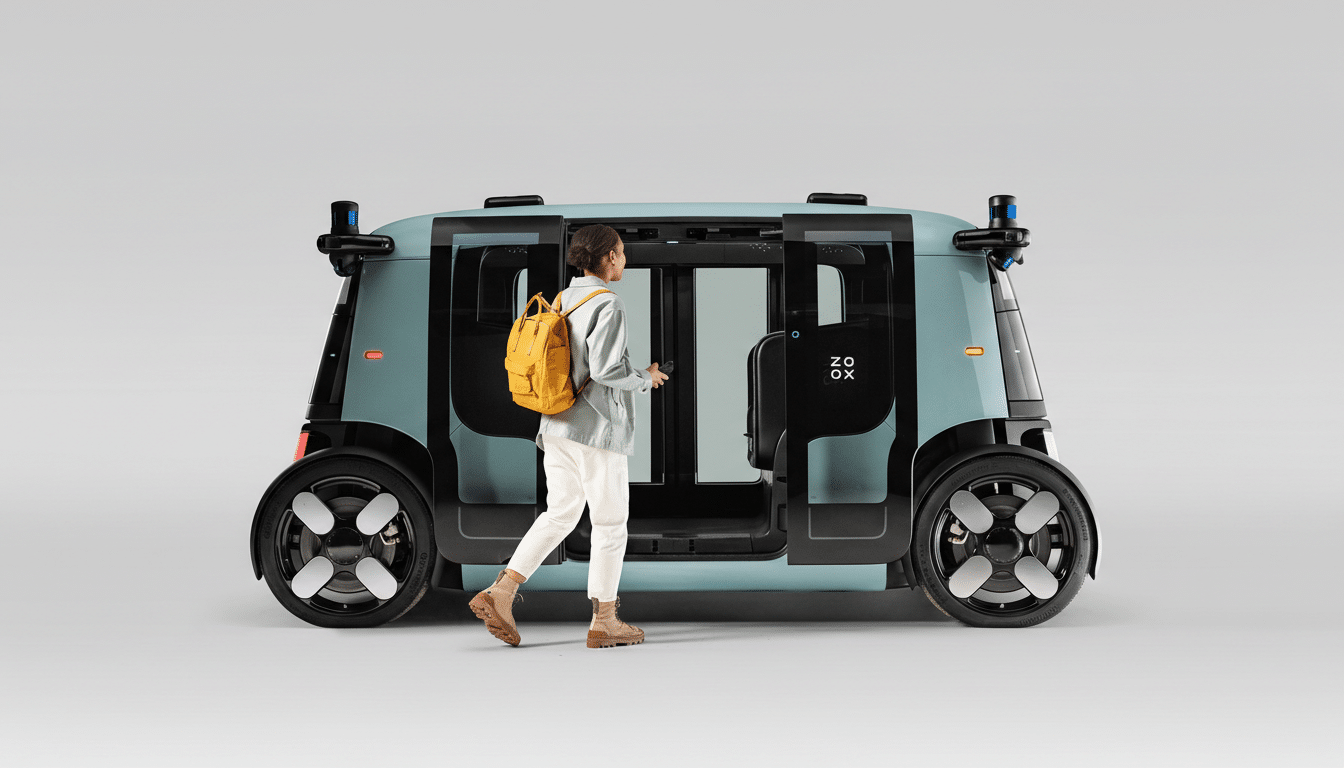
Zoox stated it offered medical assistance to the person who opened the door; he initially declined care, according to the company. Local reporting has indicated he later sought attention after the car was towed. SFPD has not announced any citations while it gathers witness accounts, video, and onboard data from the vehicle’s sensor suite.
How Door-Opening Crashes Challenge AVs in City Traffic
Sudden “dooring” is a classic urban hazard. California Vehicle Code Section 22517 prohibits opening a door unless it is reasonably safe and does not interfere with traffic. For autonomous vehicles, the scenario is particularly tricky: a door can swing into the lane within fractions of a second, forcing a split-second choice between braking, edging away, or stopping short behind trailing traffic.
Zoox’s custom-built robotaxi uses overlapping lidar, radar, and cameras designed to identify lateral intrusions like opening doors. But even high-fidelity perception and predictive models have limits when objects emerge abruptly into the vehicle’s path at close range. AV safety experts note that curb-adjacent driving is a balancing act; hugging the lane center offers more margin for doorings, yet too wide a berth risks encroaching on oncoming lanes or crosswalks.
In human driving, dooring crashes are common enough that many cities paint buffer zones next to parking or bike lanes. Automated systems face the same physics but must also adhere strictly to conservative rule sets—yielding to vulnerable road users, maintaining lane discipline, and avoiding unpredictable swerves—constraints that can make some contact unavoidable when a door appears late in the vehicle’s field of safe travel.
Zoox Rollout Faces Added Scrutiny Amid San Francisco Testing
Zoox has been gradually opening free rides to the public in San Francisco under its Zoox Explorer program, mirroring a similar effort in Las Vegas. The city’s complex streetscape—dense traffic, frequent double-parking, and heavy pedestrian activity—makes it a proving ground for autonomous tech, but also exposes shortcomings quickly.
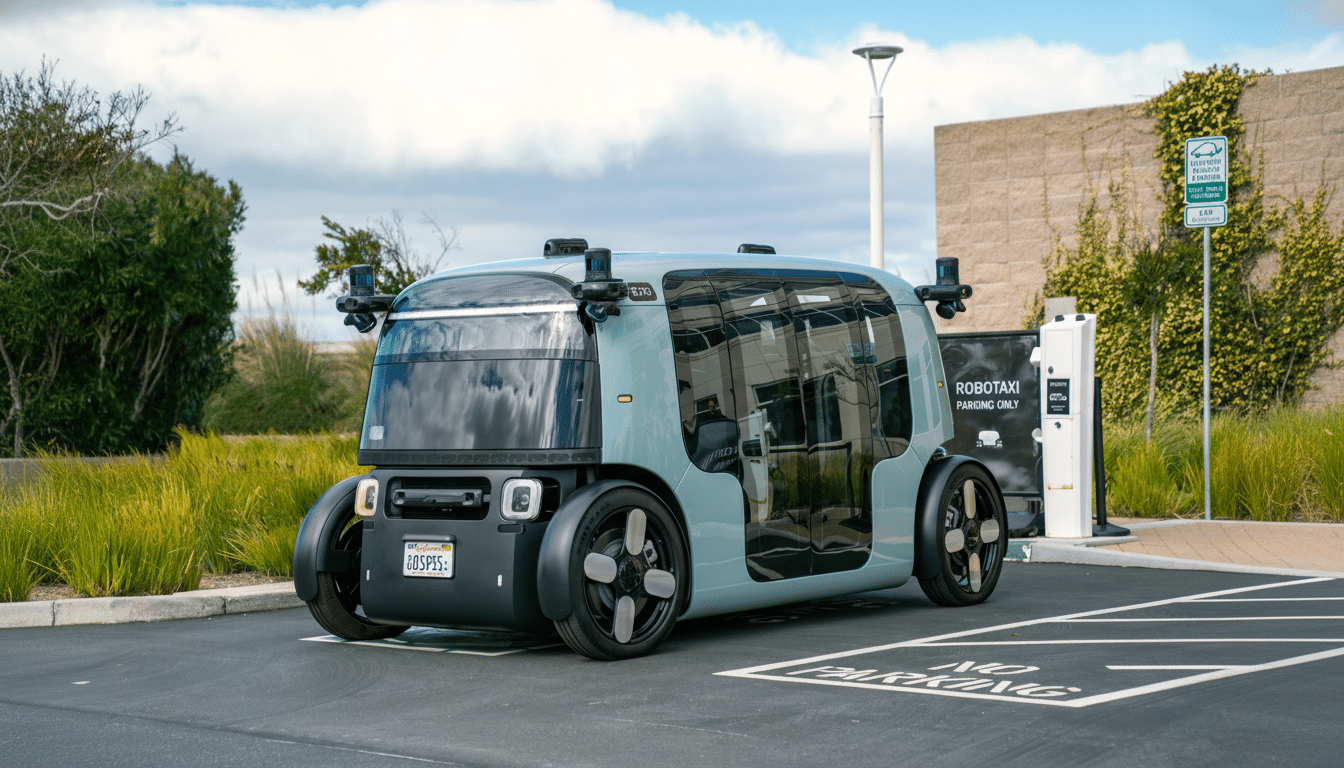
In recent months, the company issued a software recall to address behavior that could lead vehicles to cross center lines or block crosswalks, underscoring how deployment-stage fleets iterate fast. Zoox said it has pushed multiple over-the-air updates to refine path planning and compliance at intersections as it scales its operations.
Community perception can swing on isolated incidents. San Francisco has seen headline-making moments across the autonomous sector, from vehicles stopping unexpectedly in traffic to high-profile enforcement actions. While a single collision does not define system safety, each one becomes a test of how quickly operators diagnose, fix, and transparently communicate about edge cases.
Regulatory Context and Next Steps After the Collision
SFPD’s investigation will help determine whether any traffic laws were violated, including the state’s rules on opening doors into moving traffic. Separately, collision details are typically shared with state and federal authorities: California’s DMV oversees AV permits and reporting, and the National Highway Traffic Safety Administration requires prompt notification of crashes involving automated driving systems under its Standing General Order.
Investigators will review onboard logs, perception recordings, and vehicle trajectories to assess detection speed, braking profiles, and evasive actions. For AVs, this data is as central as a human driver’s testimony. Outcomes can range from a traffic citation for unsafe door opening to recommendations for software adjustments if system behavior is found wanting.
Zoox says safety and transparency are foundational to its rollout, and the company typically shares aggregated safety learnings with regulators. Given heightened public sensitivity after other autonomous operators faced restrictions in the city, how Zoox responds—both technically and publicly—will influence confidence in its service more than any single crash statistic.
For now, the focus is squarely on the facts: a parked car door opened into a live lane, an autonomous vehicle attempted to avoid it, and contact occurred. The investigation’s findings will clarify not just fault, but how well current-generation robotaxis handle one of the most unforgiving micro-moments in city driving.