


Sennheiser has introduced what may be the first dedicated TV headphone bundle to embrace Bluetooth Auracast, a milestone that could rewrite how households listen to television. The RS 275 package pairs the new HDR 275 over-ear headphones with the BTA1 digital transmitter, unlocking broadcast-style wireless audio, lower latency, and flexible multi-listener setups without brand lock-in.
What Auracast Changes for TV Listening at Home
Auracast is the flagship feature of Bluetooth LE Audio. Instead of the typical one-to-one Bluetooth pairing, it enables a transmitter to broadcast audio to an open or password-protected “channel” that any compatible earbuds, headphones, hearing aids, or speakers can join. In a living room, that means multiple people can connect their own Auracast devices to the TV, each with individualized volume and EQ, without juggling splitters or matching headphone brands.
- What Auracast Changes for TV Listening at Home
- Open Ecosystem Beats Brand Lock-In for TV Audio
- Latency and Audio Quality Advantages with LE Audio
- Comfort And Control For Long Binge Sessions
- Accessibility and Real-World Use Cases for Auracast
- What You Get and How Much It Costs for RS 275
- Early Verdict on Sennheiser’s Auracast TV Bundle
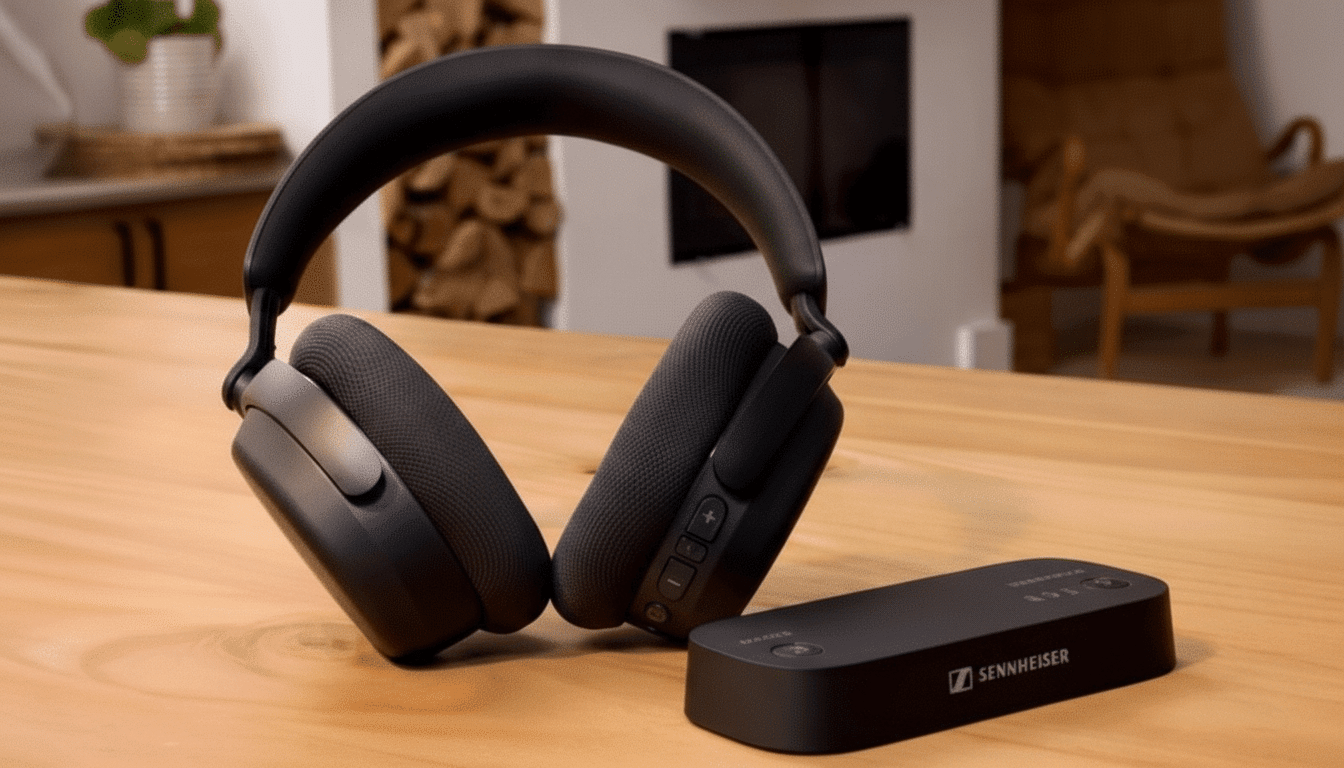
For Sennheiser’s RS 275 kit, the included BTA1 serves as the Auracast transmitter. Plug it into a TV via optical or HDMI ARC, power it over USB, and it can stream audio to the bundled HDR 275 headphones and to any other Auracast-ready listeners nearby. Because it is broadcast-capable, there is effectively no hard cap on how many devices can tune in.
Open Ecosystem Beats Brand Lock-In for TV Audio
One of the persistent frustrations with TV audio add-ons is closed ecosystems. Many soundbars, streamers, and “private listening” solutions only work with the same brand’s headphones or apps. Auracast undercuts that model. If a roommate prefers their own earbuds or a family member uses modern hearing aids, they can join the BTA1 broadcast without replacing gear.
That openness also fits the direction of the broader industry. The Bluetooth SIG has positioned Auracast as a foundation for public audio sharing in venues like gyms, airports, and classrooms. As more phones, TVs, and hearables adopt LE Audio, a TV transmitter like Sennheiser’s becomes a bridge between today’s sets and tomorrow’s interoperable listening experiences.
Latency and Audio Quality Advantages with LE Audio
Beyond the broadcast trick, the BTA1 supports the LC3 codec, which is core to LE Audio. In testing summarized by the Bluetooth SIG and research from Fraunhofer IIS, LC3 typically delivers equal or better perceived quality than SBC at lower bitrates, improving efficiency without sacrificing fidelity. It can also enable tighter end-to-end latency than the SBC pipelines common in many TVs—important because lip-sync issues become noticeable for many viewers around the 80ms mark.
No codec guarantees perfect sync on its own—TV processing, buffering, and platform support all factor in—but LE Audio plus LC3 is widely regarded as a meaningful upgrade for video. For practical use, the takeaway is simple: the RS 275 bundle aims to cut the lag that has made garden-variety Bluetooth a poor fit for TV dialogue.
Comfort And Control For Long Binge Sessions
The HDR 275 are lightweight, closed-back over-ears with breathable cushions designed for hours-long viewing. Sennheiser rates battery life at up to 50 hours on a charge, an endurance figure that outpaces most everyday wireless headphones. The set works with the Sennheiser Smart Control Plus app, letting users tailor EQ or personalize sound for speech clarity—useful for late-night streaming without waking the household.
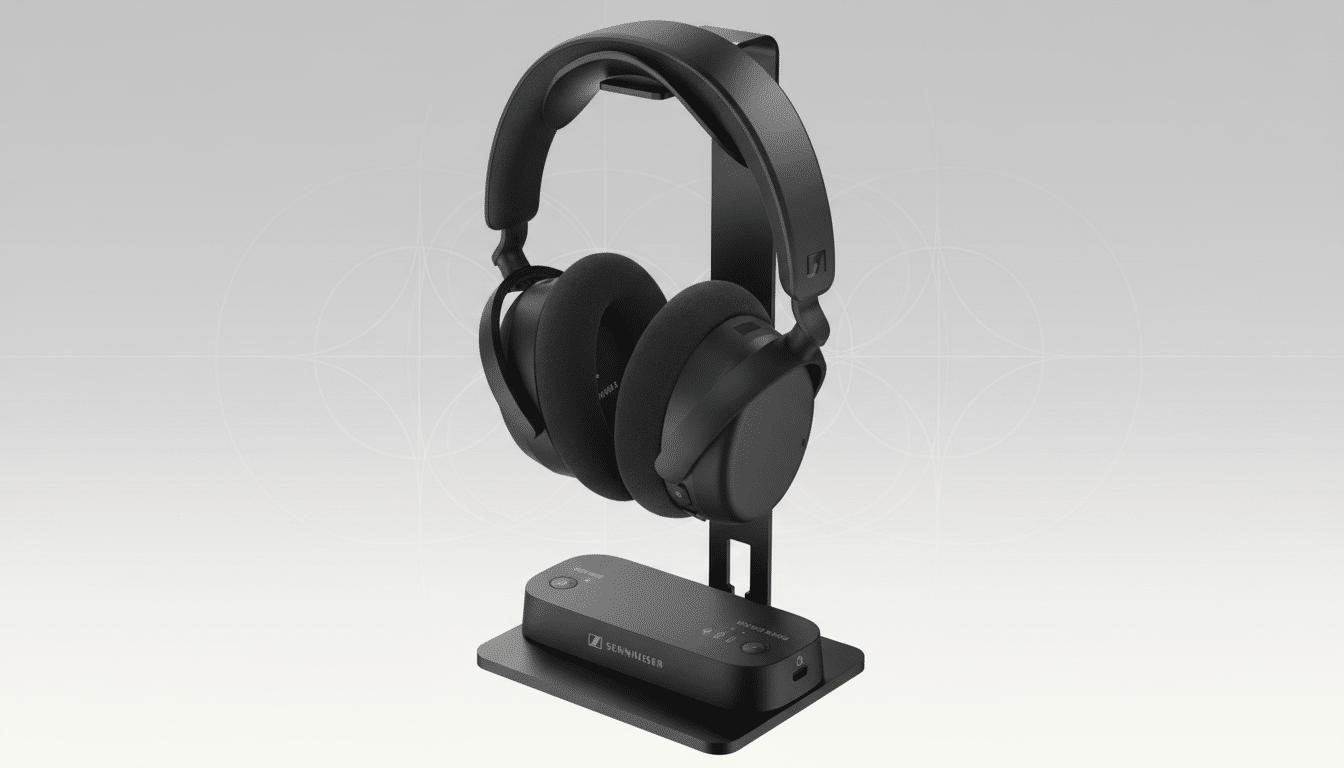
While the BTA1 exclusively uses Auracast for transmission, the HDR 275 headphones support both LE Audio and Bluetooth Classic, so they can double as everyday wireless headphones with phones, tablets, or laptops when you leave the couch.
Accessibility and Real-World Use Cases for Auracast
Auracast’s most transformative angle may be accessibility. The World Health Organization estimates more than 1.5 billion people live with some degree of hearing loss. With Auracast, compatible hearing aids can connect directly to a TV broadcast stream for clearer dialogue without cranking the room volume. In shared spaces, multiple listeners can tune in privately at comfortable levels, each adjusting volume to taste.
The same broadcast model scales to public spaces. Museums can stream exhibit audio silently, sports bars can offer multiple TV feeds without blaring speakers, and gyms can let members pick the channel on overhead displays. As Android and major TV platforms continue to roll out LE Audio and Auracast support, compatibility should widen quickly.
What You Get and How Much It Costs for RS 275
The RS 275 bundle includes:
- HDR 275 headphones
- BTA1 transmitter
- 3.5mm cable
- Optical-to-3.5mm adapter
- USB-C and USB-A power/data cables
- Stand
The BTA1 requires USB power and can also connect to laptops, consoles, or stereos via 3.5mm if optical or ARC is not available.
Pricing lands at $300 for the complete RS 275 kit, or $130 for the BTA1 transmitter on its own—appealing for anyone with Auracast-ready earbuds or hearing aids who simply needs a TV broadcast source.
Early Verdict on Sennheiser’s Auracast TV Bundle
Sennheiser’s RS 275 is not just another pair of TV headphones. By baking in Auracast and LC3, it nudges home viewing toward the open, low-latency, multi-listener future LE Audio has promised. If you have struggled with lip-sync, need private listening, or want an inclusive setup for family and guests, this is the most forward-looking TV headphone package yet—and a strong signal that Auracast is finally moving from spec sheet to living room.