


Samsung’s long-rumored Wide Fold appears to be edging closer to a US debut, with fresh IMEI database entries pointing to region-specific variants that include a dedicated model for American networks. If accurate, the move suggests Samsung is preparing a broader rollout for its wider-format foldable, not just a limited regional experiment.
IMEI Listing Points to a Multi-Market Strategy
A device identified as SM-F971 has surfaced in IMEI records with multiple regional versions spanning the US, China, Korea, Canada, and a global SKU. The numbering aligns closely with Samsung’s flagship foldables, sitting near the expected identifiers for the next Galaxy Z Fold and Flip generations, and positioning SM-F971 firmly in Fold territory rather than a Flip.
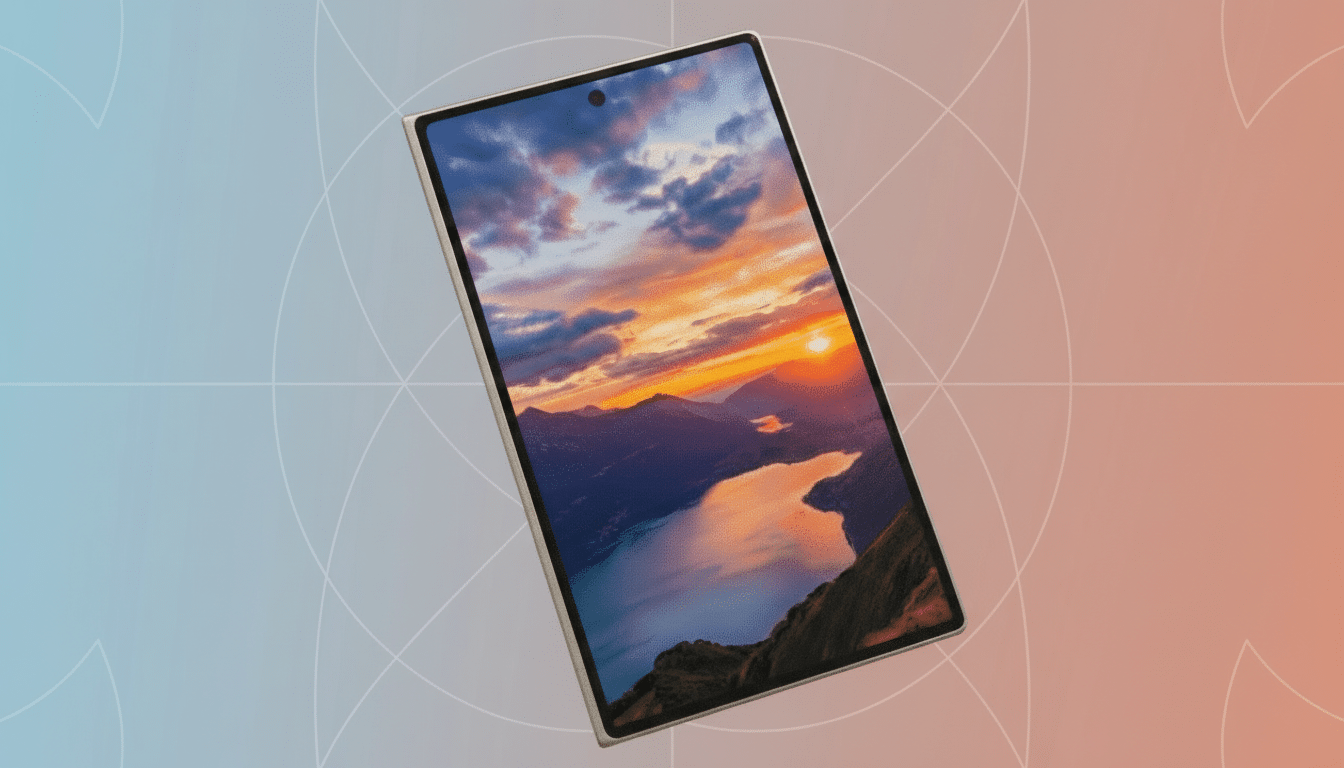
Equally intriguing is the internal codename tied to the listing: H8. Samsung’s Fold line has historically used Q-series codenames, while the Flip family follows a B-series pattern. An H-series label signals something new—likely a parallel foldable line rather than a direct successor—consistent with the “Wide Fold” moniker that’s been circulating in supply chain chatter.
The updated IMEI entries were first flagged by independent reporting in the tech community, including Smartprix, and while such databases don’t guarantee commercial launch plans, the appearance of a specific US variant typically indicates carrier certification is in motion. That’s a strong sign Samsung intends to sell the device through mainstream channels rather than as a niche import.
What a Wide Foldable Design Could Deliver for Users
“Wide” in this context refers to an inner display that favors a squarer, tablet-like workspace—think more Pixel Fold or even Surface Duo DNA—over the tall, narrow canvas of the standard Galaxy Z Fold. The appeal is obvious: a landscape-friendly layout that reduces letterboxing, improves split-screen app parity, and makes typing and editing feel more natural.
Rumors point to a 7.6-inch inner screen paired with a 5.4-inch outer display. The exact aspect ratio remains contested: some sources suggest a near-square 18:18, while others indicate 4:3. Internal materials that briefly surfaced have leaned toward 4:3, which would deliver a genuinely tablet-like feel for reading, gaming, and productivity, while making the cover screen more usable as a standalone phone.
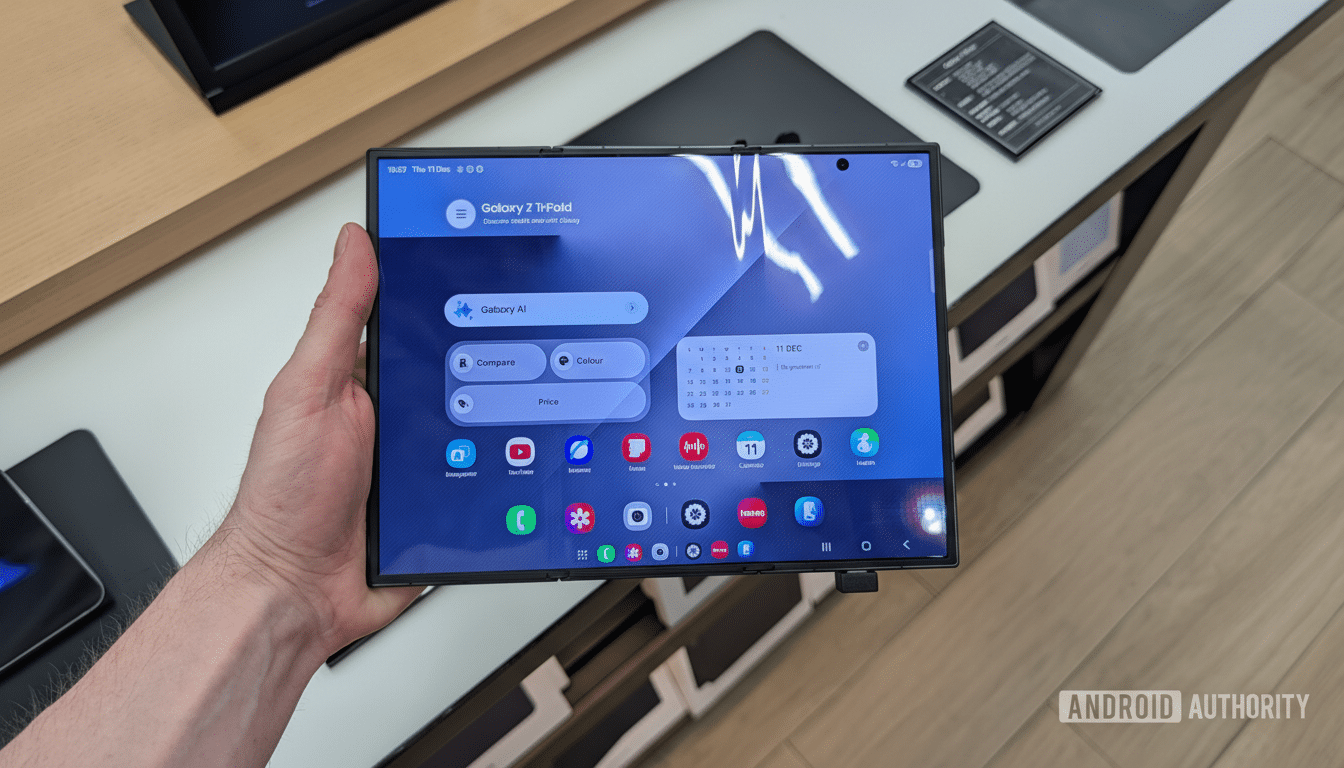
For US buyers, a more practical outer display could address one of the most common complaints about tall, narrow foldables: cramped typing and awkward app layouts when closed. If Samsung pairs the hardware with polished wide-screen optimizations in One UI—improved taskbar behavior, better windowing, and tighter inner-to-outer continuity—the experience could feel substantially different from the traditional Fold line.
Production Targets Signal Bigger Ambitions
Supply chain indications suggest Samsung is planning roughly one million units for the Wide Fold run. That is a notable figure for a specialized form factor and would far exceed the volumes typically associated with concept-adjacent devices like the Z TriFold or the China-only Fold 6 Special Edition. It reads less like a tech demo and more like a mainstream expansion of the portfolio.
Context matters. Display Supply Chain Consultants has tracked foldable shipments in the mid-teens of millions annually, underscoring that a single model targeting around the million mark would represent a meaningful slice of the category. Counterpoint Research expects the segment to keep expanding at double-digit rates as prices moderate and durability improves through better hinges, tougher ultra-thin glass, and subtler crease management.
What US Buyers Should Watch Before the Launch
A dedicated US model typically entails a full compliance runway: FCC filings, lab testing for carrier bands, and likely mmWave support for certain networks. Those steps are consistent with national retail availability. If the IMEI trail is accurate, the Wide Fold should sit alongside the next Galaxy Z Fold as a complementary option rather than a replacement, giving shoppers a choice between a phone-first tall design and a tablet-first wide design.
Key unknowns remain. Samsung has not confirmed branding, pricing, or final specifications, and the exact aspect ratio could materially shape the user experience. Still, the triangulation from model numbers, codenames, and regional variants paints a clear picture: a wider Samsung foldable is moving through the pipeline, and for the US market, that’s very likely good news.