


A recent leak from South Korea suggests Samsung will return to the foldable design with something wider, making it more of a tablet than a phone—a move that makes sense if Apple is looking to meet its first foldable device at the starting line. The so-called Wide Fold reportedly pairs a 7.6-inch inner 4:3 aspect ratio OLED with a 5.4-inch cover screen, setting up exactly the same dimensions timeline watchers expect for Apple’s first foldable iPhone. If true, Samsung isn’t just iterating on its tall book-style Fold; it’s building a second pillar that’s born for reading, work and stability.
A Broader Fold Designed For Reading And Workflows
The Wide Fold, according to ETNews, abandons the narrow portrait shape of Samsung’s current large foldable in favour of a squarer footprint that more closely resembles a notebook. The 4:3 inner canvas by its nature minimizes letterboxing when viewing video for conferences or documents, allows for a more genuinely useful on-screen keyboard, and leaves room for two apps to sit side by side without feeling cramped. The wider stance additionally brings the center of gravity toward the palms, helping to make two-handed use more comfortable and stable, according to industry sources.
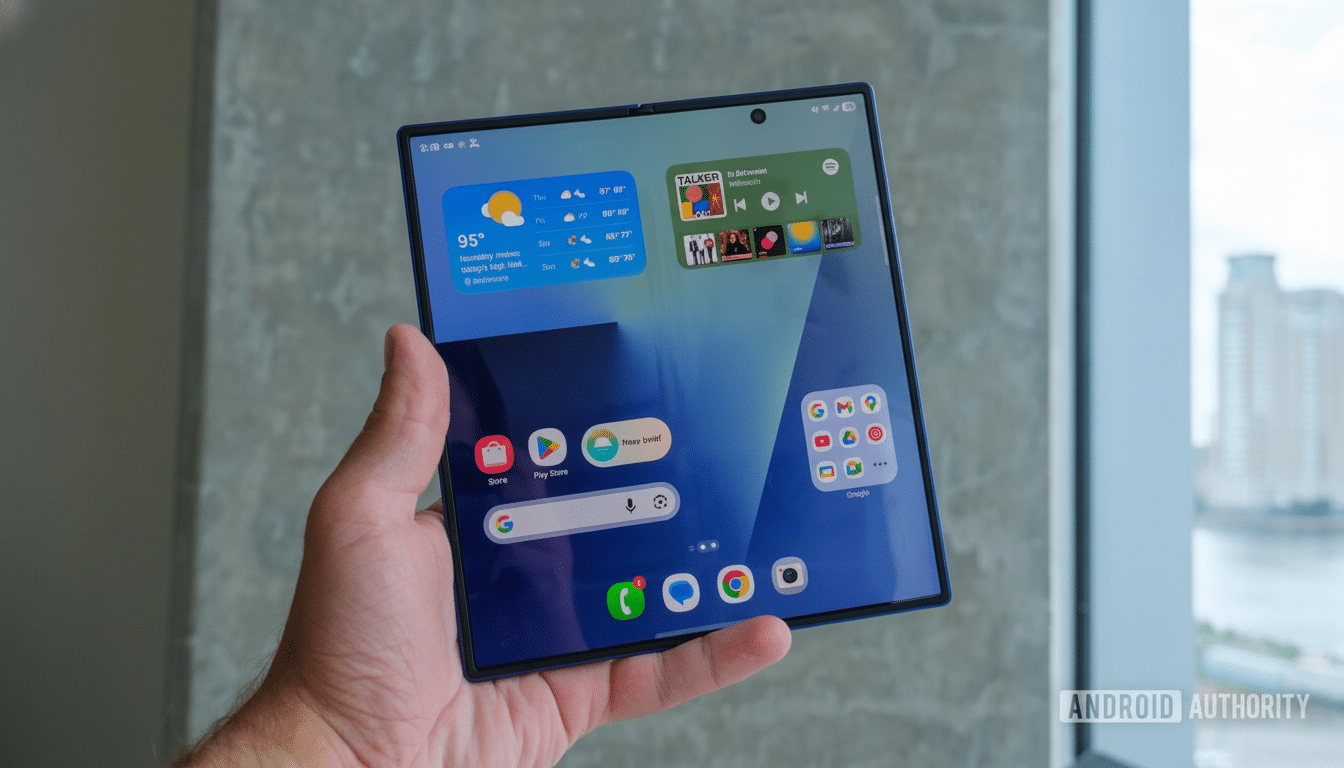
When measured against the tall outer display on today’s Galaxy Z Fold, a 5.4-inch cover screen suggests a device that would encourage quick tasks and notifications when shut, grander use cases once opened. That makes a strange sort of sense, as it lines up with how many owners use large foldables: brief checks closed, deep work open. And it’s a good answer for one of the most common complaints I hear from narrow cover displays.
Positioning Against Apple’s First Foldable
The timing and the sizing appear deliberate. Several supply chain whispers have eyed Apple’s first foldable at around 7.6 inches, also retaining the same 4:3 ratio. By planting one ahead of or alongside Apple’s own debut, in a wide-format Fold, Samsung could guide the conversation on what that “default” book-style foldable should look like. It also promotes differentiation outside the screen, moving the battle to software connection, accessories and robustness.
Apple’s strength tends to be in app optimization and ecosystem handoff, while Samsung’s counter might rely on the mature multitasking apparatus that is DeX and stylus support if the hardware will have it.
Samsung Display dominates the foldable OLED supply market—more than 70 percent in recent years, according to Display Supply Chain Consultants—so Samsung has leverage on yields and new material like far-harder-but-still-ultra-thin glass. That could be a thing as both companies aim for greater reliability in larger, squarer panels, where managing the crease and stress on the hinge are more difficult.
Expanding Samsung’s Foldable Portfolio Strategy
The Wide Fold isn’t going to replace Samsung’s tall Fold. Instead, there is talk of a three-model approach: a clamshell Flip; traditional tall Fold; and wide-screened Fold. That segmentation reflects the wider smartphone market, which is divided more neatly by price bands and use cases than a one-size-fits-all flagship.
The market environment is also conducive for the shift. IDC estimates that more than 16 million foldables shipped around the world in 2023, defined by IDC as a combination of flip-style designs capturing the most volume but book-style options garnering higher average selling prices. A large Fold in the mix for Samsung is a more rounded set for just when Apple nudges demand. Rivals like Huawei, Honor and OnePlus have all gone for wider aspect ratios—but none of them marry that breadth to Samsung’s scale and software depth.
Hardware Clues 25W Wireless And Launch Window
One spec in particular stands out: ETNews says the Wide Fold will be capable of 25W wireless charging. (That would be a big leap over the speeds Samsung’s wireless charging currently offers and an asset for a device rumored to power larger panels and multitasking.) The report posits the faster wireless charging might start on a forthcoming Galaxy S Ultra before filtering down to foldables, implying that there may be a larger charging roadmap tied not only to new coil designs but also heat management.
As for timing, we’re hearing it’ll also hit within someone’s approximation of when Apple’s foldable will arrive, thus syncing their unveiling cycles and creating as much competitive theater as possible. A synchronized arrival would also be logical: foldables tend to raise buzz when large companies make a joint push, and both can feel that app developers want them to optimize for squarer inner displays.
What To Watch Next In Samsung’s Wider Fold Plans
Look for signs in the display supply chain—panel orders, hinge component tooling and iterations of ultra-thin glass—as a tell on schedule confidence. Software will be equally crucial; improvements to multitasking presets, continuity between outer and inner screens and letterboxing fixes in popular apps could potentially shape day-one usability more than raw specs.
If the leak is true, Samsung’s Wide Fold stops being a side experiment and becomes a strategic feint ahead of Apple’s arrival. Broader, more stable and purpose-tailored to reading and productivity, it could recalibrate the market’s expectations for big-screen foldables at a time when they are priming themselves to see their most competitive year yet.