


Samsung is denying reports that it will halt consumer solid-state drives (SSD) production in favor of pouring resources into producing storage for artificial intelligence. In comments to multiple publications, the company denied the reports and doubled down that it wasn’t actually shutting down its storage lineup for retail customers.
What Sparked the Rumor About Samsung SSD Plans
The most recent round of talk conspired against Samsung broke out after a popular YouTuber reported that his contacts filled him in on the fact that Samsung is getting rid of consumer SATA SSDs and will direct more production to DRAM and NAND for data center customers, even hinting at a switcheroo happening at one of the company’s flagship fabs. The story played into a larger industry plot: hyperscale and AI customers are consuming high-value memory as fast as they can, but consumer-facing products are seeing longer lead times and higher prices.

Samsung swiftly countered that framing. WCCFTech spoke to a spokesperson who denied that the alleged plan was in place to get rid of SATA or other SSD lines. The company also denied rumors that the semiconductor division rejected some home orders, saying it has been closely consulting with its global customers.
Samsung’s official line on its consumer SSD strategy
Read plainly, Samsung’s response doesn’t leave much wiggle room: the firm is not pulling out of consumer SSDs. That matters because Samsung is a bellwether in both NAND flash and DRAM, and its client drives—such as the 990 Pro and 980 series—still serve as baseline models for quite a few retail and OEM builds. Pulling out of it would have sent shock waves through the channel at a time when memory markets are already snug.
It’s a reminder that capacity decisions are complicated. Fabs are certainly capable of being reconfigured, but wafer starts, tooling and packaging for DRAM or NAND fabs aren’t just interchangeable on a whim. Switching the mix to pursue soaring AI demand is a tightrope, not a light switch.
Why the memory market is so jumpy amid AI demand
Memory is, in turn, whipsawed as AI build-outs pull forward demand for DRAM and HBM — which command premium margins. That has knock-on effects for client storage: even if NAND supply is treated independently of each other, shared capex, substrate constraints and packaging limitations may have ripple effects across product lines. Memory prices are set to rise again, warned TrendForce, squeezing device manufacturers and pushing up retail tags.
And there is also the shadow from competitors’ moves. Micron is closing down its consumer-focused Crucial business to focus on data center customers, prompting speculation that others may take a similar route. While mainstream NVMe retail prices have already come off historic lows, with several 1TB and 2TB drives having double-digit% increases if we go by the observed listings at major e-tailers.
SATA isn’t an exit, but its shrinking role matters
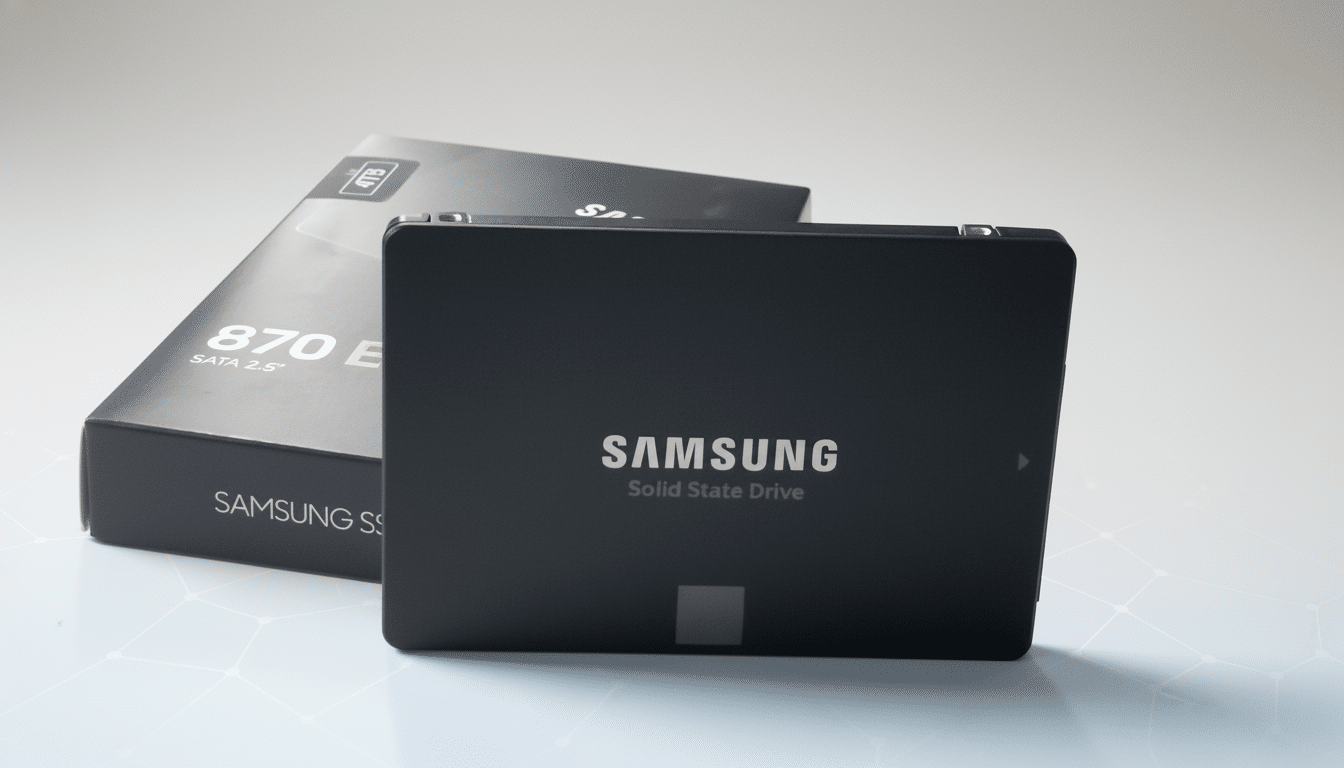
There is one speculative bit that we know to be true, which is the direction of SATA itself. NVMe has already taken over the client storage market as motherboards and laptops standardize on M.2. The pundits who track such things estimate that NVMe now makes up more than 80% of client SSD shipments, with SATA confined to budget builds and systems seeking a storage upgrade from webcam-visioning days of yore. That transition can seem, on the outside, like a “phase-out,” even if vendors continue to offer selected SKUs for which demand is high.
Accordingly, Samsung’s denial should be read as a pledge to keep playing consumer SSD ball, not an affirmation that every legacy form factor will continue to find room at the refreshing trough.
I expect that the company will continue to lean into its PCIe Gen4 and Gen5 NVMe portfolio while selectively continuing down the SATA path where it makes business sense.
What PC builders need to know about Samsung SSDs
In the short term, availability of popular Samsung NVMe drives should hold steady, but expect to see higher prices if supply remains slow across memory verticals. There may be more volatility for power users in the market for top-tier sustained-write performance or greater endurance. Budget upgraders aiming at SATA will have fewer to choose from over time—not a trend specific to Samsung, but true across the industry as NVMe reigns.
The message to OEMs and integrators is clearer: Samsung isn’t giving up on client storage even as it scales to serve the more lucrative AI demand. The company has to marshal capacity between consumer, enterprise and AI segments, but in publicly throttling the exit narrative it lets everyone know that its roadmap remains – at a time when markets despise uncertainty.
Bottom line: Samsung remains committed to consumer SSDs
Rumors of Samsung’s departure from the consumer SSD market don’t stand up against the company’s categorical denial. As AI-era needs redefine memory economy, storage terrain will continue pacing and evolving — quicker NVMe, light SATA portfolios, crunchier supply — but Samsung is still in the consumer fight. Analysts at TrendForce and others continue to expect pricing pressure, but for both PC buyers and builders, the lesson is quite straightforward: Samsung SSDs aren’t going anywhere.