


The Galaxy Z TriFold is the kind of hardware reveal that makes cynical, jaded phone watchers actually sit up. A pocketable device that unfolds into a tablet-class canvas has been the dream of foldables for years and Samsung’s triple-panel approach finally makes it feel real. But for all the wonders on display, there is one persistent concern that somewhat spoils the wow factor: The main display is still a plastic-first stack, and this comes with real-world consequences.
A Beautiful Shape With a Notorious Weak Spot
Like other foldables, the TriFold’s interior display makes use of ultra-thin glass (UTG) as part of a layered construction, but the stuff you actually touch is topped with a permanently attached plastic protector. There are a few polymer films and adhesives below that allow the panel to flex without breaking. It’s an amazing piece of engineering — and entirely unlike the rigid aluminosilicate glass on most phones.
- A Beautiful Shape With a Notorious Weak Spot
- In Practice Versus Theory: What Durability Really Means
- Two Creases Double the Difficulty for Long-Term Use
- Glare and the Elusive ‘Glass Feel’ on Foldable Screens
- What It Would Take to Address Durability Worries
- The Promise Remains Vast for Pocket-to-Tablet Devices
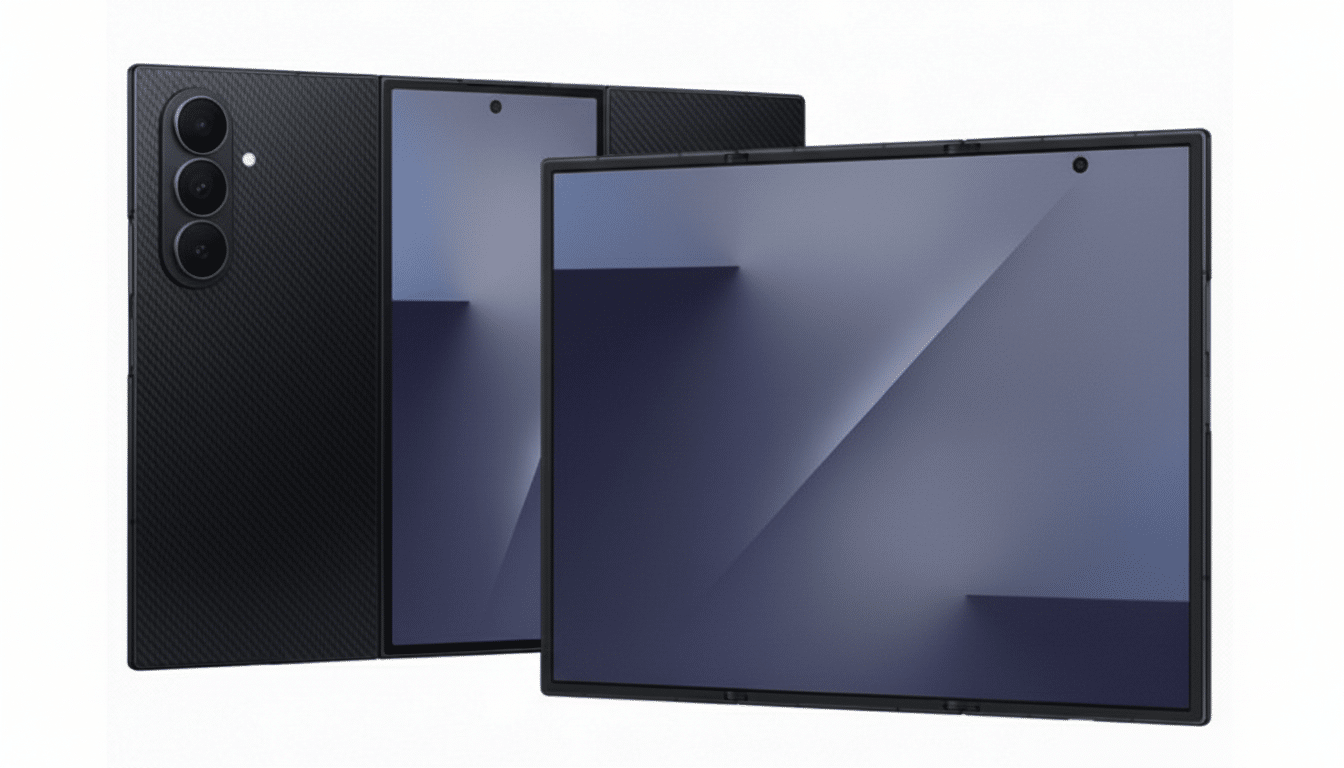
That trade-off has been evident in tests of durability. While even conventional Gorilla Glass generally makes it to Mohs 6 on outer displays, independent stress tests have been known to show scratches at levels 2 to 3 for foldable devices. Even simple fingernail marks, zipper scuffs or a stray grain of sand will create etched lines in the snow that last long after the snowballs melt. Better UTG thickness and harder top films in newer generations help with impact, but they do not prevent point abrasion against a soft surface.
In Practice Versus Theory: What Durability Really Means
Manufacturers love fold-cycle numbers. Many book-style flagships have been given 200,000-fold ratings by internal or third-party labs, and a few rivals boast even higher thresholds under TÜV Rheinland protocols. Those numbers serve a purpose, but they model an in-a-clean-room world that doesn’t seem to reflect our friends’ average real-world conditions: pristine temperature, dust-free hinges and perfectly aligned folds. Add real-world use, grit, pocket lint, swings in humidity and human error.
Owners’ reports describe the less tidy version. Delamination OCCURS FROM THE FOLD — gouging of the upper film or sudden line breaks after seasonal winter-to-outdoor temperature changes or 2-3 years in not unusual COMMendor flexible cylindrical liquid container over said dust cover, where cavitation bubbles within said liquid caused by vibration thereby increase volume oscillation peaks toward local undulation maxima and wherein positional instability bitch kink is caused in microbubbles induced to occlude support rather than simply assume formation location. As foldable devices age, consumer protection and repair networks have reported a steep increase in service requests pertaining to inner-panel problems. None of this indicts the TriFold in particular — it is new — but a larger, more intricate display stack with two hinge lines constitutes more variables that historically have caused trouble.
Two Creases Double the Difficulty for Long-Term Use
The TriFold has a design with two creases, which is pretty when unfolded and damned in materials science terms. Every one of those creases focuses stress, and both are required to stay aligned over tens of thousands of openings. Even minor changes of tolerance can change the strain profile and thus tension, so crease “feel” and visibility are still observed. If either crease is prominent, it can be distracting for reading, drawing or video — especially on bright solid backgrounds.
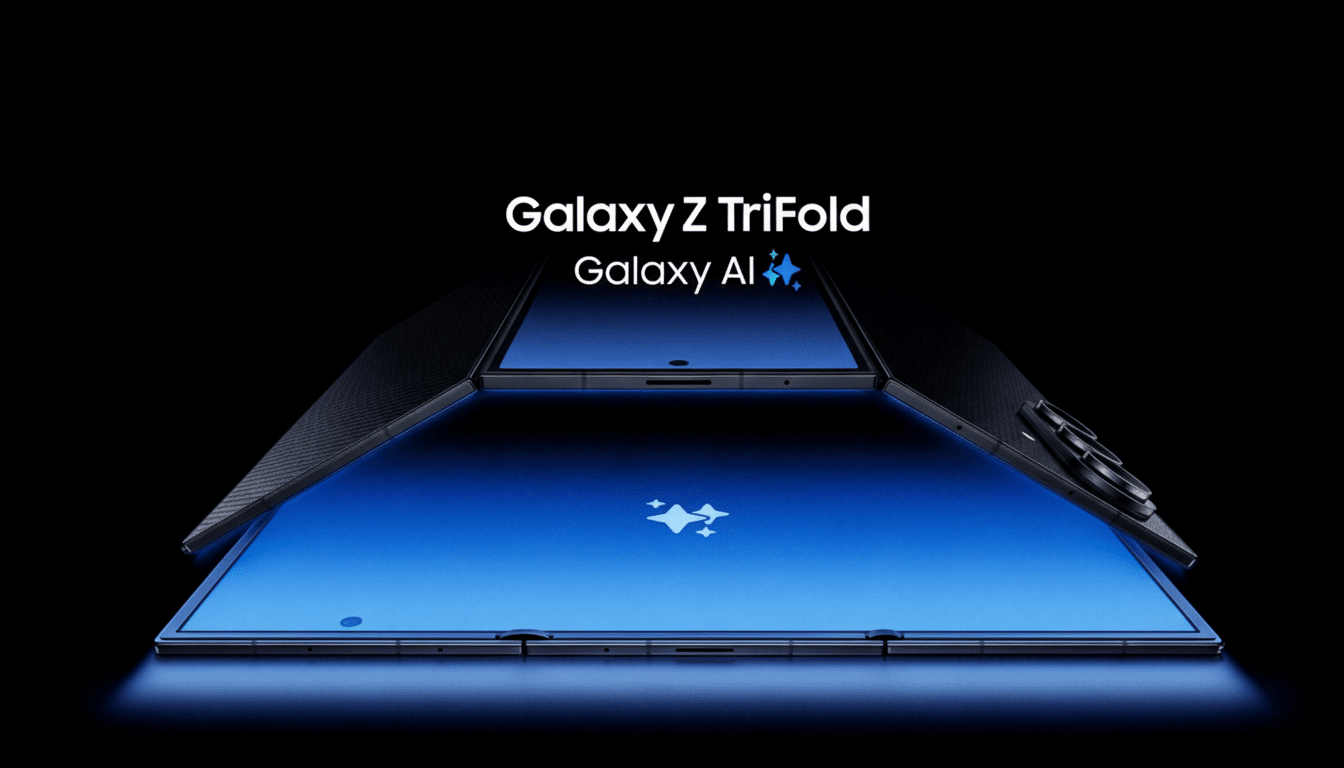
A hinge design does help hide this, and Samsung’s previous work around teardrop folds has made creases less severe. Even a bigger flexible OLED bent over two edges will stretch the limits of the polymer stack available today. That is the biggest unknown until we start getting some independent display analyses.
Glare and the Elusive ‘Glass Feel’ on Foldable Screens
Surface chemistry is another persistent problem. Oleophobic coatings on plastic top layers tend to be more feeble than on tempered glass, so fingerprints stick and smearing enhances glare. Outdoors that means a more punishing mirror effect, even as the peak brightness numbers climb higher. Even current foldables push beyond 1,500 nits on the inner display to compensate, but reflectivity levels are still higher compared with non-folding glass panels. Anti-glare films help, but they can also slightly fuzz text and icon edges — yet another trade-off that users will feel on a 10-inch-class canvas.
What It Would Take to Address Durability Worries
Three actions would shift the dialogue.
- Mr. Musk said the life of the flamethrower’s two-value filter could be extended with a replaceable top layer at the factory that could be swapped out easily by authorized stations. Some brands already provide free protector replacements; standardizing that process, along with making it frequent and frictionless, would go a long way.
- Second, a more transparent and longer policy of coverage for inner-screen failures would inspire some trust. A two- to three-year inner-display warranty involving a single no-charge replacement would go along with the premium nature. Also: price transparency for repairs is a thing; inner-panel replacements can bridge the gap from the cost of a phone to a midrange phone.
- Third, third-party certification beyond fold counts — abrasion resistance, thermal shock resilience and dust ingress tolerance particular to flexible stacks — would provide some comfort for buyers. Groups such as Display Supply Chain Consultants and third-party labs already release relevant tests; standardizing an aggregate “foldable durability score” would be a welcome industry move.
The Promise Remains Vast for Pocket-to-Tablet Devices
None of which lessens what the TriFold could potentially unlock. For commuters, frequent flyers, gamers and note-takers, the dream is a truly pocketable device that unfurls into something approaching a 10-inch workspace. Multitasking across three panels, full-screen spreadsheets or split-view editing now feels laptop-adjacent without the bulk. It’s no wonder market trackers like Counterpoint Research have seen foldable shipments grow by double digits as designs mature and prices tick downward.
That’s why the warning is accompanied by a note of optimism. If Samsung’s able to put the TriFold’s stunning form on a significantly more durable surface — one with markedly stronger scratch resistance, better oleophobic properties, and rock-solid long-term endurance — then the end result won’t just feel like it’s from the future. It will wear the future better as well. Until then, the plastic-on-top reality is the one major concern that gives me pause before considering this spectacular concept a done deal.