


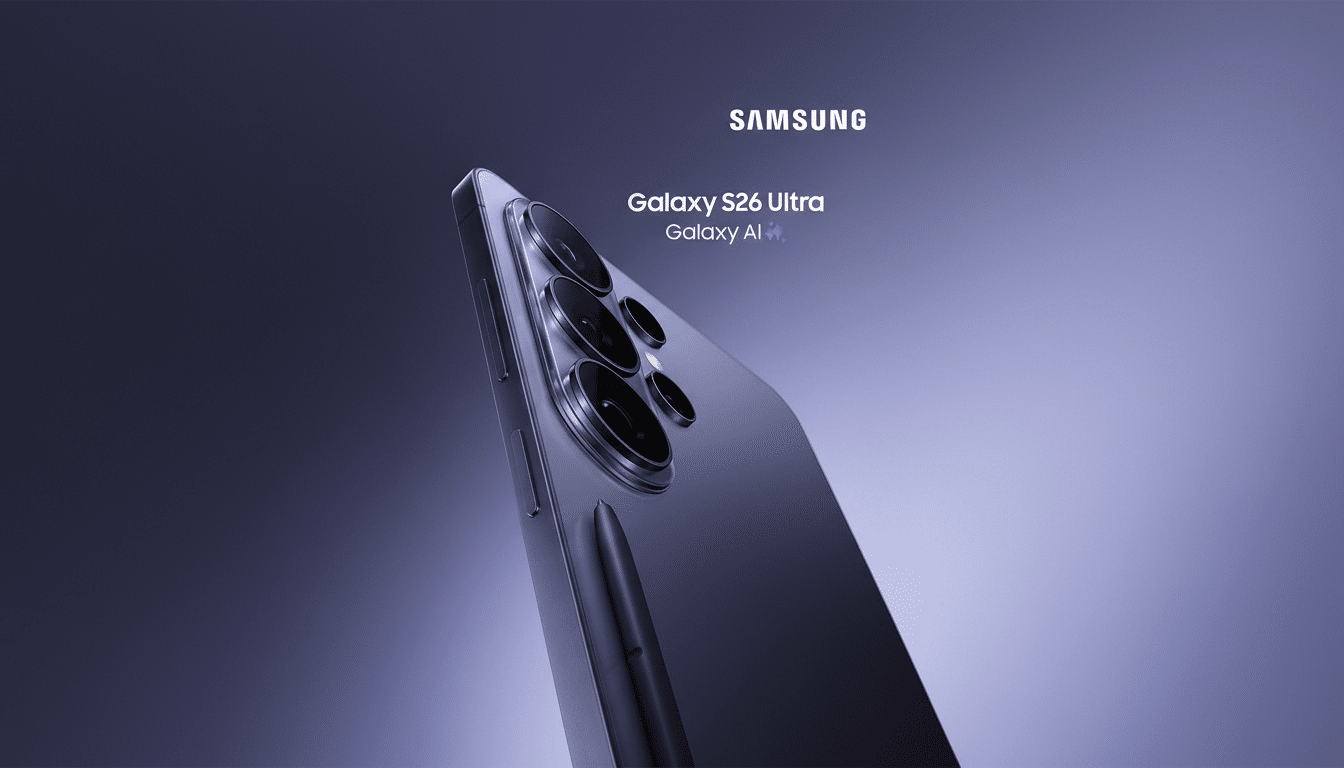
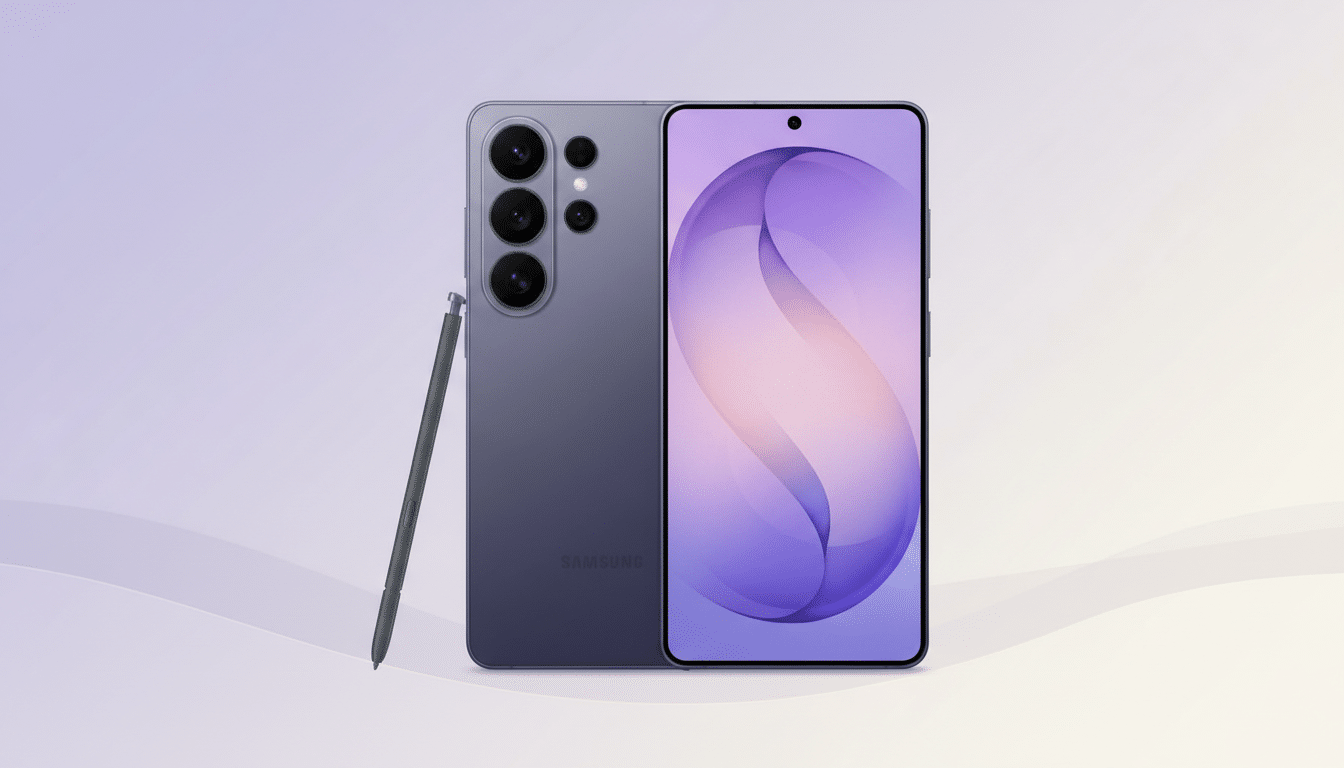
Samsung has posted three official Galaxy S26 teaser videos, and the message is clear: camera upgrades are the headline. The clips spotlight longer-reach zoom and brighter low-light video, while flashing the series’ distinctive camera layout and prominent AI phone branding. Even with caveats in the fine print, the teasers sketch out where Samsung is aiming to move the needle.
Zoom Gets Sharper and Reaches Farther in New Teasers
The first teaser shows a user pushing past the familiar 5x and 10x marks to frame a pet with surprising clarity. A disclaimer notes that the background is AI-generated, signaling a blend of optics and computation rather than a simple hardware leap. That tracks with industry chatter: the Galaxy S26 Ultra is widely expected to keep a 50MP 5x periscope, reportedly with a wider aperture, while the standard and Plus models are tipped to use a 3x telephoto around 10MP to 12MP.
Why a wider aperture matters: in photography, opening the lens by one full stop doubles the light reaching the sensor. At long focal lengths—where shutter speeds rise and stabilization is stressed—that extra light can be the difference between a usable 10x shot and a noisy smear. Pair a bright 5x optic with a high-resolution sensor and multi-frame super-resolution, and you can crop your way to cleaner 10x or even 15x without the mushy texture that plagued earlier long-range zooms.
Samsung has already pivoted from the old 10x optical strategy to a higher-resolution 5x sensor approach in recent flagships, trading pure optical reach for detail-rich in-sensor zoom. Expect the S26 series to double down with stronger stabilization, more aggressive deconvolution sharpening, and smarter fusion between the main and tele cameras to keep textures intact across the zoom ramp.
Low-Light Video Takes Center Stage in Samsung Teasers
The other two teasers lean hard into night video. One clip shows a DJ dancing in a dim venue; another captures fireworks twirling against a dark sky, paired with language that implies bright-looking footage from dark scenes. That aligns with Samsung’s Nightography branding, but the framing suggests more than a simple ISO bump.
Expect multi-frame exposure stacking with motion compensation, temporal noise reduction across frames, and a heavier reliance on AI-driven scene segmentation to preserve faces and skin tones while dialing down noise in the background. Faster image signal processors from the latest Snapdragon and Exynos platforms, plus beefier NPUs, enable more aggressive real-time computation at higher frame rates. If Samsung can stabilize 4K at 60 fps across multiple lenses in low light while holding detail and color, that’s a meaningful practical upgrade.
There’s also the codec angle. Industry leaks have pointed to expanded video codec support designed to deliver better efficiency and higher quality at the same bitrates. The broader market has been moving toward advanced formats, and organizations like the Alliance for Open Media have pushed hardware acceleration that makes high-quality, low-bitrate capture more feasible. Practically, that means brighter, cleaner footage without file sizes ballooning.
AI Imaging Steps Into the Frame for Galaxy S26
Every teaser flashes AI phone branding, and one explicitly notes an AI-generated background in its simulation. That tells us Samsung will lean on on-device AI to elevate zoom and video: semantic understanding to separate subjects from backgrounds, smarter exposure fusion across moving frames, and context-aware sharpening that avoids the crunchy artifacts of older algorithms. We’ve already seen competitors use multi-frame super-resolution and subject tracking to rescue zoom and night clips; Samsung’s play will likely hinge on its latest ProVisual-style processing and NPU throughput gains.
One area to watch is relighting—think illuminating faces without blowing out city lights behind them—as well as motion-stabilized night video that resists smear. Those improvements tend to rely on per-frame scene analysis, optical stabilization tuned for long exposures, and machine-learned denoising that preserves detail. The fireworks teaser, in particular, hints at higher dynamic range capture and faster sensor readouts to tame rolling shutter.
What It Means for the Lineup Across Galaxy S26 Models
The Ultra model appears primed to benefit most from a brighter periscope and high-resolution sensor fusion, pushing usable reach at 10x while lifting telephoto video at night. The standard S26 and S26 Plus, likely sticking with a 3x optic, would ride improved computational zoom and new ISP/NPU pipelines to deliver cleaner middle-range shots without major hardware changes.
Beyond imaging, recent reports have sketched out features such as enhanced scam detection, support for developer-friendly tools like a Linux Terminal, and a 10-bit display on the Ultra. Those add depth to the story, but the teasers make it clear that zoom and low-light video are the headline upgrades aimed at everyday use.
As always, marketing clips are curated. The real test will come with side-by-side trials against rivals like iPhone Pro and Pixel in dim venues and at long focal lengths. Independent evaluations from testing labs and experienced reviewers will show whether Samsung’s promised “looks dark, films bright” experience holds up across the lineup. For now, the official teasers set expectations: farther, brighter, and more AI-forward imaging on the Galaxy S26 series.