


Samsung’s biggest and boldest foldable phone has finally arrived. The device opens to a table-like canvas from something that can fit in your pocket. It’s arriving in the United States following a staggered international rollout, and early hands-on impressions say that Samsung may have redefined what a pocketable big screen is.
Design and display details of Samsung Galaxy Z TriFold
The TriFold feature works like the Z Fold 2, but does it with two folds to go from a 6.5-inch phone to unfolding into a 10-inch Dynamic AMOLED 2X display. The cover panel is FHD+ with a 120 Hz adaptive refresh while the interior opens out to a 2160 x 1584 QXGA canvas, also at 120 Hz. That gives you a regular one-handed mother’s little helper on the outside, and something like a small digital tablet inside — an instant context shift for reading, gaming, or side-by-side work.
- Design and display details of Samsung Galaxy Z TriFold
- Hardware and camera specifications of Galaxy Z TriFold
- Software features and productivity on Galaxy Z TriFold
- Price details and United States release timing and plans
- Early reviews and market reaction to Galaxy Z TriFold
- Why you should care about the future of foldable phones
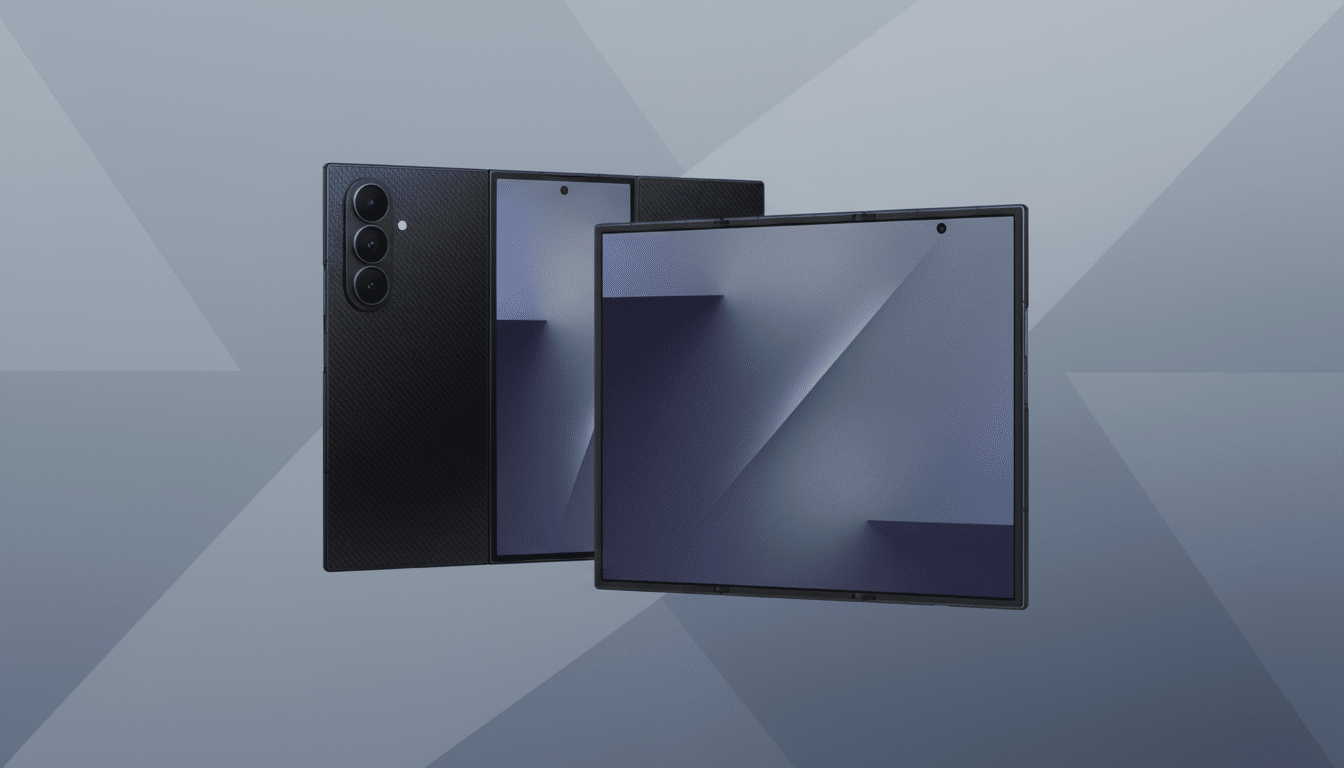
Thickness is the trade-off. Folded up to a thickness of 12.9 mm, the TriFold is much thicker than Samsung’s book-like foldables. And at 309 g it is heavier than many slab phones, but still pocketable. That bulk is not for naught: the device spreads a three-cell battery over the panels to provide balance and maintain ergonomics.
Hardware and camera specifications of Galaxy Z TriFold
Running under the hood of the TriFold is the Snapdragon 8 Elite for Galaxy, along with 16 GB of RAM and either 512 GB or 1 TB storage. On paper, that’s high-end silicon married to Samsung’s more expensive line. Expect performance to be on par with the latest Galaxy Fold, but with more headroom for when you’re using multiple windows on a wider canvas.
The camera stack is a reflection of Samsung’s newest flagship formula: 200 MP wide main, 12 MP ultrawide, and 10 MP telephoto around back. It has dual 10 MP selfie shooters for the cover and inner displays. Foldable cameras traditionally lag behind the company’s slab flagships, but the sensor mix here hints at something with good daylight abilities, and flexible framing given all that viewfinder space inside.
Battery capacity is 5,600 mAh using a three-cell design — roughly a 1,200 mAh increase compared to Samsung’s book-style foldable. The increased capacity helps buffer the larger inside panel, but spent on a 10-inch, 120 Hz display, it will still be a long day. Expect a mixed result: Heavy tablet-mode users will pull the battery down faster, but phone-mode people should be able to easily stretch through a day.
Software features and productivity on Galaxy Z TriFold
Here is Samsung’s foldable software playbook: app continuity switching from cover to interior, strong multi-window layout support, and drag-and-drop across panes. On a trifold, that equals three-column views attempting to emulate desktop paradigms — a doc, browser, and chat side-by-side but with fewer compromises. For creative professionals and road warriors, it’s the first phone that functions like a pocketable mini workstation without needing an external display.
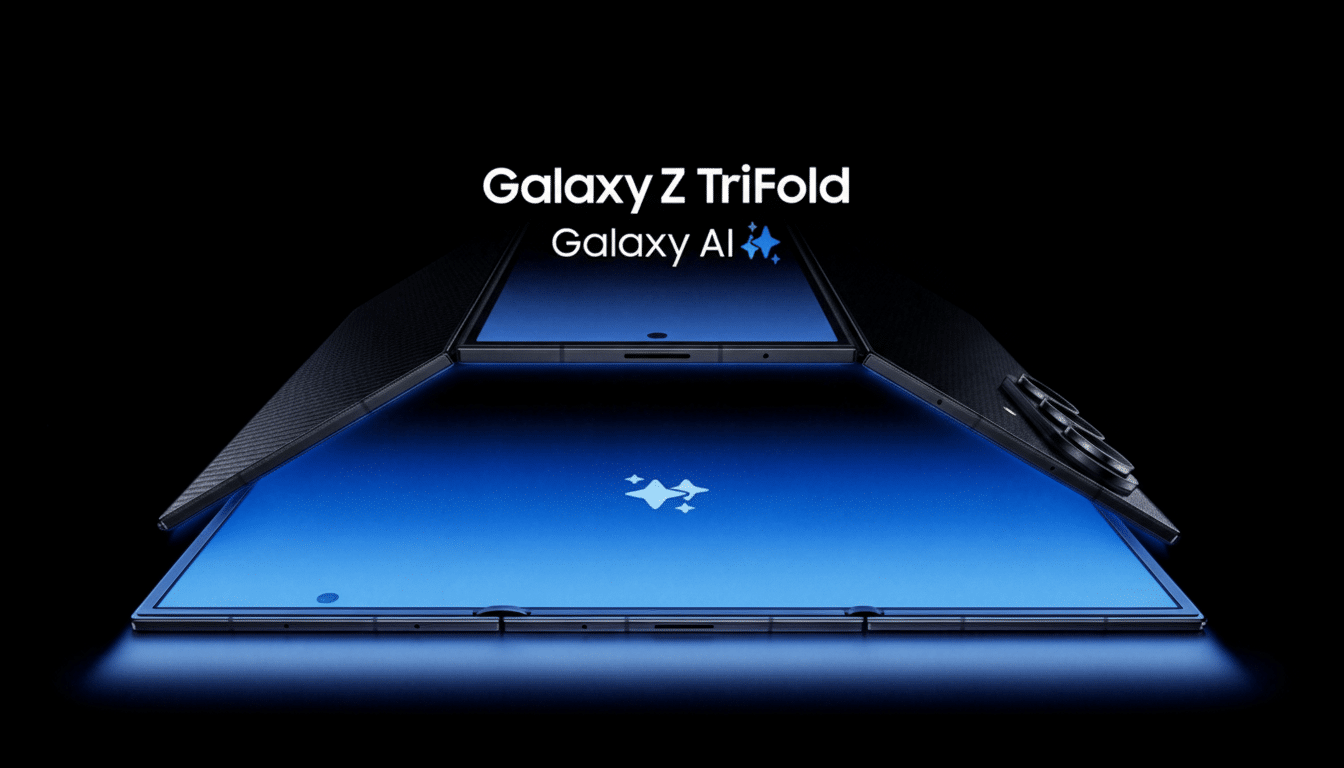
The hinge design also allows additional tent and tabletop modes for watching video, taking notes, or using the camera. Early demos show off smooth window resizing and smart edge detection, but execution will matter. First-gen tri-hinges need to strike a balance between rigidity and ease of movement, and while Samsung’s been working on it for a long, long time by now (as evidenced by the note about side profile there), real-world wear is still an open question.
Price details and United States release timing and plans
As for the price of this gadget, Samsung has revealed it is expected to cost 3,594,000 won, or approximately $2,450–$2,500 without local taxes. That makes the TriFold a good deal taller than typical flagships, and not too far off from the company’s book-style foldable. Volume is low, according to Bloomberg, with a staggered rollout that targets Samsung’s home market and one or two other regions before coming to the US.
Chances are we’ll get a phased US introduction in the wake of the initial international shocks, possibly starting on Samsung’s online store and at select retail partners. At that price and given its limited supply, the TriFold is also positioned as something of a halo product — a showpiece rather than a mass-market device — for early adopters and professionals who can take advantage of its extra screen real estate.
Early reviews and market reaction to Galaxy Z TriFold
Early feedback from heavy-hitters has been remarkably positive. Tech creators like Mrwhosetheboss and SuperSaf lauded the implementation and utility of this bigger canvas, dubbing it Samsung’s most appealing direction for foldables yet. The South Korean launch sales were swift, with initial batches sold out in minutes, demonstrating that customers have longed for a true “tablet-in-pocket” experience.
Apprehensions are to be anticipated: thickness, long-term hinge reliability, and repair cost. Social chatter also indicated battery life was less than ideal under heavy tablet use and that display repair was pricey, which is why Samsung is offering a 50% discount on the first screen repair in launch markets — suggesting it recognizes people’s aversion at least. Until it becomes more widely available, there will be few full, day-to-day verdicts.
Why you should care about the future of foldable phones
Industry trackers at Counterpoint Research and Display Supply Chain Consultants have both consistently forecast double-digit annual growth for foldables, with larger-screen designs encouraging more use cases. The 10-inch maw of the TriFold represents a strategic middle ground between phones and tablets, which could effectively carve away some share of time from sub-7-inch tablets and, incredibly, even ultraportables used for light productivity.
If Samsung can keep the build quality and power draw to a manageable level, then it’s possible that TriFold may just be the touchpoint device for multi-panel mobile computing. At this price, it’s not going to be a volume seller, but it does set the benchmark — and asks competitors to come up with something that boasts a genuinely pocketable big screen. Now, for US buyers, there are questions of availability and support. Samsung, on both scores, has the scale that — even with a niche flagship — gives it an edge with carriers.