


I spent time listening to Samsung’s new Galaxy Buds 4 Pro at their debut, and one takeaway was immediate: the low end hits with authority and control that rivals, and in some tracks surpasses, the latest AirPods Pro. It’s not boom for boom’s sake—the bass is tight, extended, and clean enough to force Apple to pay attention.
First listen verdict on Galaxy Buds 4 Pro sound quality
On quick A/B tests across bass-forward EDM and dense rock mixes, the Buds 4 Pro kept sub-bass lines distinct without muddying kick drums or crowding vocals. Where some earbuds inflate the 60–120Hz region to fake heft, these push meaningfully lower, preserving midrange clarity. With modern pop like Billie Eilish and club tracks with deep sine sweeps, the Buds 4 Pro stayed composed at high volume with no audible rattle.
- First listen verdict on Galaxy Buds 4 Pro sound quality
- Hardware and audio architecture behind Buds 4 Pro
- Noise cancellation and safety smarts tested in use
- Battery life, fit, and durability for Galaxy Buds 4 Pro
- Ecosystem advantages and competitive pressure outlook
- Early takeaway on Galaxy Buds 4 Pro strengths and gaps
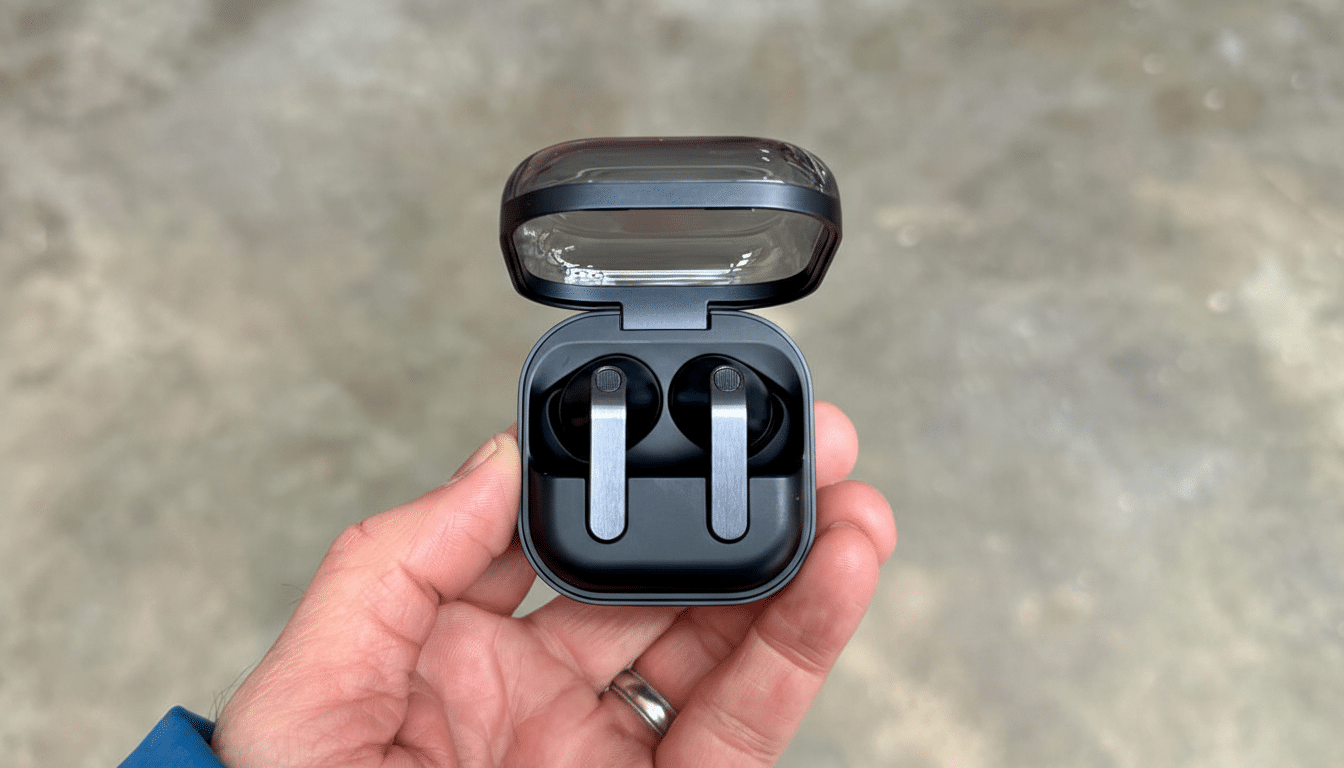
Apple still holds an edge in natural, out-of-box balance, but Samsung has found a bass tuning that energizes without smearing. For commuters and gym-goers who want impact without fatigue, that’s a potent combo.
Hardware and audio architecture behind Buds 4 Pro
The headline change is a two-way driver system: an 11mm “Super Wide” woofer paired with a 5.5mm planar tweeter. Splitting duties this way typically lowers distortion and improves transient response, especially in the handoff around the crossover region. Treble textures—hi-hats, strings, room reverb—benefit from the planar’s speed, while the woofer shoulders the heavy lifting down low.
Samsung’s SSC UHQ pipeline enables 24-bit/96kHz playback on recent Galaxy flagships, alongside support for SSC HiFi, AAC, SBC, LC3, and Auracast over a next-gen Bluetooth stack. Translation: if you feed them a clean source from a modern Galaxy device, you unlock higher-resolution streams and lower latency for spatial and multichannel modes. Apple’s AirPods Pro still lean on AAC over Bluetooth, while Google’s latest Pixel Buds emphasize simplicity over codec breadth.
This codec headroom matters. With lossless-tier tracks, cymbal decay lingered more naturally, and bass textures—electric bass finger noise, kick drum beater clicks—were easier to pick out than on buds locked to basic SBC. It’s not night-and-day, but it’s audible with good files.
Noise cancellation and safety smarts tested in use
Both Buds 4 and Buds 4 Pro carry three mics per ear. The Pro model upgrades to two high signal-to-noise mics plus a digital mic, improving voice pickup and ANC targeting. In a busy demo hall, broadband noise and HVAC hum dropped convincingly, while midrange chatter softened but didn’t vanish—typical for top-tier ANC today.
New voice and siren detection automatically elevate ambient passthrough when you start speaking or when the buds sense emergency tones. Apple and Google offer comparable transparency tricks, but Samsung’s implementation felt fast and subtle, easing conversation without the tinny glare some transparency modes introduce.
Battery life, fit, and durability for Galaxy Buds 4 Pro
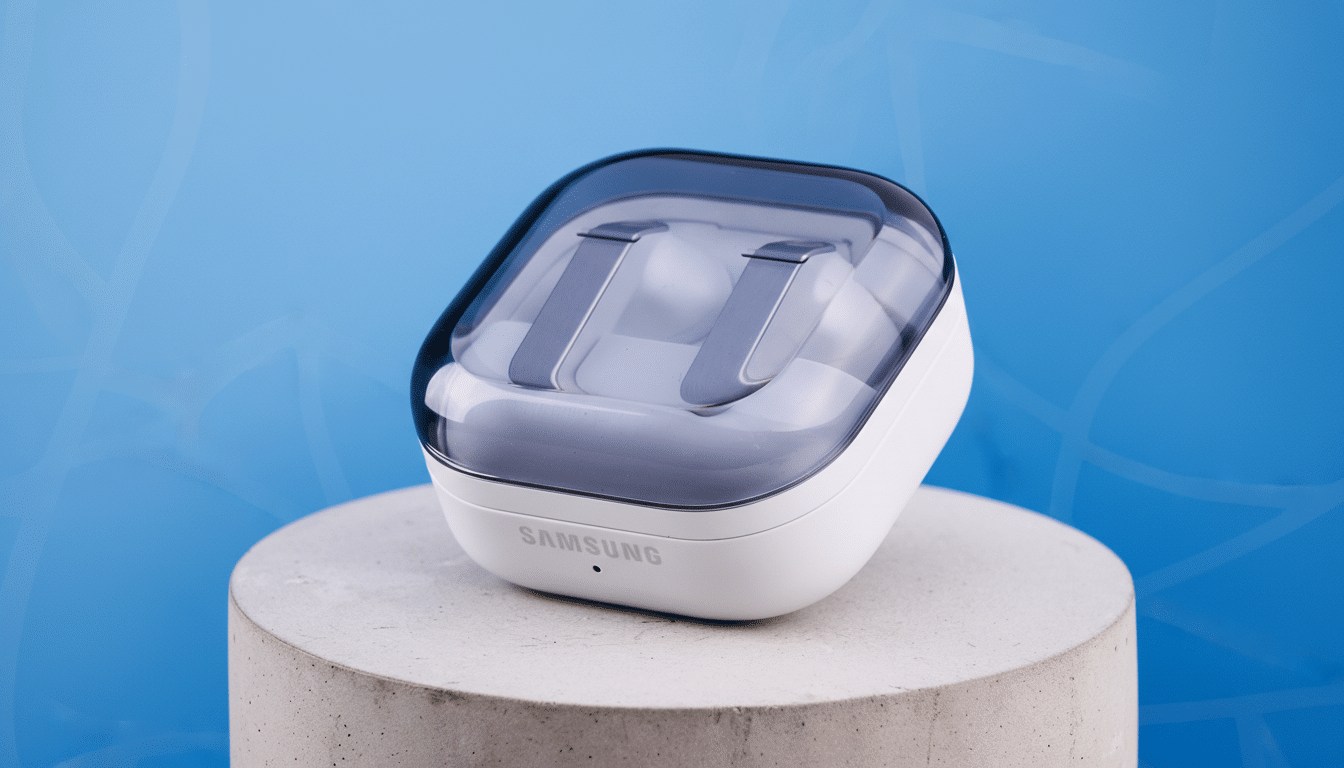
Samsung rates the Buds 4 Pro for about 6 hours of listening with ANC on (7 with it off), plus up to 26–30 hours from the case. That trails leading rivals advertising closer to 8 hours with ANC, but it’s serviceable if you top off between sessions. The case is compact at roughly 1.1 by 2.0 by 2.0 inches, though its squared profile feels chunkier in a coin pocket than the most pocketable cases from competitors.
Ruggedness gets a boost: the Buds 4 Pro earn an IP57 rating, making them resistant to dust and immersion in shallow water. That’s a welcome upgrade for runners and travelers. The non-Pro Buds 4 settle at IP54, fine for sweat and drizzle but not rinsing.
Fit will make or break ANC and bass. Samsung includes three silicone tip sizes; your seal will dictate both noise reduction and low-end punch. In my ears, the default tips needed a size-up to maximize isolation. As ever, a quick tip swap can change the experience more than any EQ slider.
Ecosystem advantages and competitive pressure outlook
Samsung is plainly optimizing these buds for Galaxy owners. Features like 24-bit UHQ, 360 Audio, and seamless device switching all click into place with recent Samsung phones and tablets. That mirrors Apple’s end-to-end play, where AirPods unlock the most convenience on iPhone and Mac.
The broader backdrop matters. Industry trackers such as Counterpoint Research and Canalys consistently show Apple leading global premium earbud share, with Samsung and Sony vying for the next slots. To dent that lead, you need a headline advantage users can hear in seconds. The Buds 4 Pro make their case the moment the kick drum lands.
Early takeaway on Galaxy Buds 4 Pro strengths and gaps
The Galaxy Buds 4 Pro deliver bass that feels engineered, not exaggerated, and a level of codec ambition that rewards high-quality sources. AirPods Pro still set a high bar for natural tonality and dead-simple integration on iPhone, but Samsung has found a visceral, listener-first angle—weighty, articulate low end—that could sway buyers who live on modern pop, hip-hop, and electronic playlists.
If you’re in the Galaxy ecosystem, these jump straight to the shortlist. If you’re on iPhone, they’re credible enough to spark comparison shopping—and that alone is a win Samsung hasn’t always secured in the earbud wars.