


Samsung has fired the next big salvo in the foldable wars with the Galaxy Z Trifold, a dual-hinge device that opens to form a tablet-like canvas. Apple, which has been long rumored to be developing a foldable iPhone, is reportedly nearing a debut. One is official, the other still behind closed doors — but there’s plenty to compare based on confirmed specs and credible reporting.
Design and form factor: tri-fold phone versus book-style
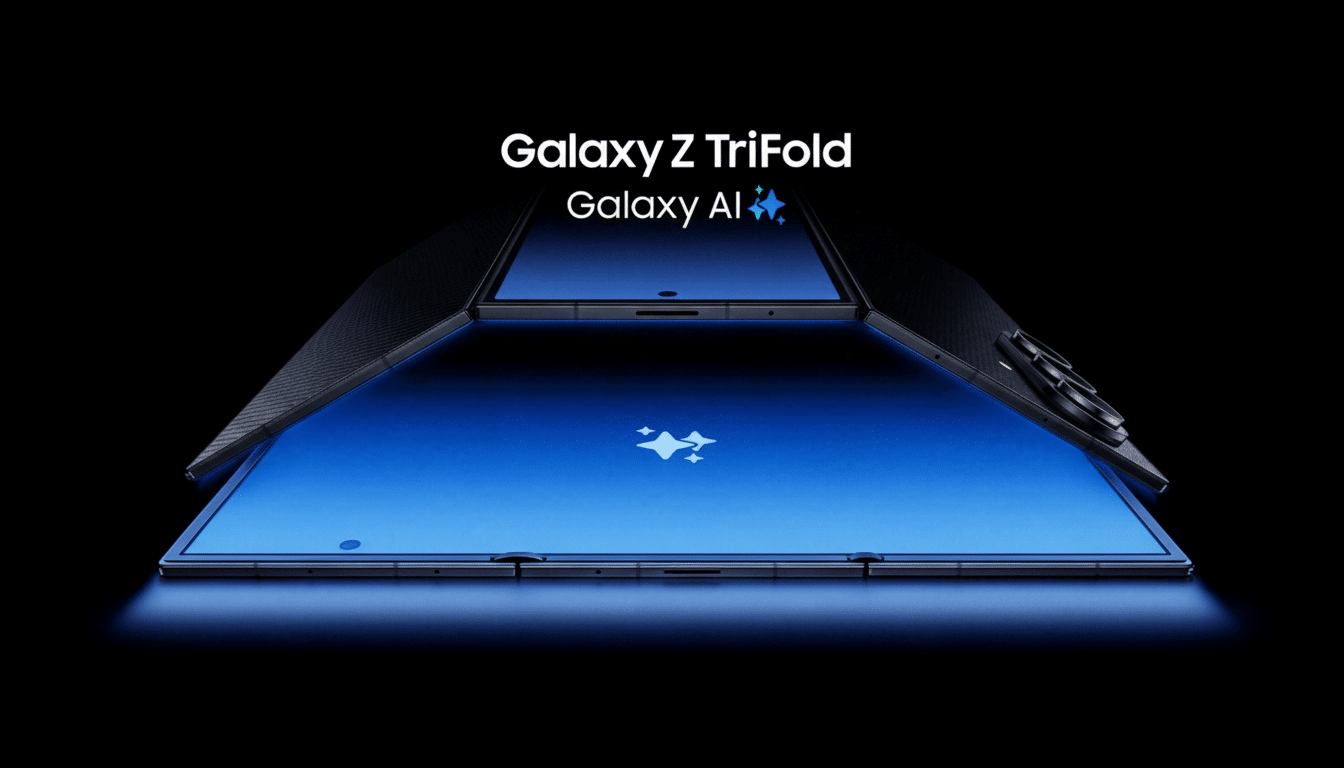
The Galaxy Z Trifold is constructed around two hinges, folding out to a large inner screen while retaining an outer display for fast tasks. It’s a phone with a tablet-like screen when open. In contrast, several supply chain sources report that Apple is aiming to create a single-hinge book-style foldable iPhone focused on portability — likely smaller than Samsung’s tri-fold canvas.
- Design and form factor: tri-fold phone versus book-style
- Displays and hinge technology across both foldables
- Performance and software on Samsung and Apple’s foldables
- Cameras and battery expectations for both foldables
- Durability and dimensions, thinness and hinge longevity
- Price and availability predictions and market context
- Early takeaway: choosing between Samsung and Apple’s visions
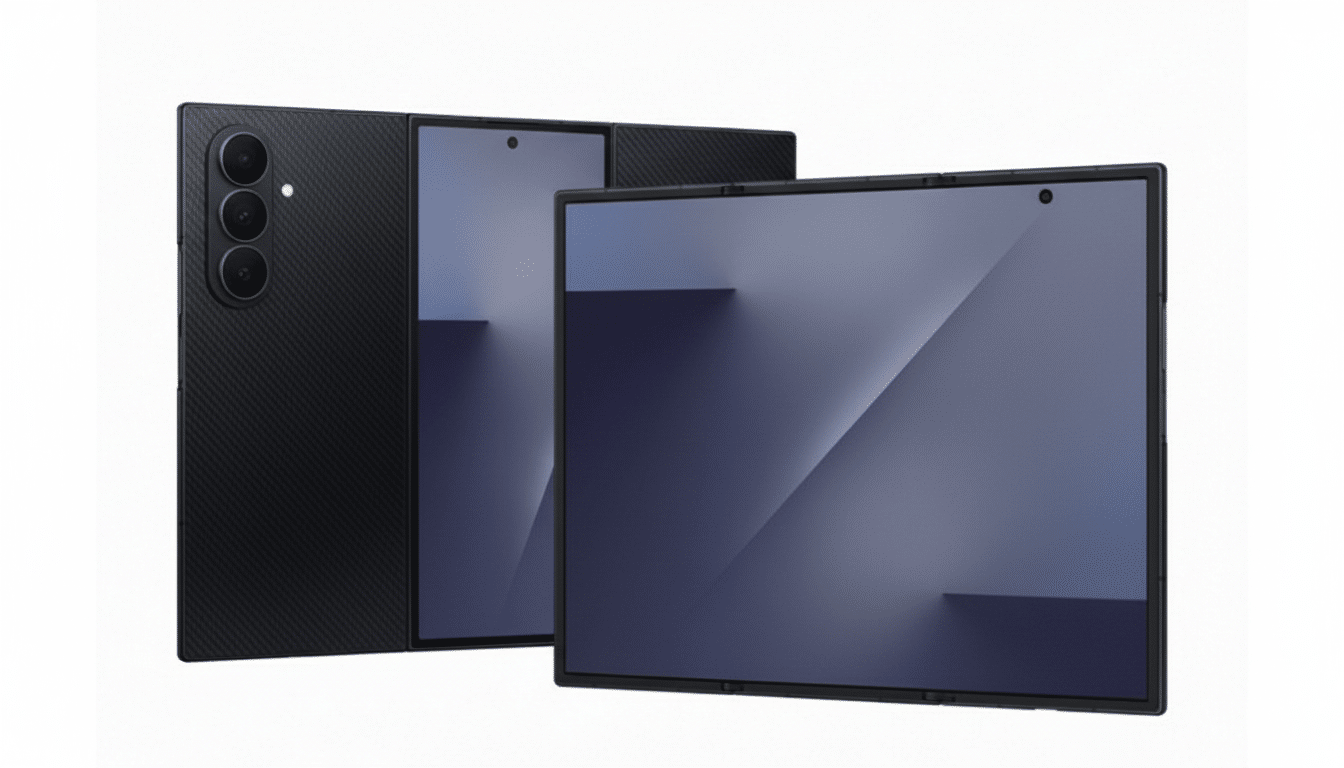
Analysts at Display Supply Chain Consultants, and reporting from Bloomberg have more or less repeated the same thing over time: Apple’s all about three core fundamentals of industrial design right now; thinness, balance in weight, in the hand “just works” feel. Look for a design that skews more to an iPhone-first shape versus folding mini iPad.
Displays and hinge technology across both foldables
Samsung has nailed a 10-inch main display at 2160×1584 with a 120Hz adaptive refresh rate, as well as a second screen cover panel that’s 6.5 inches and running the same resolution, clipped to the edges of the portrait-mode phone when folded.
That large inner canvas is the draw: multi-window apps, creative tools, and a proper work-and-play split screen.
For Apple, supply chain talk from DSCC’s Ross Young and others suggests a near-square inner display in the high-7-inch ballpark with a cover screen somewhere in the mid-5-inch range. One of the more interesting rumors is a “creaseless” tack. Patents filed with the U.S. Patent and Trademark Office by Apple describe hinge geometries that increase the bending radius — akin to waterdrop hinges used by a number of Android vendors — in order to minimize strain lines. If Apple is able to significantly downplay the crease line, it could be one of the headline features shoppers can see on day one.
Performance and software on Samsung and Apple’s foldables
The Z Trifold carries a Snapdragon 8 Elite for Galaxy processor, paired with 16GB of RAM and either 512GB or 1TB of storage. That’s laptop-adjacent horsepower for a phone, and it makes a difference on a device created to run multiple apps, floating windows and desktop-like multitasking. Samsung’s One UI already offers up strong multitasking; the tri-fold form factor should go some way to stretching that out even more, especially for creators and productivity power-users.
Apple will presumably rely on a next-gen A-series chip with enough performance headroom to at least match small notebooks over short bursts. The software will be a leading factor: Should iOS develop to incorporate more of what iPadOS has (better windowing, greater support for external displays, Pencil-like input down the line), Apple could end up bringing these two systems together without making one lose its edge. Mark Gurman and other reporters at Apple-focused news outlets suggested the company could be exploring features that hybridize iPhone and iPad modes on a foldable space.
Cameras and battery expectations for both foldables
On paper, Samsung’s spec sheet reads like a flagship: 200MP wide and 12MP ultra-wide cameras, and a 10MP telephoto with 3x optical zoom; all backed by a large, 5,600mAh battery. That combination makes for a phone that shoots like a premium slab but powers through even the busiest day of multitasking and big-screen use.
Apple’s camera is still a mystery, but many reports point to four cameras with two on the back and two on the front. Apple’s computational photography — Smart HDR, Deep Fusion and tuned video pipelines — will be expected to do the heavy lifting, with the foldable form providing creators with fresh ways of framing vlogs or capturing hands-free shots.
Durability and dimensions, thinness and hinge longevity
Samsung claims that the Z Trifold is only 4.2mm thick when unfolded — a significant (though unexplained) engineering feat given its second hinge. The company has continued to strengthen its ultra-thin glass and hinge seals with each subsequent generation, and this lesson should hold. Real-world durability will depend on scratch resistance, preventing debris ingress — and how this two-crease architecture ages with repeated folding.
Apple’s device will also be extremely thin, some supply chain sources said, with one person describing it as two stacked iPhones — a description once repeated for the company internally. Apple’s historic practice is to keep hardware behind locks and keys until it passes intensive reliability testing, which may explain why the foldable iPhone has taken so long to surface.
Price and availability predictions and market context
U.S. pricing has yet to be confirmed by Samsung. Apple’s foldable has been speculated by industry watchers as landing on the ultrahigh end, with some projections around $2,399. That would make it faster than many book-style competitors. Premium pricing is par for the course with early-stage foldables, though competition from Samsung, Google and others has begun to squeeze top-tier prices.
Analysts at Counterpoint and IDC say foldables are one of the few areas in smartphones that continues to grow as the broader market becomes more mature. That growth is being driven by two groups: flagship upgraders hungry for something new and productivity users who see foldables as pocketable tablets. Both phones seem targeted squarely at that demographic.
Early takeaway: choosing between Samsung and Apple’s visions
If you’re sick to death of those pesky bezels, and carrying around two devices which do pretty much the same thing anyway — now with a helping of Android multitasking thrown in for good measure today — you’ll love eyeing up Samsung’s Galaxy Z Trifold that seemed tailor-made for getting work done (or just artistically venting). For those deeply plugged into the Apple ecosystem, the rumored foldable iPhone might be the cleanest on-ramp to a flexible screen, especially if Apple delivers a less-noticeable crease and seamless software.
It may then just come down to philosophy: tablet-first flexibility with Samsung’s tri-fold, or phone-first smoothness with Apple’s book-style foldable. Either way, the next generation of foldables seems to be less about party tricks and more about daily use — and that’s the real win for potential buyers.