


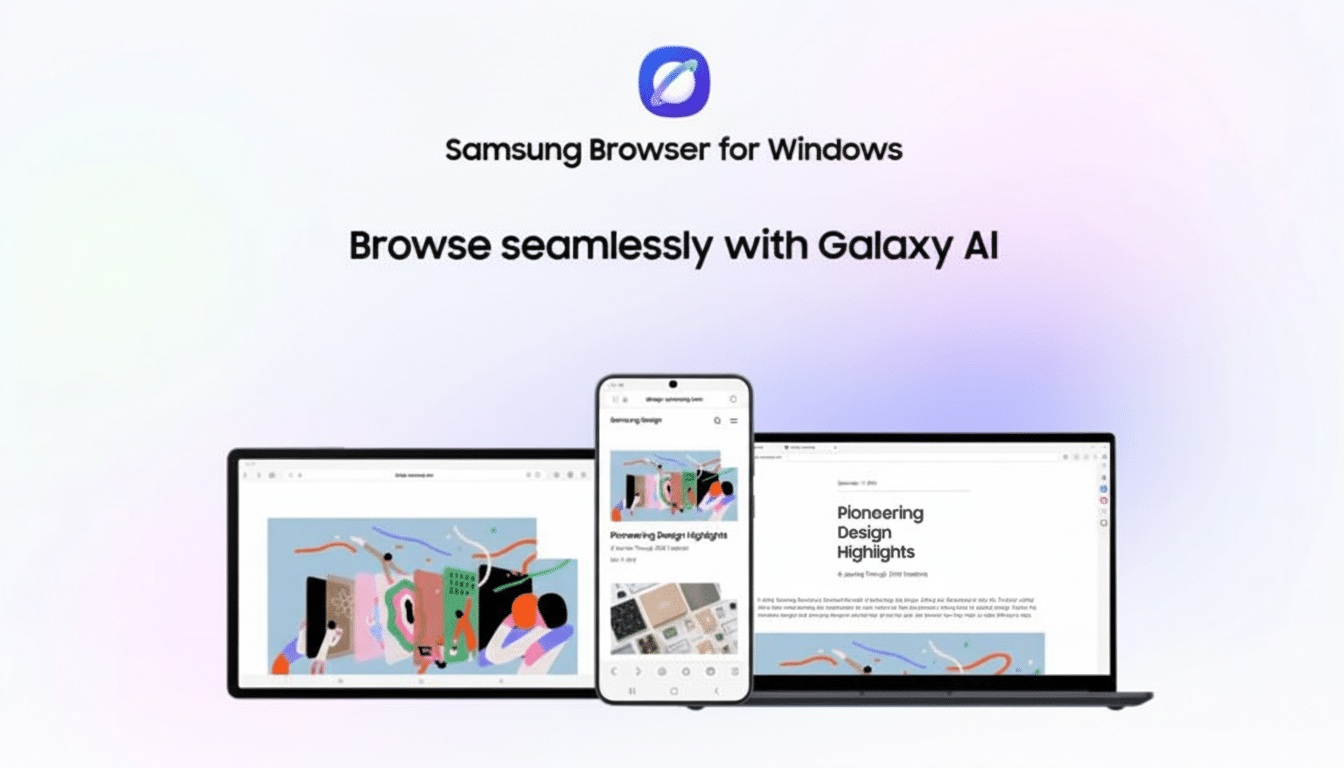
Samsung’s once-mobile-only web browser has arrived on Windows, signaling a bigger push by the Galaxy maker to compete head‑to‑head with Chrome and Edge on the desktop. The debut brings Samsung’s cross‑device sync, built‑in AI tools, and Samsung Pass integration to PCs for the first time, aiming squarely at users who live with a Galaxy phone in their pocket and a Windows laptop on their desk.
What’s New on Windows: Design, Sync, and Samsung Pass
The Windows version mirrors the look and feel of modern Chromium browsers, with a familiar tab strip, omnibox, and a clean settings layout that won’t intimidate Chrome or Edge users. Under the hood, it’s designed for continuity: a prompt in the browser’s corner lets you pick up the current tab from your Android phone and move it to your PC without digging through history or messaging yourself links.
- What’s New on Windows: Design, Sync, and Samsung Pass
- AI Features with Real Utility for Browsing on Desktop
- Why Samsung Wants a Desktop Seat in the Browser Market
- Privacy, Security, and Extensions Samsung Users Expect
- Availability and System Support for Windows PCs
- Early Outlook for Samsung’s Windows Desktop Browser
Samsung Pass, the company’s password and autofill vault backed by its Knox security platform, carries over too. Logins, addresses, and payment details saved on your phone appear on your PC once you sign in with your Samsung account, reducing the chore of re‑entering credentials across devices.
AI Features with Real Utility for Browsing on Desktop
Beyond sync, Samsung is betting on built‑in AI to stand out. You can search your browsing history using natural language—think “the article about Wi‑Fi 7 testing I read last week” instead of exact keywords. A Multi‑tab Context Awareness tool scans what you have open and produces a quick, readable summary, useful when you’re comparing laptops or tracking specs scattered across several product pages.
The browser’s AI also takes cues from the page you’re viewing. Planning a trip from a long travel guide? Ask it to draft a four‑day itinerary based on the highlights on screen. Watching a long event video? Samsung says you can request the moment a specific feature is mentioned, and the browser will jump you to that timestamp—no scrubbing required.
These are the kinds of tasks users increasingly expect inside the browser itself rather than bouncing to a separate chatbot. The key test will be speed, accuracy, and how well the AI respects privacy controls compared with rivals’ assistants embedded in Chrome, Edge, and Arc.
Why Samsung Wants a Desktop Seat in the Browser Market
Owning the browser on both phone and PC gives Samsung a stronger lock on daily habits than a mobile‑only play. According to StatCounter’s global tracking, Chrome maintains roughly two‑thirds of desktop share, with Edge and Safari trading places behind it, while Firefox hovers in the single digits. Breaking that inertia takes more than another Chromium skin; it takes a reason to switch.
Samsung’s pitch is continuity for Galaxy owners and lower friction for sign‑ins and form fills via Samsung Pass. That aligns with how consumers actually adopt browsers: they try them during a moment of convenience (a new device or a compelling feature) and stick if sync, performance, and extensions meet expectations. With Microsoft previously citing more than 1.4 billion monthly active Windows devices, even modest traction could translate into a sizable installed base—especially if Samsung features the browser prominently on its Galaxy Book laptops.
Another tailwind: regulatory pressure has nudged platforms toward clearer browser choice. Windows has made it easier to switch defaults, and Android features choice screens in some regions. That gives newcomers like Samsung a better shot at discovery.
Privacy, Security, and Extensions Samsung Users Expect
Samsung Internet on mobile is known for robust tracking protections and support for content blockers. On Windows, users will look for similar controls, plus seamless passkey support alongside passwords. The broader industry—led by the FIDO Alliance and major platforms—continues to push passkeys as a phishing‑resistant alternative, so Samsung’s integration with its identity stack could be a practical advantage for sign‑ins across devices.
Given its Chromium foundations, extension compatibility should be strong, which matters because power users expect their password managers, shopping tools, and developer add‑ons to carry over. The line between “nice new browser” and “daily driver” often comes down to whether your extensions just work.
Availability and System Support for Windows PCs
Samsung Browser is rolling out in the US and South Korea first, with more regions promised. It supports Windows 11 and Windows 10 from version 1809 onward, covering the vast majority of modern PCs. There’s no indication of a macOS version, which makes sense given Samsung’s focus on the Android‑Windows bridge and the lack of Samsung Internet on Apple’s mobile platforms.
Early Outlook for Samsung’s Windows Desktop Browser
If you’re a Galaxy user who lives in Chrome by default, Samsung’s Windows browser offers an immediate reason to try it: frictionless handoff from phone to PC, passwords that follow you, and AI that feels embedded rather than bolted on. For everyone else, the test will be whether speed, stability, and extensions match the incumbents. Browsers win on convenience and trust; Samsung just gave itself a credible shot at both on desktop.