


Samsung’s debut three-panel foldable is a reality, and it toes the phone-tablet line more agreeably than any Galaxy before it. The Galaxy Z TriFold unfolds into a 10-inch canvas but folds up into a pocketable slab, representing an evolution of the foldables that focuses on bona fide multitasking over gimmickry.
Design and displays of Samsung’s three-panel TriFold
The TriFold relies on two hinges to unfold three display sections into one seamless Dynamic AMOLED 2X screen spanning 10 inches with a resolution of 2160 x 1584 pixels and an adaptive refresh rate of 120Hz. At an almost 4:3 aspect in the second mode, you get extra vertical space to be more productive with documents, spreadsheets, and creative apps compared to regular super-wide phones.
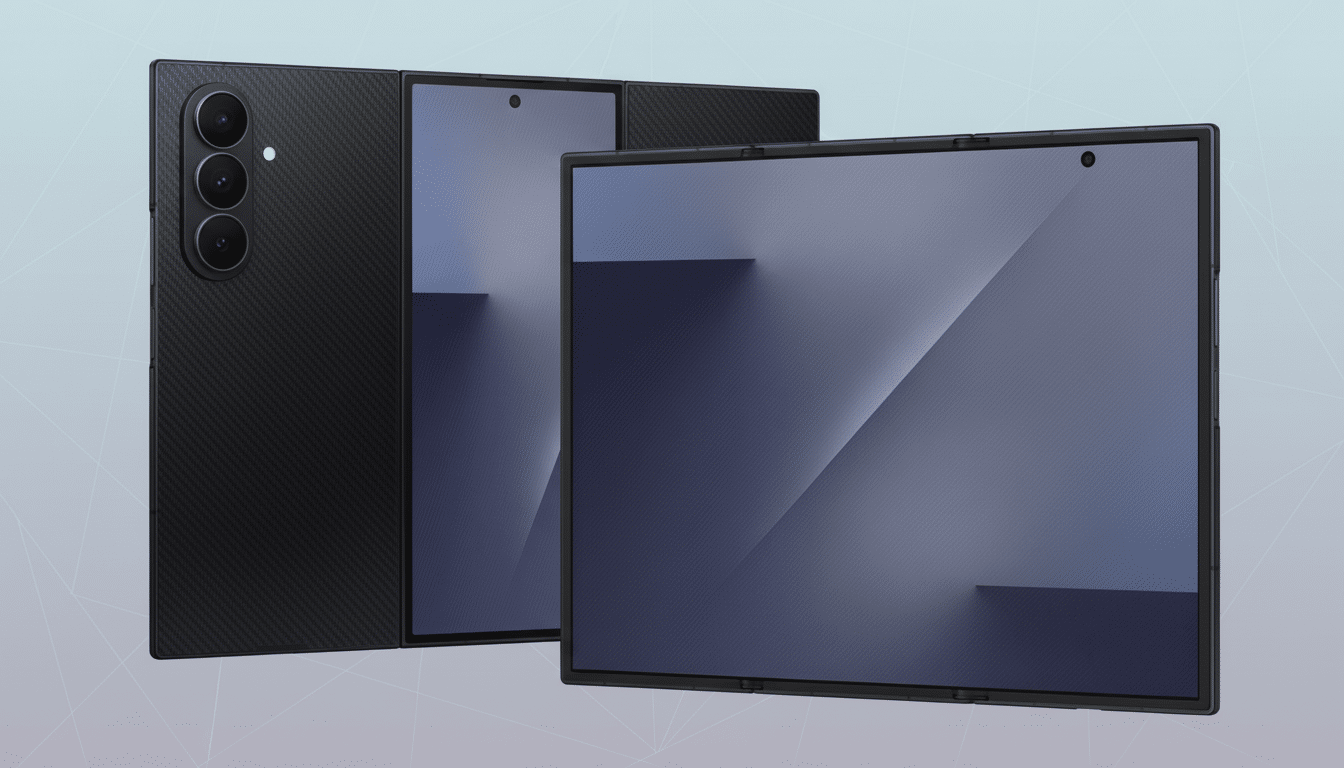
Samsung’s three-panel interface can also treat the unfolded screen as three individual 6.5-inch portrait panes. That means you could stage, say, email, a web browser, and chat side by side with just enough shared space to drag and drop files or text between panes as if they were three separate phones welded together. It’s the most literal realization yet of “do three things at once.”
When folded, there’s a familiar outer display: a 6.5-inch cover screen at 2520 x 1080, for the tall grip you’ve grown accustomed to using.
That makes the TriFold something that can be used like a regular phone for those little in-and-out tasks, while the interior canvas is there for getting things done and imbibing media.
The engineering trick is how thin it becomes when open — its profile is between 4.2mm and 3.9mm, depending on whether you are looking at the thickest or thinnest end — but it does not feel worryingly flimsy. Folded, it’s 12.9mm thick — a little thicker than a regular slab but relatively compact for a gadget that conceals three screen segments and two hinges.
Performance and cameras on Samsung’s Galaxy Z TriFold
Underneath the hood, Samsung is leveraging a custom Snapdragon 8 Elite Mobile Platform for Galaxy, tuned to their thermals and software stack. You can expect strong performance for heavy multitasking and the level of sustained throughput required to keep three active panes smooth while also preserving the full 120Hz refresh rate.
The TriFold doesn’t appear to treat imaging as an afterthought, with a 200MP sensor on the rear array. High-resolution sensing on foldables has to accommodate the more complex optical stacking and smaller confines too, although Samsung’s recent advancements in detail merging and low-light noise reduction should materialize when it comes to tri-folding it out against top slab flagships.
Software multitasking features and Samsung DeX support
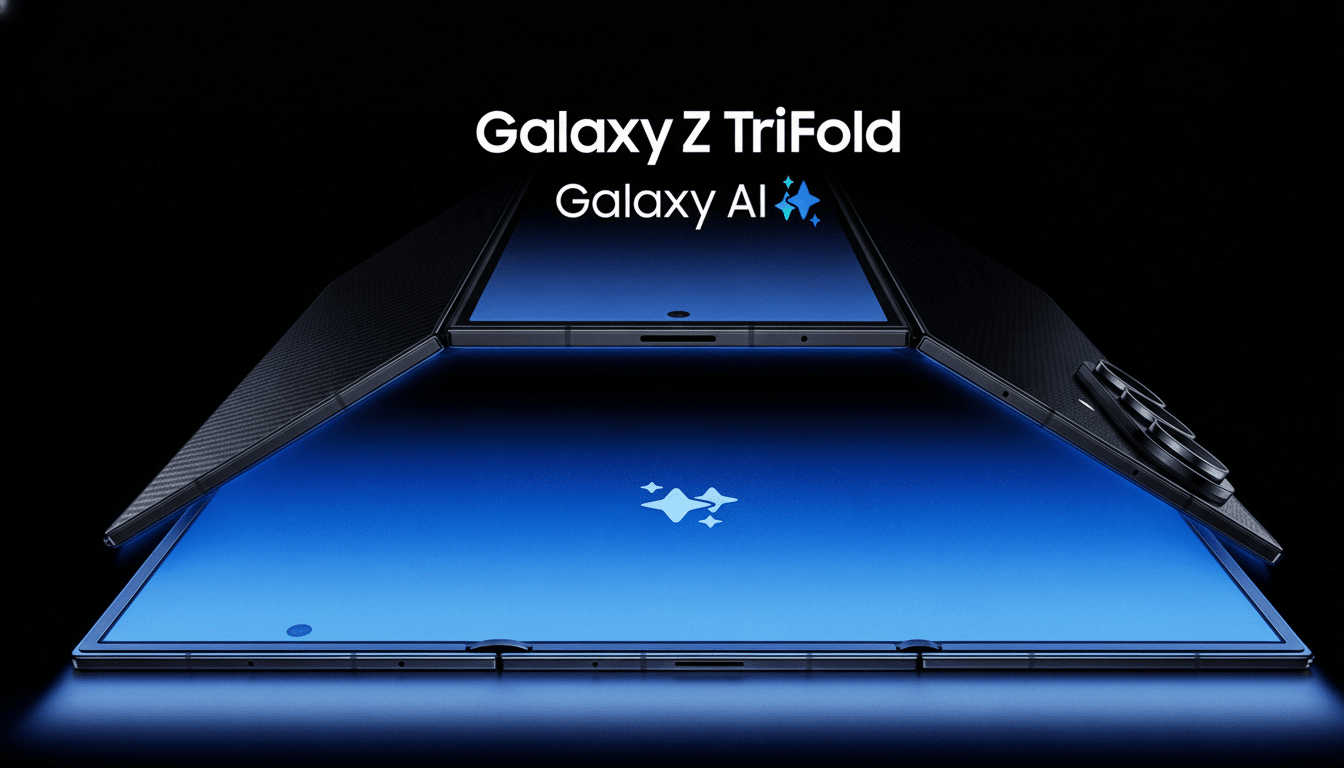
Software is where the TriFold offers its defining worth. Samsung’s One UI scales seamlessly over the three-pane format, meaning that users can also pin favourite app trios, invoke floating windows, and utilise a mighty drag-and-drop. Imagine a spreadsheet on the left, slides in the middle, and a video meeting on the right — practical stuff, not just flashiness.
Samsung DeX is onboard for a desktop-like experience when connected to an external display. It’s more like DeX just became less of a luxury and more of an integral workflow here: the internal 10-inch screen can serve as a dedicated touch controller, note-taking canvas, or secondary monitor to the external display, which runs windowed apps. It’s the nearest a Galaxy phone has come to doubling as a travel PC.
For developers, the canvas is three panels high; a reimagining of responsive UI awaits. Apps that already have foldable postures — everything from productivity suites like Microsoft 365 through creative apps to, well, the end of apps — should see instant advantage, and if those postures are also optimized for tri-pane layouts, then it’s just good vs. great.
Price and availability details for Galaxy Z TriFold
Samsung promised that it was also launching around the world, including in the U.S., after first debuting domestically. The company has not yet announced U.S. pricing. Though costly in Korea, maybe $2,500 to start, it’s a strong indication of where we can expect U.S. pricing to line up after taxes and carrier deals are tallied.
At that price, the TriFold is less a rival for mainstream flagships and more a rival to premium tablets and ultraportables. The math is simple: if one device can replace your phone and tablet — and sometimes a laptop through DeX — the sticker shock recedes for power users.
Why the Galaxy Z TriFold matters for foldable devices
Tri-fold hardware has been the foldable industry’s white whale for years, shown in concept videos but conspicuously absent for sale. Samsung’s decision means it is hitting the market with a strong software story, not just a new hinge. Counterpoint Research and IDC analysts have long called multitasking and larger canvas experiences the key to taking foldables beyond early adopters; the TriFold aims squarely at that inflection point.
Should the build quality prove resilient and developers support a tri-pane optimization world, the Galaxy Z TriFold could redefine what a “phone” even is. This is not just bigger — it’s purpose-built for doing more, all at once.