


Samsung has unveiled its 2026 sound device offerings, centered on a refresh of two top-of-the-line new soundbars and a pair of Wi‑Fi speakers meant to bridge the gap between home audio and home decor.
The lineup leans heavily into spatial audio, AI-assisted tuning, and tighter TV integration, and will be previewed for the public at CES in Las Vegas.
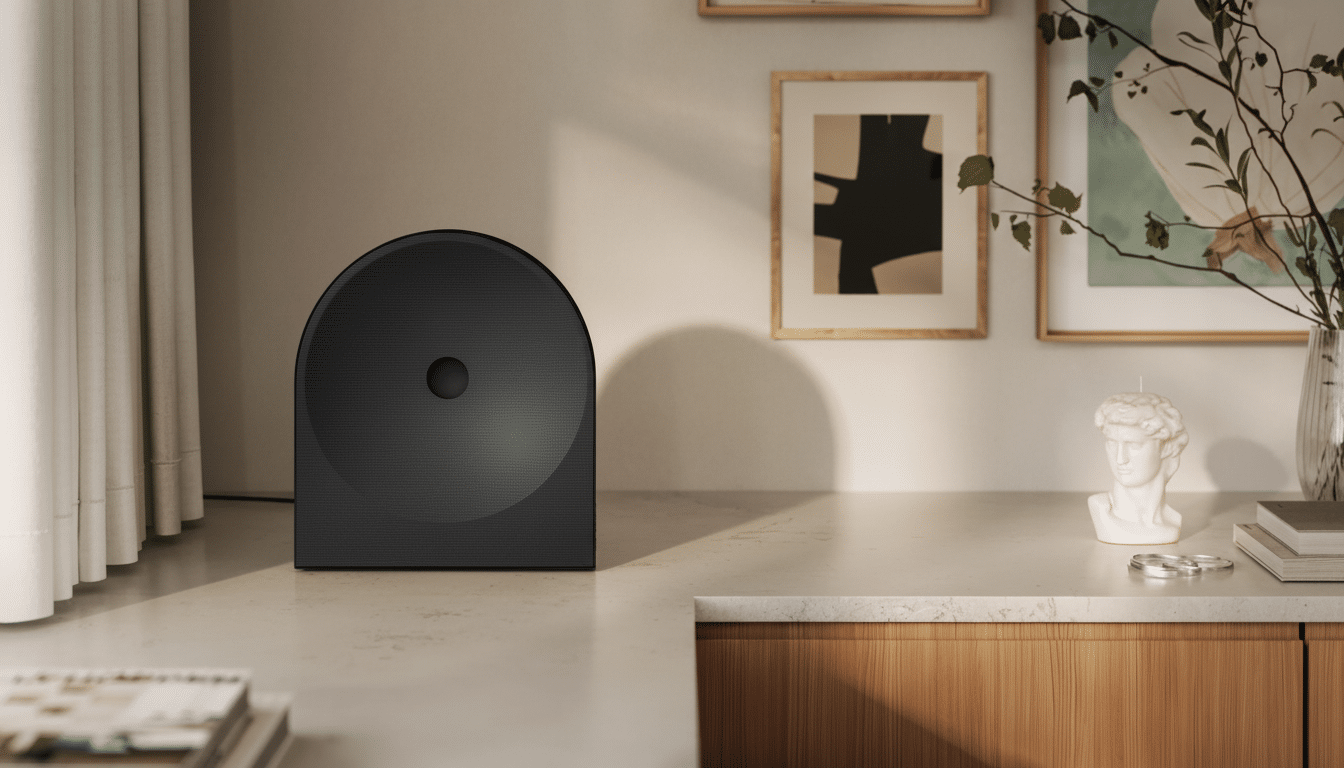
At the top of the list are the HW-Q990H and HW-QS90H soundbars, along with new “Music Studio” Wi‑Fi speakers that bring to market an aesthetic inspired by dots thanks to industrial designer Erwan Bouroullec. And, universally, Samsung’s pushing simplicity without compromising the mind-boggling scale it always did — big-room immersion with fewer cables, smarter calibration, and combined playback with compatible televisions.
Flagship Soundbars Push Immersion to New Levels
Billed as Samsung’s most immersive bar yet, the HW-Q990H takes an 11.1.4-channel formation. The system teams a 7.0.2 main bar with 4.0.2 rear speakers, while anchoring bass tones with dual eight-inch drivers in the compact active subwoofer. Put another way, all those distinct channels are an attempt to move effects not just around you but also above you, creating a dome of sound without requiring dedicated ceiling speakers.
New this year is Sound Elevation, an effect meant to raise dialogue more toward the visual center of the TV, addressing a frequent complaint that voices sound too low in the soundstage. The bar brings Auto Volume as well, which is intended to normalize the volume from apps and inputs, and also so-called next-gen AI tuning, a real-time process that gauges both your room acoustics and the type of content being played. Codec support is not specified by Samsung, although, as a company, its curved premium bars have traditionally supported object-based formats such as Dolby Atmos and DTS:X.
All-in-One Design with QS90H Targets Clean Setups
The HW-QS90H is designed for users who crave cinematic scale but don’t have the space for additional subwoofers or rear satellites. It’s a 7.1.2-channel all-in-one bar with 13 drivers, including nine wide-range speakers — four for the front, two on the left and right sides, end-mounted rear surround speakers — and an ingenious Quad Bass Woofer array that turns the cabinet itself into a big speaker. A Convertible Fit design allows owners to wall-mount it or park it on a console; there’s also a built-in gyro sensor that senses the orientation and automatically outputs accordingly.
All-in-one bars succeed or fail on cabinet engineering — bass extension, cabinet resonance, and driver dispersion. With bass consolidated in the enclosure and wide-range drivers spread across the front, the goal of the QS90H is to keep dialogue sounding crisp but still have presence in larger rooms — a tightrope act that’s particularly tough for one-piece systems.
Music Studio Speakers That Mix Decor And Fidelity
Samsung’s new Wi‑Fi speakers, Music Studio 7 and Music Studio 5 (model LS50H), embrace the “furniture-grade speaker” concept using a simple round design. The bigger Music Studio 7 also offers 3.1.1-channel spatial audio, with left, center, and right drivers plus up-firers too. The high-res playback up to 24-bit/96 kHz can be complemented with AI Dynamic Bass Control, which layers in and removes distortion when the going gets loud. Launching in black first, it can play solo or in a multi-speaker setup.
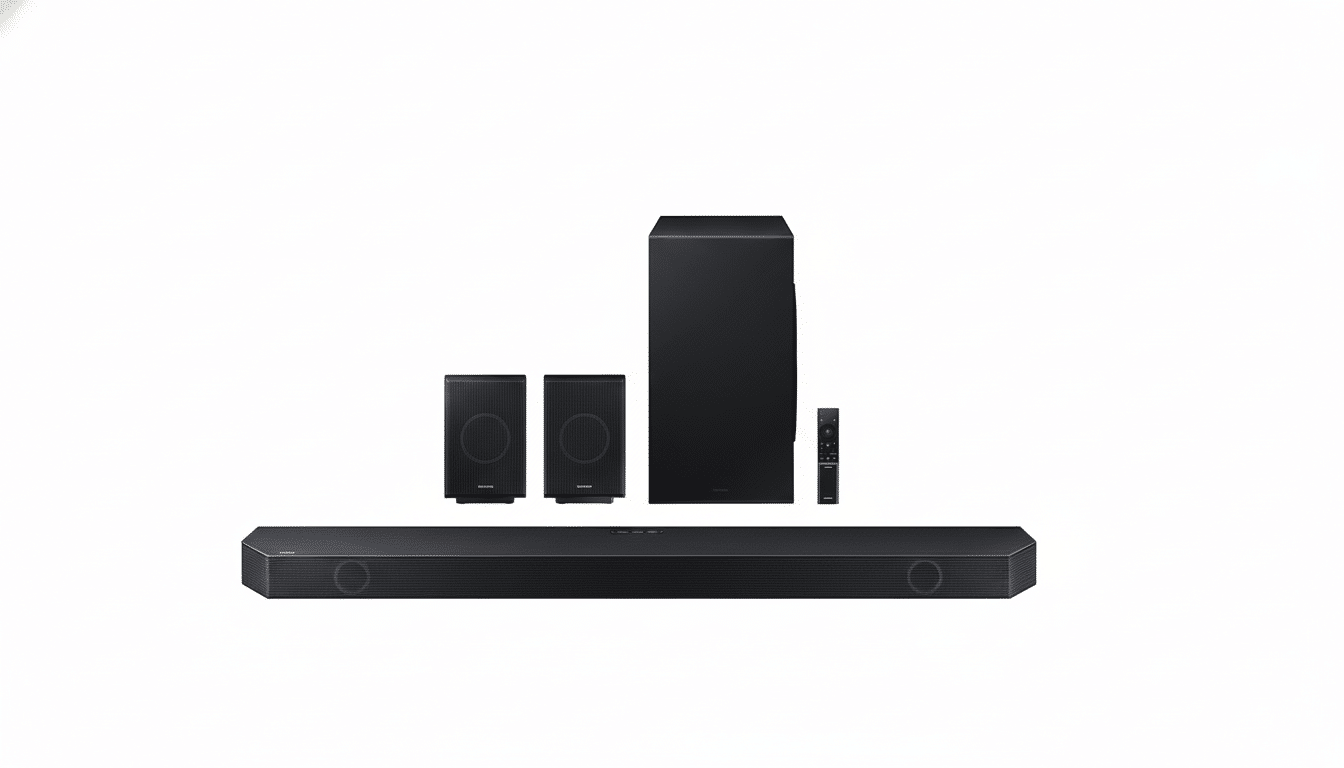
The small-space-friendly Music Studio 5 takes the gallery approach and features a four-inch woofer, dual tweeters, and an integrated waveguide for cleaner off-axis response at $399.99. It also supports Wi‑Fi casting and major streaming services, as well as Bluetooth, providing apartment dwellers with a discreet solution that fits within the confines of an elaborate home theater system.
Q-Symphony Brings the Home Audio System Together
Samsung’s ecosystem play revolves around Q-Symphony, which allows compatible TV speakers and external audio devices to play in unison instead of muting the TV. With 2026, Samsung is raising the ceiling to five sound devices connecting with a single TV at the same time. The system employs AI-aided room mapping to calibrate output based on where each piece is actually positioned — bookshelf speakers, soundbar, and a sub should sound like one system building audio together rather than three systems fighting for primacy.
Novel intelligent leveling and phase correction have been demonstrated to yield double-digit improvements in dialogue intelligibility and perceived envelopment, particularly in non-dedicated living rooms, as measured by independent testers.
Market Context and What to Watch in Samsung Audio
Samsung enters 2026 with momentum. Futuresource Consulting has consistently crowned it the world’s best soundbar maker over the past decade, a title won on flagship ranges that combine extra channels and smarter tuning with every passing year. “I’m optimistic that those are new formats companies like ours will be able to pursue,” he says. (The Consumer Technology Association estimates continued growth in high-end audio, even as places like streaming platforms have big inventories of spatial mixes in film and music.)
Key details we’re still waiting on include confirmed codec support, rear speaker options for the QS90H, and long-term firmware updates that can kill or create features like voice elevation and auto leveling. It will be crucial to get independent measurements from laboratories like Rtings and neutral listening panels in order to verify the touted elevation effect improvements and bass control.
For potential buyers the difference is simple: the HW-Q990H aims at dedicated home theater listeners who want separate rear channels but also height effects, the HW-QS90H leads with tidy installs while delivering near cinematic scale, and Music Studio speakers are intended to work as design-forward, high-fidelity nodes that can function as standalone players. If Samsung’s AI tuning and full Q-Symphony live up to the hype, they could be a huge level-up for multi-piece setups in 2026 that already feel far less fussy than anything from past generations.