


Samsung and LG have announced a new TV-war front, showcasing Micro RGB models that promise OLED-level precision along with LCD-grade brightness and durability. The companies promised various screen sizes, from ones that would blend into a living room to others topping 100 inches or more on the diagonal, and new AI processing. The $5,000 (£3,550) question: So, just what is a Micro RGB TV, and why should I labor to give a rodent’s posterior?
What is a Micro RGB TV, and how does the technology work?
Despite the “micro” part of its name, Micro RGB is an LCD television at its core. Instead of the usual white or blue LED backlight (often with a quantum dot film), these sets have an ultra-fine grid of tiny red, green and blue LEDs that serves as a light source. The screen up front is still an LCD panel that makes the image by opening and closing little shutters, but where the light comes from behind has been made so much more exacting (and colored already; no longer just “white light” that needs filtration).
- What is a Micro RGB TV, and how does the technology work?
- How Micro RGB differs from OLED and true Micro LED displays
- What Samsung and LG are promising with their Micro RGB TVs
- Early performance expectations for Micro RGB backlit LCD TVs
- Pricing and availability outlook for first-wave Micro RGB TVs
- Should you wait for Micro RGB TVs or buy what’s best today?
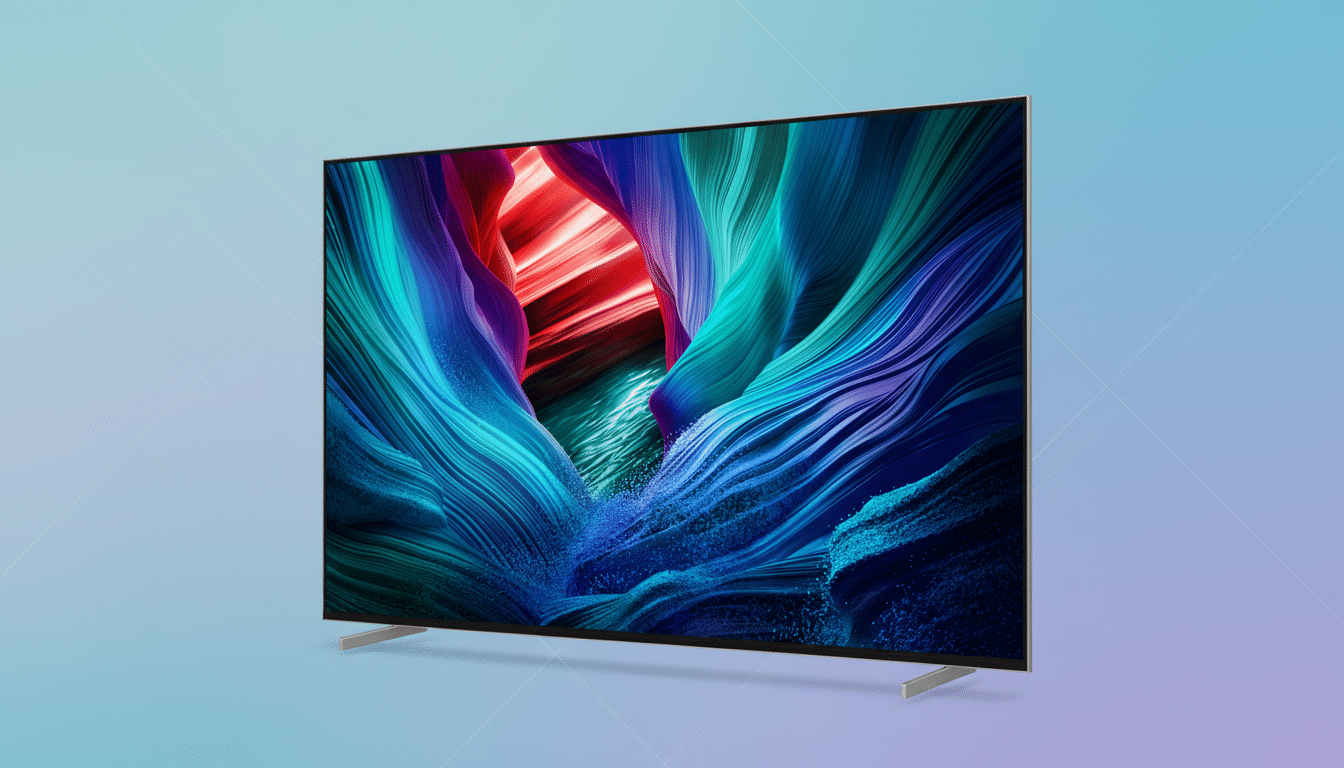
Why it matters: A lower emitter count allows many more local-dimming zones, tighter control of haloing, and cleaner transitions around bright objects. Premium mini-LED TVs now deliver on the order of thousands of dimming zones, and developers at industry research firm Display Supply Chain Consultants (DSCC) have said that by making emitters even smaller, and by going to an RGB (red-green-blue) configuration instead of one driven by cheaper white light, Micro RGB backlights hope to again increase control granularity even as they improve color purity at the light source.
How Micro RGB differs from OLED and true Micro LED displays
The jargon can get confusing. Both OLED and the real Micro LED are self-emissive, meaning each pixel creates its own light and can fully turn off for “infinite” contrast. Micro RGB is different. It’s a transmissive LCD stack with a much, much more complex backlight. There will be deeper blacks and less blooming than standard mini-LED LCDs, but not the super-sexy pixel-level shutoff of OLED or Micro LED.
Brightness is another area where Micro RGB might be able to pull away. Independent readings from sources like Rtings indicate that some recent high-end mini-LED sets are already capable of getting brighter than 2,000 nits on small highlights. Micro RGB’s spectrally pure and efficient emitters enable constant brightness as well as enlarged color volume, allowing for brighter output as well as colors that approach (or maybe someday even exceed) BT.2020 coverage over today’s white/blue LED backlights. Meanwhile, the emitters are themselves inorganic LEDs, so there’s no danger of the typical OLED-style image retention risk from the light source itself.
What Samsung and LG are promising with their Micro RGB TVs
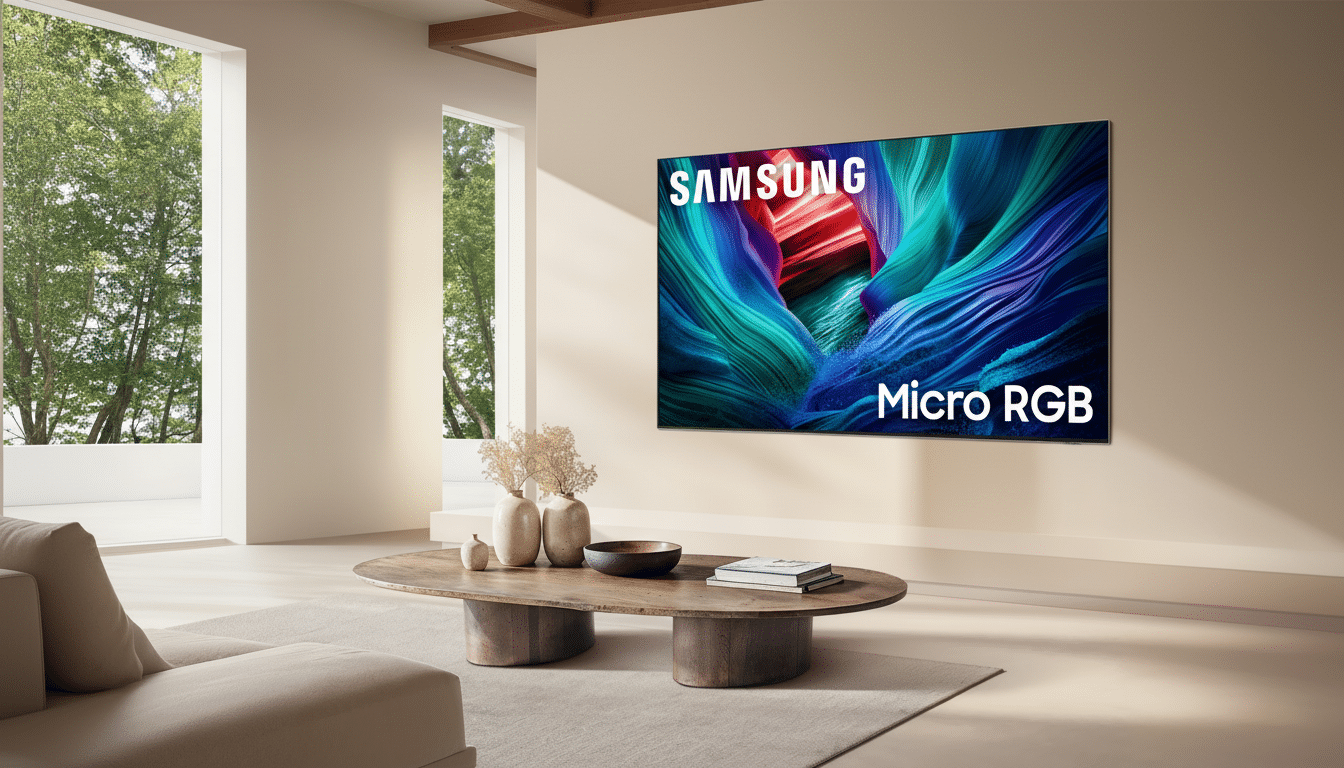
Samsung also previewed the expanded Micro RGB size lineup that includes 55, 65, 75, 85, 100 and 115 inches, in a sign of an effort to bring the tech outside of ultra-large showpieces. The panels are being combined with a next-gen AI processor that it says will enable improved fine tone mapping, artifact removal, and detail enhancement on a scene-by-scene basis.
LG had a flagship entry with Micro RGB evo in 75-, 86-, and 100-inch sizes. LG pitched the new backlight itself as a further refinement, using microscopic RGB LEDs and control algorithms adapted from its OLED knowledge to modulate it more precisely, in company briefings. Both manufacturers are selling Micro RGB as the compromise between the black-level finesse enthusiasts crave and the HDR punch that hits mainstream buyers in the face as soon as they press Play.
Early performance expectations for Micro RGB backlit LCD TVs
Anticipate many more dimming zones than regular mini-LED—possibly tens of thousands, according to panel size and architecture—resulting in cleaner-looking specular highlights and less blooming with challenging content such as starfields or subtitles plus dark video. Since they are RGB emitters, color mixing in the backlight should be fairly accurate (and therefore color luminance is better), even for the saturated reds and greens where white-LED systems tend to trip up.
There are trade-offs. Since it’s still an image crossing an LCD matrix, viewing angles and uniformity will vary depending on panel type (VA or IPS variants) and any optical layers applied. Response times should be better than on conventional LCDs due to smarter backlight scanning and drive speeds but won’t approach the instant responsiveness of an OLED’s pixel-switching. Calibrators will also be on the lookout for “mura” and color shift from the dense LED grid, as well as how well factory calibration holds over time.
Pricing and availability outlook for first-wave Micro RGB TVs
Early Micro RGB isn’t going to be cheap. Samsung’s initial 115-inch Micro RGB model has been priced in the ultra-premium tier, and the manufacturer’s genuine Micro LED sets have only fallen to the high five-figures. Omdia analysts forecast self-emissive Micro LED to clock in at less than 1% of TV shipments for years, given the difficulty to manufacture; LCD-based Micro RGB should scale better, though initial yields, alignment tolerances, and per-unit calibration all add cost. Smaller sizes should help, but don’t anticipate early pricing to launch below competing OLEDs and mini-LED flagships.
Should you wait for Micro RGB TVs or buy what’s best today?
It is quickest to emphasize the best picture on the market: blackest blacks and widest seating angles—those are still provided today by OLEDs. The best mini-LED sets offer searing high-dynamic range brightness for a sunlit room or sports, and I can tell the difference in many cases, especially from off-angle. Micro RGB is looking to thread the needle: a bit more OLED-esque shadow control and power without compromising on that LCD-level punch and longevity. The catch, for some, is first-generation pricing and real-world performance unknowns.
For most shoppers, it’s the smart move to check out Micro RGB in person once reviews and instrumented tests surface from trusted labs and calibrators. If the technology delivers on its promise—greater color volume, tighter dimming, and more consistent accuracy—it could be the premium LCD to beat. Meanwhile, OLED and mature mini-LED models continue to be the safe bets until then, and the Micro RGB is everyone’s new awkward-looking toy they can’t wait to see light up in a dark demo room.