


Salesforce has signed a definitive agreement to acquire Rune Technologies, a young defense-technology company whose software is designed to support military logistics in difficult communications environments. The proposed deal would push Salesforce’s Missionforce business beyond enterprise and headquarters workflows toward supply, movement and sustainment operations closer to the tactical edge.
The transaction, announced Oct. 29, is expected to close in the fourth quarter of Salesforce’s fiscal 2027, subject to customary closing conditions, according to the company’s announcement. Financial terms were not disclosed. That leaves investors without a basis to measure the acquisition’s immediate impact on Salesforce’s revenue, margins or capital-allocation program, even as the deal signals a more deliberate move into defense software.
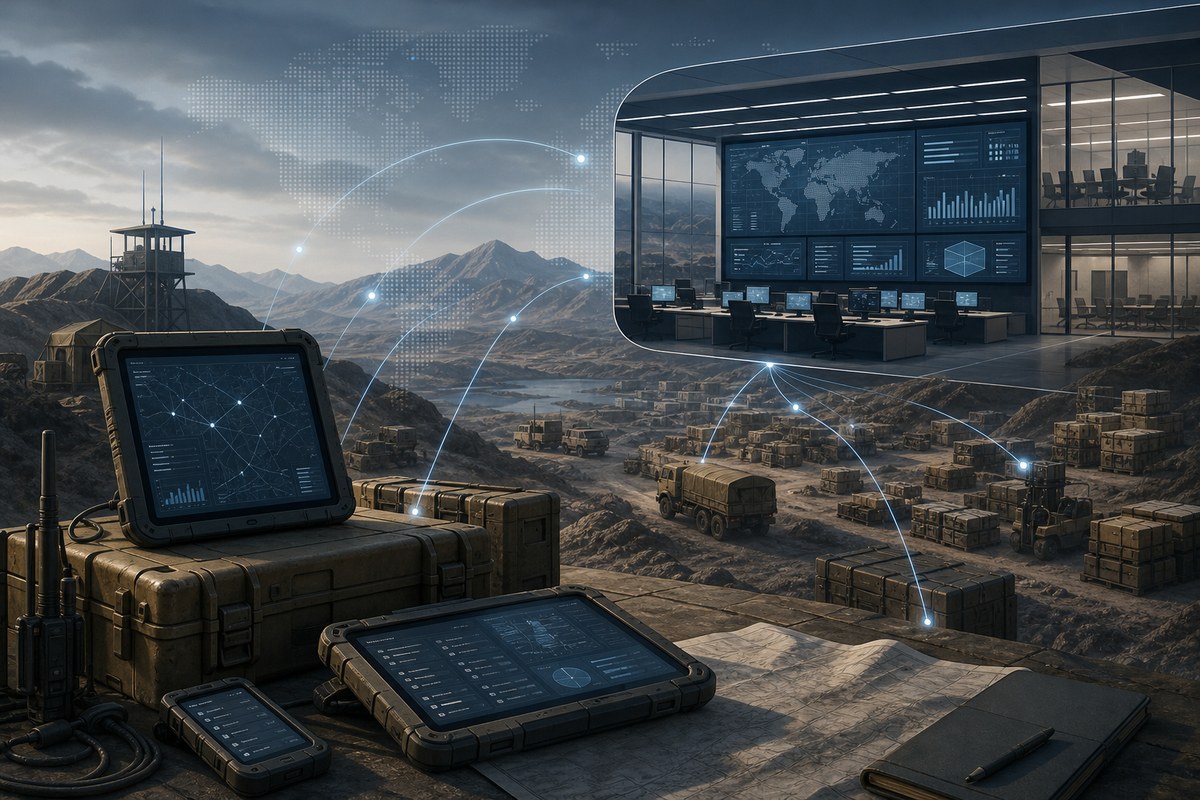
Missionforce moves toward field logistics
Salesforce describes Rune as an edge-native provider of logistics and sustainment technology for the U.S. military and allied nations. Rune’s tools are intended to help frontline teams forecast supply requirements, allocate resources and make operational decisions in denied, degraded, intermittent or limited-connectivity environments, commonly abbreviated as DDIL.
The distinction is important to the product strategy Salesforce is outlining. Traditional enterprise applications generally depend on persistent network connections and centralized data systems. Salesforce says Rune is built for users whose communications may be unavailable or unreliable, with information designed to synchronize with broader systems when connectivity permits. The company’s stated aim is to connect field supply and movement requirements with enterprise workflows for asset management, field service and operational visibility.
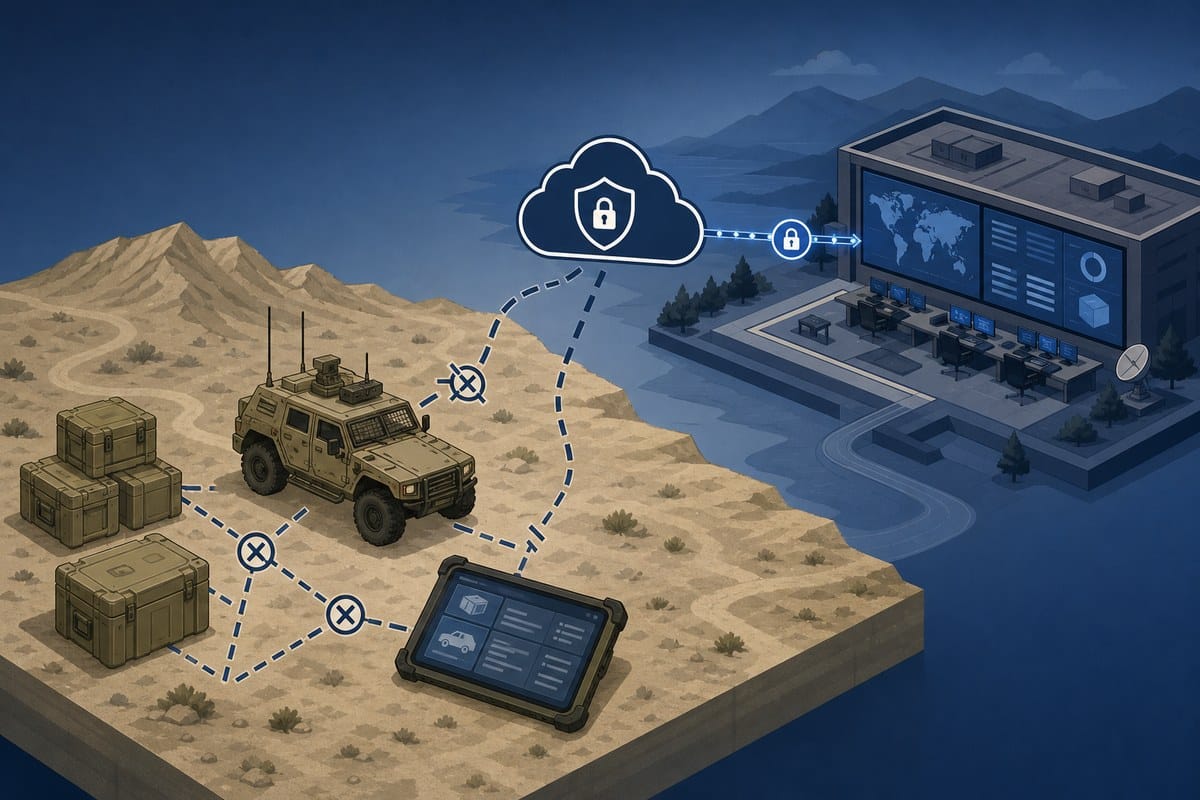
Salesforce characterizes Rune’s capabilities as purpose-built “super-intelligence” for tactical-edge logistics. That is a company marketing description rather than an independently specified technical benchmark: the announcement does not disclose model performance, contract values, deployment scale, revenue or the precise degree of software integration planned after closing.
A Reuters report said the U.S. Army and U.S. Marine Corps already use Rune’s technology. Salesforce’s announcement describes the target’s customer focus more broadly as the U.S. military and allied nations, but neither account provides details on the programs, contract sizes or duration of those deployments.
A small target in a larger defense push
Rune was launched in 2024 by co-founders David Tuttle and Peter Goldsborough, Salesforce said. Its short operating history makes the transaction notable less as the purchase of a mature public-scale software vendor than as an effort to add a specialized product and team to an established cloud-platform company.
Salesforce launched Missionforce about a year before the announcement and said its defense business was growing 80% year over year while serving customers across all six branches of the U.S. military. Those figures and customer-reach assertions come from Salesforce and were not accompanied by a revenue base, bookings measure or external verification. An 80% growth rate can represent very different dollar gains depending on the starting base, so the disclosure does not establish Missionforce’s scale within Salesforce’s much larger operations.
The company calls Rune its most significant national-security-focused acquisition. The phrasing points to the strategic role Salesforce assigns the deal, but no purchase price has been released and no comparable financial yardstick was supplied. Reuters likewise reported that terms were not immediately disclosed.
What remains unresolved
The agreement is not a completed acquisition. Salesforce has announced a signed definitive agreement, and the parties still must satisfy customary closing conditions. The company did not identify a regulatory timetable, any government-consent requirements, expected integration costs or changes to Rune’s existing customer arrangements.
Nor does the announcement say whether Rune will remain a separately branded product, how its data architecture will connect to Salesforce’s platform, or when customers could use an integrated offering. For defense buyers, those details can be as consequential as the initial announcement because frontline logistics systems must fit with existing operational, security and procurement requirements.
For Salesforce, the immediate strategic logic is clearer than the financial calculation. Missionforce has been positioned around government and defense workflows; Rune would give it software aimed at a narrower operational problem where disconnected field conditions are part of the design requirement. The eventual value of the deal will depend on whether Salesforce can turn that specialized capability into deployments across its government customer base after the transaction closes.