


President Donald Trump has expressed his preference for the idea of importing Japan’s “kei” style microcars to America and promoting them as low-cost, fuel-efficient runabouts for American cities.
The political jolt is flashy, but auto industry insiders and safety experts say one thing is clear: These tiny cars will not be zipping down American freeways any time soon.
What Kei Cars Are, and Why They Exist in Japan
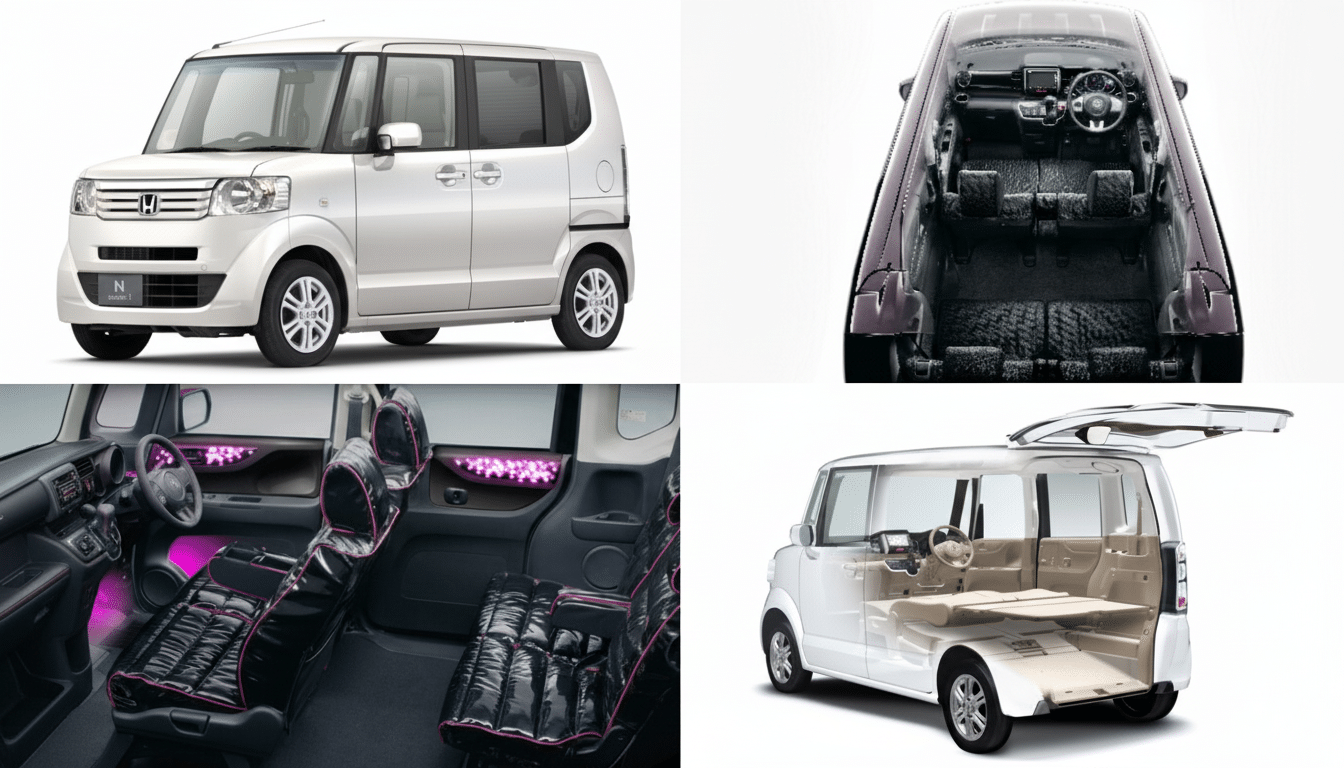
Kei cars are a unique and uniquely Japanese class that places strict size and power constraints on vehicles: around 3.4 meters in length, 1.48 meters in width and with tiny motors of about 660cc. The result: extremely compact footprints, low ownership taxes and budget prices. Models like the Honda N-Box frequently lead sales charts in Japan, where kei cars represent about a third of new registrations, according to industry associations and transport ministry figures.
Recipe fits with dense cities, where parking is tricky and national incentives favor small frugal vehicles. The regulatory and tax structure in Japan takes small cars as a foundation; those in the US are built around highway-capable, full-size cars.
Regulatory Wall Against US Freeway Reality
To be sold widely in the US, any “tiny car” had to meet the Federal Motor Vehicle Safety Standards. That includes frontal and side-impact tests, roof strength requirements, advanced airbag and crash avoidance standards as well as lighting regulations. Kei-style imports would struggle to meet those safety requirements, the Insurance Institute for Highway Safety has said, unless regulators create exemptions — rarity that is complicated with legal challenges.
There is a specialized class for low-speed neighborhood electric vehicles, but these are capped at 25 mph and are not freeway legal. Converting a Japanese kei car into an all-US-friendly highway vehicle would take a lot of engineering: stronger frames, better crumple zones, updated restraints and higher-speed crashability. The conversion only makes it heavier and more expensive, and in the process waters down the very kernel of kei.
Market Physics Favor Big Trucks Over Tiny Cars
Consumer demand is a towering question, even if regulators threw the door open. SUVs and pickups, or light trucks, now comprise an estimated 75-80% of US new-vehicle sales, according to analyses by S&P Global Mobility and Cox Automotive. The Ford F-Series, Chevrolet Silverado and Toyota RAV4 are perennial leaders in sales. 3,000-pound kei car mixing it up on the lanes against 6,000-pound three-ton pickups and full-size SUVs is not something to win any American over.
IIHS research has consistently found that very small, very light cars are more likely to fare poorly in multi-vehicle crashes, simply because they lose the battle of physics. The proportion of sizes in the US fleet is very biased away from small vehicles, this makes mass mismatch risk-averse and undermines potential safety benefits of microcars: no matter how well they pass single-vehicle tests.
The Cost Math Doesn’t Quite Work in America Yet
In Japan, kei cars can begin close to $10,000 because of tax discounts as well as a lower threshold for crashes and smaller parts. In the US, add in the cost of compliance engineering and certification testing, not to mention added safety systems. Automakers have retooling deadlines and domestic-content requirements if the vehicles are to be built in America, as Trump’s manufacturing-first posture seems to suggest they should.
Electrification doesn’t add up to affordability.
Although BloombergNEF is tracking falling battery pack prices in the area of $130–$140/kWh, there are thousands of dollars’ worth of electronics and safety content needed on a US-ready microcar. New rules requiring automatic emergency braking and other driver-assistance features will further increase baseline costs. To realistically hit real transaction prices of $10,000 without big incentives is a long shot.
City Use Cases Are Plausible and Limited
The transportation secretary, Sean Duffy, has said tiny cars would make a “great solution” for dense cities but not interstates. That leaves targeted pilots: geofenced urban zones, municipal fleets, campus shuttles or last-mile delivery where speeds are slow and lanes narrow. Europe offers a playbook — the Citroën Ami and other micro-EVs have proven a success in cramped cityscapes with friendly regulations.
American consumers have occasionally dallied with this idea. The Smart Fortwo and the Mitsubishi i-MiEV were downsized, but faced problems in achieving price competitiveness, perceived safety levels, and highway performance. The newest Fiat 500e proves that there is space for tiny stylish EVs in niche volumes, but it’s also still a big step away from kei-size pricing and dimensions.
Policy Signals and Realistic Timing for Microcars
The administration’s support grants agencies room to investigate pathways — rulemaking petitions, special-use designations, pilot programs — but all of those also require formal proposals, public input and final rules. That’s a process that itself can take years. Manufacturers must have an additional 24-48 months to engineer, test, tool and certify a compliant product.
Put it all together and the result points to this: One day America could get more micro-mobility choices of its own, and they might even be shaped by Japan’s kei philosophy. But really, truly small, highway-legal, mass-market cars built to U.S. specs won’t arrive soon. For now, the country’s roads — and buyers — are still tuned to larger vehicles, contributing to the regulatory, safety and cost hurdles hindering reduction.