


A well-designed backyard can become one of the most enjoyable parts of your home. It gives you a place to enjoy morning coffee, host friends for dinner, or relax outside after a busy day. In Sacramento, however, creating a comfortable outdoor space takes more than choosing attractive furniture. Hot summers, strong sunlight, and occasional rain all affect how you use your patio year-round.
The right cover can make a significant difference. From traditional roofed pergolas to modern cantilever structures, options fit different homes, budgets, and backyard layouts. The key is to choose a design that offers the protection you need without making the space feel closed off. With thoughtful planning, you can create an outdoor area that looks good, works for everyday life, and complements your home.
- Pergola With Roof: Creating a Stylish and Functional Outdoor Retreat
- Open Patio: How to Design a Welcoming Backyard for Relaxation and Entertaining
- Outdoor Roofing: Choosing Durable Materials for Sacramento’s Climate
- Screen for Outdoor Patio and Covered Outdoor Living: Combining Comfort, Shade, and Privacy
- Cantilever Patio Cover: A Modern Solution for a Spacious Outdoor Living Area
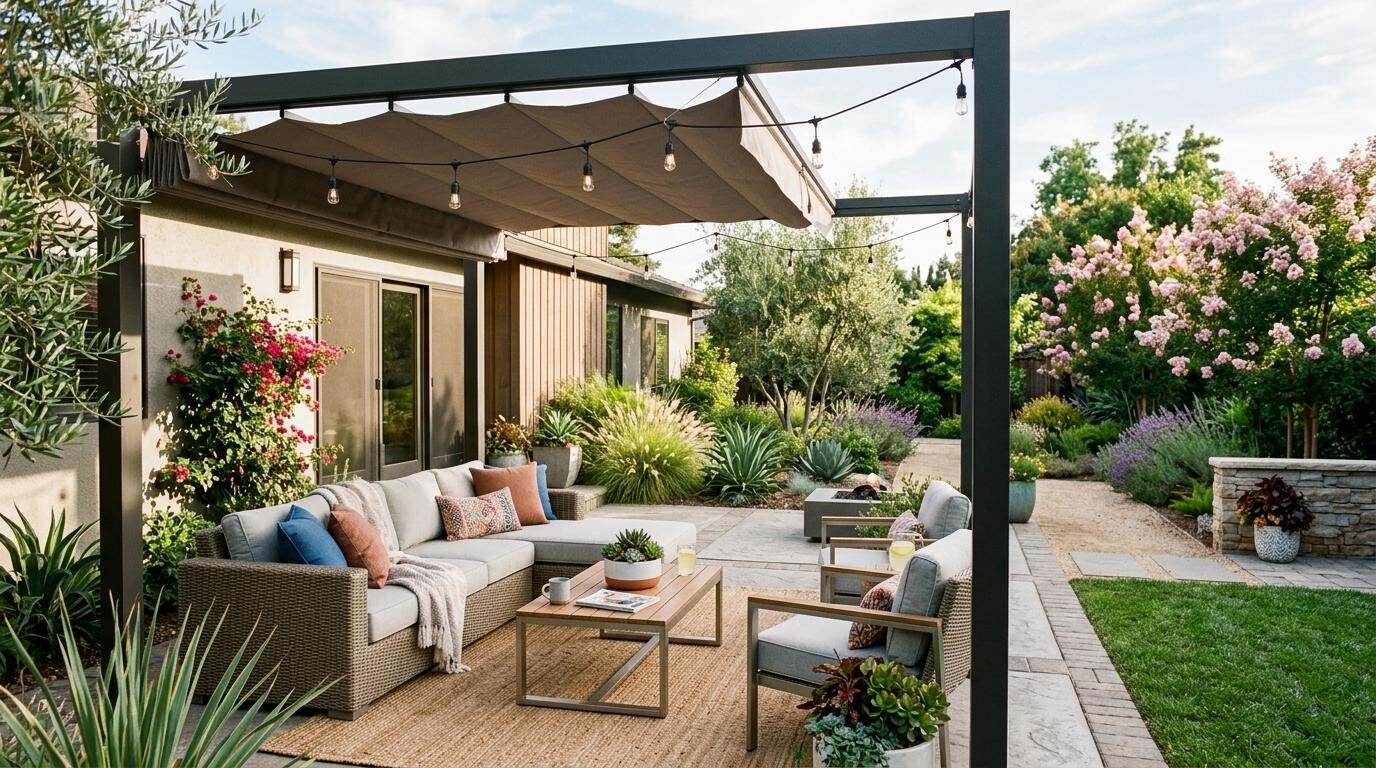
Pergola With Roof: Creating a Stylish and Functional Outdoor Retreat
A pergola can add structure and character to a backyard, but a traditional open-beam design does not provide complete protection from the elements. Adding a solid or adjustable roof makes the space more practical, especially during Sacramento’s hot summer months.
A pergola with a roof combines the open feel of an outdoor structure with the comfort of reliable shade. Depending on the design, the roof may feature insulated panels, metal sheets, polycarbonate, or adjustable louvers that let you control how much sunlight enters the space.
Before choosing a style, consider how you plan to use the area. If you want an outdoor dining room, a roof that blocks direct sunlight and provides dependable rain protection may be the best choice. For a lounge area where you enjoy changing light throughout the day, adjustable louvers offer greater flexibility.
When comparing designs, pay attention to the following features:
- Roof performance: Choose a system that provides sufficient shade and handles rain effectively, with appropriate drainage.
- Structural strength: Design posts, beams, and connections for the roof’s weight and local wind conditions.
- Everyday comfort: Consider airflow, lighting, and enough clearance for furniture, doors, and walkways.
A well-planned pergola with a roof can create a comfortable transition between indoor and outdoor living without sacrificing the feeling of being in the backyard.
Open Patio: How to Design a Welcoming Backyard for Relaxation and Entertaining
An open patio can be an excellent choice if you prefer an airy backyard with plenty of natural light. Instead of covering the entire area, you can keep part of the patio open and use landscaping, umbrellas, or a smaller covered section to create shade where you need it most.
This approach works particularly well for homeowners who enjoy sunbathing, gardening, or growing plants that need direct sunlight. It can also make a small backyard feel more spacious because the design does not introduce a large roof structure across the entire area.
Start by dividing the patio into practical zones. For example, place a dining table near the kitchen entrance for convenient serving, then create a separate seating area with comfortable outdoor chairs. If space allows, a small fire feature or a decorative planter can help distinguish the two areas without blocking movement.
The paving choice also affects the overall experience. Concrete offers a clean, versatile surface, while pavers can introduce color and texture. Whichever material you choose, consider how hot it gets in direct sunlight, how easy it is to clean, and whether the surface provides good traction when wet.
If you are planning a larger backyard renovation, exploring Sacramento patio covers can help you understand how different cover styles may fit into your outdoor layout.
An open design does not mean you have to give up comfort. Consider these practical additions:
- Position a large umbrella or shade sail over the main seating area to reduce direct sun exposure during the hottest hours.
- Use drought-tolerant plants and appropriately placed trees to introduce natural shade without creating excessive maintenance.
- Select weather-resistant cushions and furniture that can withstand regular outdoor use, and store smaller accessories in a protected area.
The most successful open patio designs balance sunlight and shade rather than treating either as an all-or-nothing choice. You can enjoy the openness of the backyard while still having comfortable places to sit, eat, and spend time with guests.
Outdoor Roofing: Choosing Durable Materials for Sacramento’s Climate
The roof is one of the most important parts of an outdoor cover. It affects temperature, light, maintenance, and how well the structure protects furniture and other belongings. In Sacramento, where summer heat and intense sunlight matter most, choose materials carefully.
The best outdoor roofing material depends on your priorities. Some homeowners want maximum shade and a cooler seating area, while others prefer filtered sunlight or a lightweight, modern appearance.
Aluminum is a popular option because it is relatively lightweight, durable, and rust-resistant. Depending on the system, insulated aluminum panels can also reduce the heat radiating into the covered area. They are worth considering if you want a low-maintenance structure that provides consistent shade.
Polycarbonate panels let daylight pass through while protecting against rain. However, their performance varies by product, and transparent or lightly tinted panels can still allow significant heat into the space. If summer comfort is a priority, look for products designed to manage solar heat and UV exposure.
Metal roofing can provide a clean, contemporary look and strong weather protection when installed correctly. Insulation, ventilation, and roof color all influence how comfortable the space feels underneath. A dark, uninsulated roof may absorb considerable heat, so the complete roofing system matters more than the material name alone.
Wood can create a warm, natural appearance, but it generally requires more maintenance. Depending on the species and finish, you may need regular cleaning, sealing, or repainting to protect it from weathering.
When evaluating roofing options, consider the following factors:
- Heat control: Look for materials and roof designs that reduce direct solar exposure and limit heat buildup.
- Drainage: Make sure the roof directs rainwater away from the house, foundations, and seating areas.
- Maintenance: Compare cleaning requirements, expected lifespan, finish durability, and potential repair costs.
- Compatibility: Check that the roofing material works with the proposed structure and meets applicable building requirements.
Good outdoor roofing should do more than look attractive on installation day. It should perform reliably over time, suit the local climate, and make the space more comfortable during the seasons you use it most.
Screen for Outdoor Patio and Covered Outdoor Living: Combining Comfort, Shade, and Privacy
Shade is only one part of outdoor comfort. Glare, insects, wind, and limited privacy can also make a patio less enjoyable. Adding a screen can address several of these issues while preserving the connection between your backyard and the surrounding landscape.
Outdoor patio screens come in different forms, including retractable mesh screens, fixed panels, and decorative privacy screens. Retractable systems are particularly useful because you can lower them when you need protection and open them when you want an unobstructed view.
Mesh screens can help keep many flying insects out of a covered seating area, making outdoor dining more pleasant. Depending on the material, they may also reduce some wind and direct sunlight. However, not every screen provides the same level of protection, so check its intended purpose before selecting a product.
Privacy is another important consideration, particularly when neighboring homes overlook your backyard. A combination of screening, tall planters, and carefully positioned furniture can create a more secluded atmosphere without building a completely enclosed room.
A well-designed covered outdoor living area can extend your home. You might use it for family meals, remote work, reading, or entertaining friends. To make this possible, include enough space for furniture and circulation, and consider lighting and electrical access during the initial design.
Cantilever Patio Cover: A Modern Solution for a Spacious Outdoor Living Area
A cantilever design is worth considering if you want shade without placing support posts in the middle of your patio. Instead of relying on posts at every corner, the structure projects outward from a carefully engineered support system, leaving more of the usable area open.
A cantilever patio cover can work well over outdoor dining tables, lounge furniture, or a seating area beside a pool. With fewer posts interrupting the layout, it is easier to arrange furniture, move around, and maintain clear sightlines across the backyard.
Before choosing this style, consider where the support structure will sit and whether it will interfere with doors, windows, walkways, or existing landscaping. Also consider how rainwater will drain and whether the proposed design can handle local wind conditions.
A cantilever patio cover may cost more than a simpler structure because of its engineering and support requirements. Nevertheless, the open layout can be worth the investment when uninterrupted space is a priority.