


A Rutgers University analysis has found that adults with type 2 diabetes who began taking GLP-1 receptor agonists had a small increase in diagnoses of ischemic optic neuropathy, an uncommon disorder involving reduced blood flow to the optic nerve that can cause sudden vision loss. The researchers estimated roughly three to four additional cases for every 10,000 patients treated over 18 months.
The finding is clinically important because the condition can bring sudden changes in vision, sometimes with lasting impairment. But it does not show that medicines such as semaglutide or tirzepatide caused the cases. The study was observational, and researchers said differences in patients’ underlying health could account for some or all of the association.

The result has resurfaced in October coverage, but Rutgers’ official account of the study was published July 14, 2026. Later reports appear to describe the same Annals of Internal Medicine research, rather than a new regulatory action, safety warning or updated analysis. A Medical Dialogues report identifies the paper as “Glucagon-like Peptide-1 Receptor Agonists and Risk for Ischemic Optic Neuropathy,” by Kamika R. Reynolds and colleagues.
A rare outcome with a small reported absolute increase
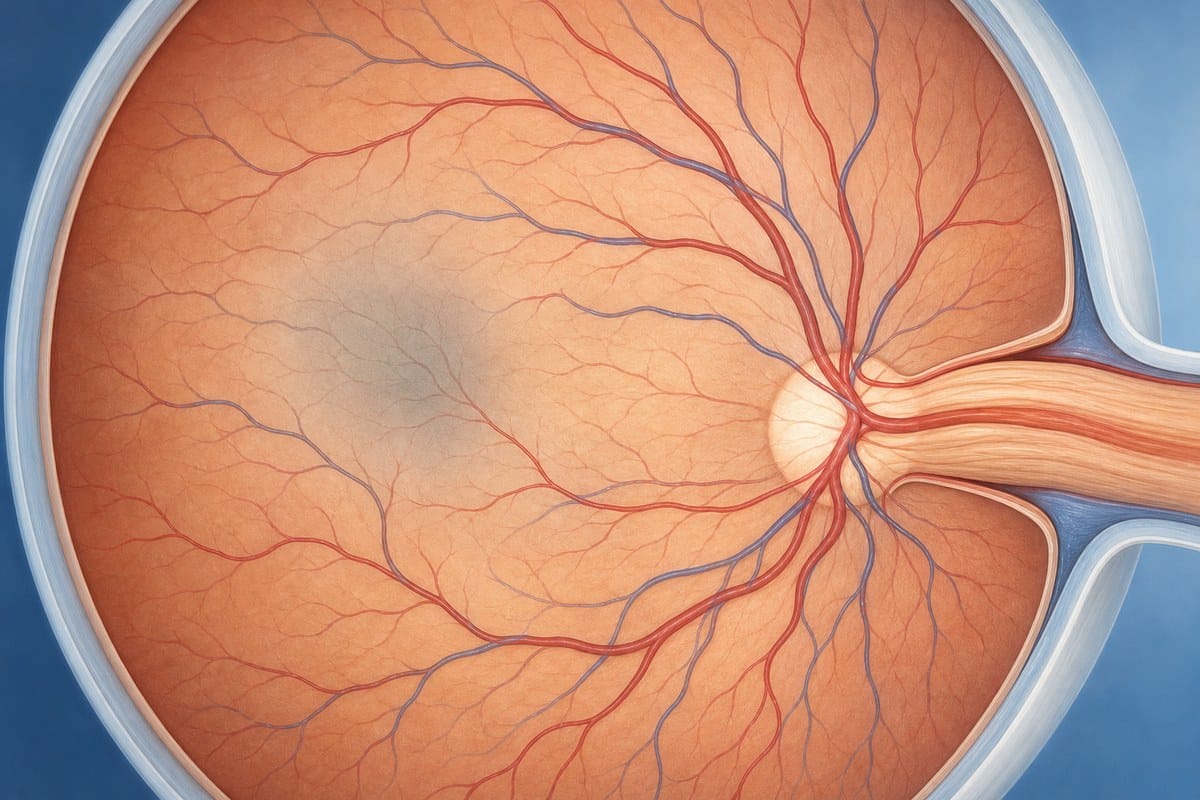
Rutgers describes ischemic optic neuropathy as involving reduced blood flow to the optic nerve that can cause sudden vision loss. Symptoms can include blurring, dimming or loss of part of the visual field in one eye. The condition can develop abruptly, but the available information does not support describing it as typical total blindness.
The researchers examined a large U.S. database of people ages 18 to 65 who had type 2 diabetes and were starting medication treatment. GLP-1 receptor agonists include semaglutide products sold as Ozempic and Wegovy, and tirzepatide products sold as Mounjaro and Zepbound. These medicines are used for diabetes, and some are also approved for chronic weight management.
Absolute numbers put the reported result in perspective. An additional three to four cases per 10,000 treated people over 18 months is equivalent to about 0.03% to 0.04% more cases during that period. That does not make a vision-threatening event trivial for an affected person, but it means the finding should not be understood as a common outcome among GLP-1 users.
Most study participants who developed ischemic optic neuropathy were men or people 50 to 65 years old, according to Rutgers. The university also said that more than four-fifths of cases are estimated to be non-arteritic anterior ischemic optic neuropathy, commonly called NAION. Some people with NAION have improvement in vision, generally within the first six months, but vision loss may persist.
What the study can and cannot show
Because this was an observational database study, it cannot by itself show that a medicine caused ischemic optic neuropathy. Rutgers specifically noted that differences in patients’ underlying health might explain some or all of the observed association.
Important details that would help assess the strength of the association are not available in the university’s public description, including the sample size, exact comparison groups, case definitions, statistical estimates for individual drugs and results across patient subgroups. Those gaps limit how precisely the finding can be applied to an individual patient.
The reported population also sets a boundary on the result. It involved adults 18 to 65 with type 2 diabetes who were beginning treatment. Although some GLP-1 medicines are widely used for obesity, this estimate does not directly establish risk among people taking them solely for weight management and without type 2 diabetes.
Eye specialists describe mixed evidence
The Rutgers report joins a still unsettled body of research on GLP-1 medicines and eye outcomes. In an October 2025 review of studies presented at its annual meeting, the American Academy of Ophthalmology said evidence on whether these medicines cause or prevent particular vision problems was mixed and that longer-term research was needed.
The Academy and the North American Neuro-Ophthalmology Society have said that a person who develops NAION while taking a GLP-1 drug should make a shared decision with clinicians about whether to continue therapy. That is different from advising people without symptoms to stop a prescribed medicine on their own.
For patients taking these drugs, sudden dimming, blurring or loss of vision merits urgent medical assessment. Rutgers called for prompt ophthalmologic evaluation of sudden visual symptoms. The study identifies a low-frequency safety signal worth further study, not proof that GLP-1 medicines directly cause optic-nerve injury.