


Russian missile strikes have halted operations at three of Ukraine’s largest steel plants, a disruption that companies said removed facilities responsible for about 90% of the country’s steel production. The plants, in the industrial Zaporizhzhia and Dnipropetrovsk regions, remain idle while operators assess damage and whether core equipment can be repaired.
The shutdown concentrates an already severe wartime industrial risk in a sector important to exports, payrolls and public revenue. Two of the affected works belong to Ukrainian mining-and-steel group Metinvest, while the third is operated by ArcelorMittal Kryvyi Rih, according to accounts published by Hromadske and Meduza, both citing Financial Times reporting and company executives.
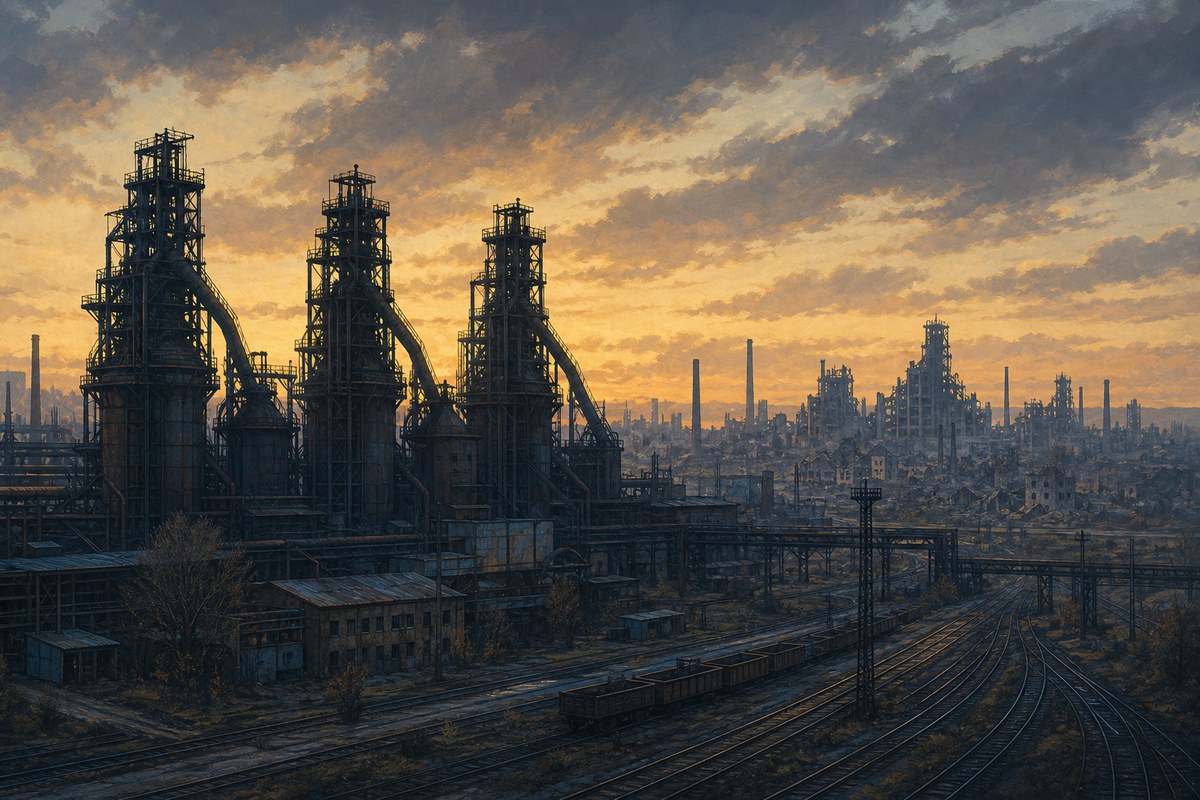
Output estimate is a company claim, not a full industry count
Metinvest and ArcelorMittal put the three plants’ combined share at roughly 90% of Ukrainian steel output, according to the reports. That figure describes the scale of the lost capacity at the named facilities; it does not establish that every steel-related operation in Ukraine has stopped. Metinvest executive Oleksandr Vodoviz characterized the interruption in broader terms, but the reported evidence identifies three idled plants rather than a complete accounting of the country’s remaining steel industry.
The affected Metinvest sites are Zaporizhstal and Kamet Steel. Hromadske reported that Zaporizhstal had been out of operation since an Aug. 11 strike and that Kamet Steel suspended operations following a ballistic-missile attack on Sept. 5. ArcelorMittal Kryvyi Rih was identified as the third plant in the accounts relayed by several outlets.
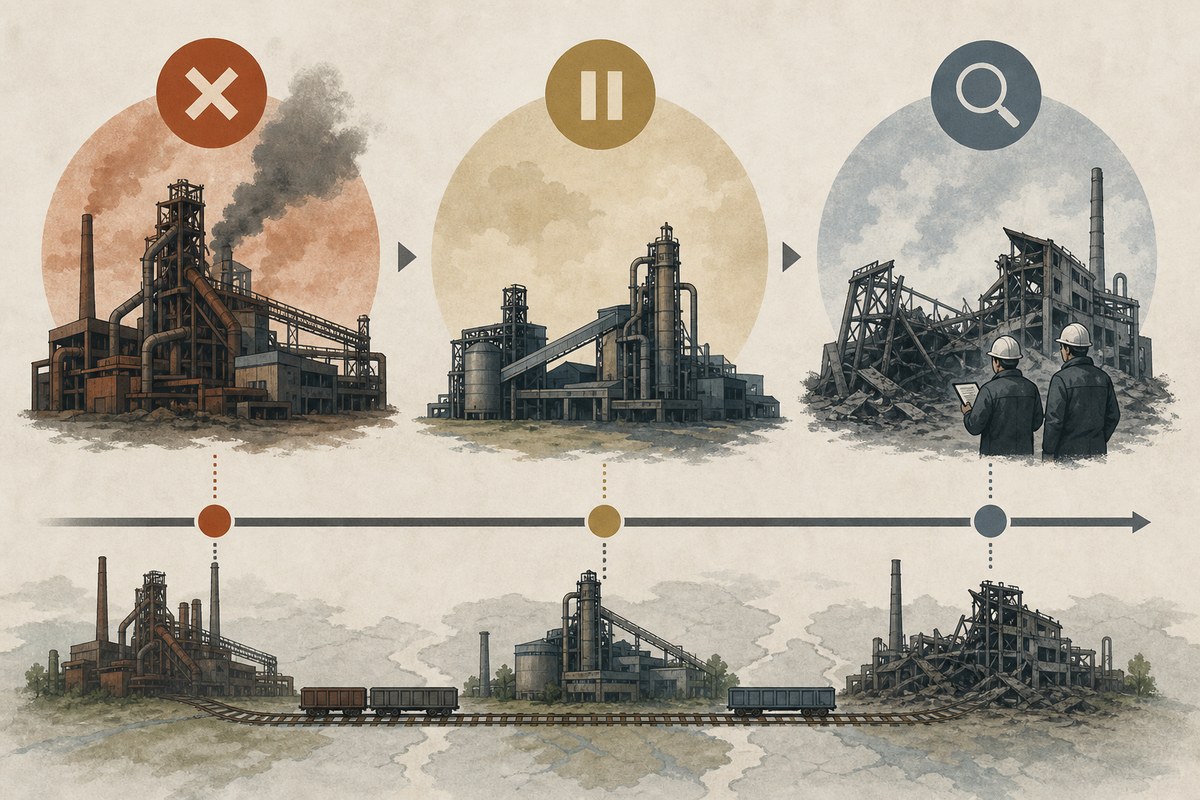
The sequence suggests that the production loss was not solely the result of one attack. Kyiv Post reported additional strikes on Zaporizhstal on Aug. 27 and Sept. 12, while multiple reports said two ballistic missiles hit the site on Sept. 17, damaging production and rail-related infrastructure. By Sept. 20 and 21, reporting citing the Financial Times said all three major plants remained shut.
Damage assessment leaves restart schedule open
The plants’ blast-furnace infrastructure was a central focus of the reported attacks, according to Vodoviz’s account to the Financial Times. Blast furnaces are not equipment that can necessarily be switched off and restarted with the speed of a conventional manufacturing line: prolonged outages can create operational and engineering challenges, while damage to supporting power, transport and materials systems can delay a return even if a furnace itself is repairable.
No repair timetable was disclosed in the reports. Vodoviz said the work could take anything from days to years, a range that underscores how little is publicly established about the condition of the facilities. UNN’s account, also citing the Financial Times, said companies were still evaluating the damage and had not set a schedule for resuming production.
The practical exposure extends beyond lost tonnage. Vodoviz said the three sites employ more than 15,000 people and warned that their closure could affect tax receipts. Those figures and potential fiscal effects have not been independently detailed in the available reports, but they identify why the stoppage carries a larger economic cost than a temporary interruption at a single mill. A sustained closure would remove a concentrated portion of domestic steelmaking capacity while placing jobs and supplier activity under further pressure.
Casualty accounts remain unresolved
Fatality reports connected to the strikes do not yet form a consistent plant-by-plant record. Financial Times reporting relayed by Meduza, UNN and Kyiv Post put the total number of plant workers killed at 17. Hromadske, however, reported seven fatalities at Zaporizhstal and five at Kamet Steel, or 12 across those two facilities. The available accounts do not explain the difference or specify whether the higher total includes other attacks, locations or workers.
There is also disagreement over the Aug. 11 strike at Zaporizhstal. Hromadske reported seven employees killed and 21 injured, while Kyiv Post cited eight deaths and 28 injuries in its account of the attack that halted output. Without a directly cited company or official casualty statement reconciling those figures, the differing tallies should not be combined into a single definitive count.
For steel buyers, suppliers and Ukrainian policymakers, the immediate issue is not an announced restart plan but the duration of the assessment. The reported 90% output estimate means the three facilities’ return will be a major determinant of whether Ukraine can restore most of the steelmaking capacity represented in these reports.