


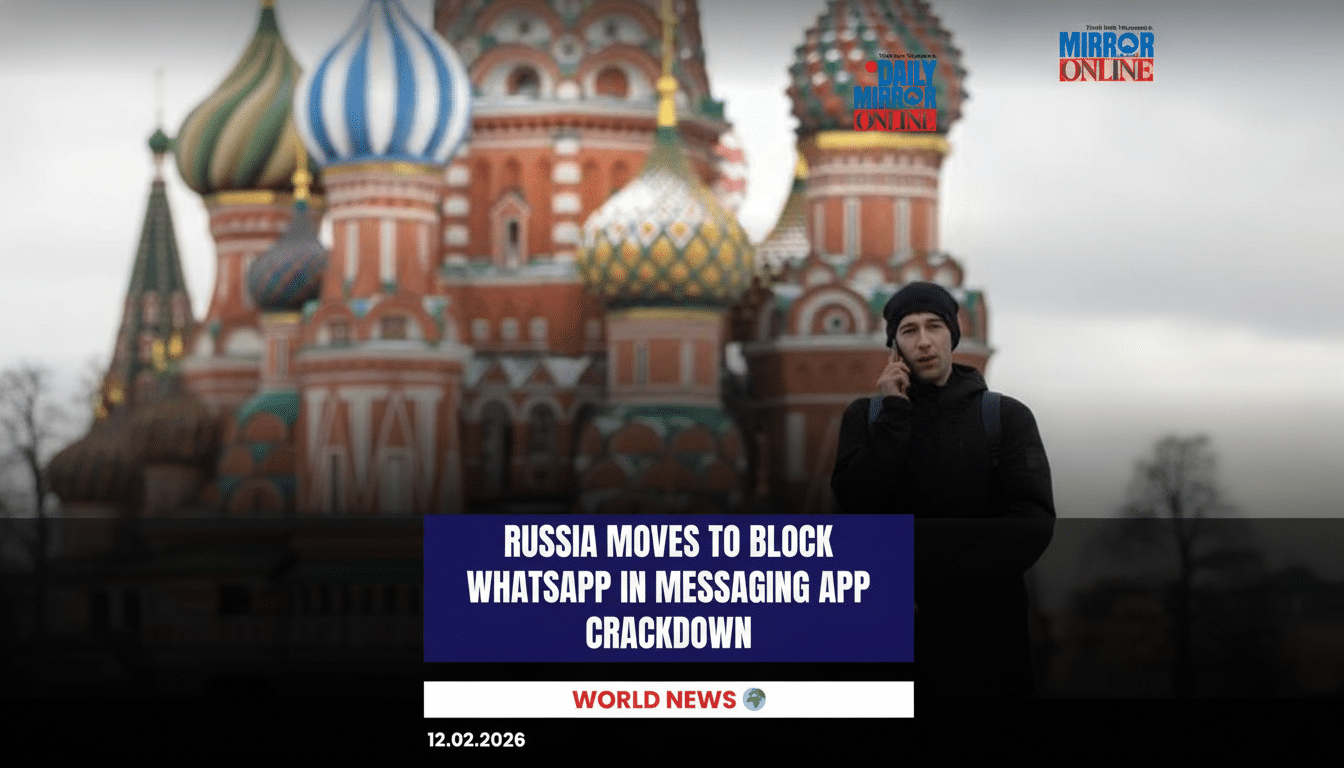
WhatsApp has been blocked across Russia in a sweeping move that tightens government control over digital communications and pressures citizens to adopt a state-backed alternative called Max. The disruption follows the app’s removal from the national online registry overseen by Russia’s internet regulator, signaling a new phase in the country’s long-running campaign to corral foreign platforms.
What Triggered the WhatsApp Block in Russia
Meta said authorities were attempting a full block of WhatsApp to force users onto a government-controlled service, arguing that cutting off more than 100 million people from private, secure messaging would reduce safety. The Kremlin told the BBC that Meta could return if it complies with Russian law and engages in dialogue. Russia labeled Meta an extremist organization in 2022, banning Facebook and Instagram; WhatsApp had been a rare exception until now.
- What Triggered the WhatsApp Block in Russia
- Max Emerges as the Official WhatsApp Alternative in Russia
- Telegram Slowdowns Signal a Wider Dragnet in Russia
- Impact On Everyday Users And Businesses
- The Legal and Technical Backdrop to Russia’s Block
- Privacy Stakes and Encryption Tensions in Russia
- What to Watch Next as Russia Tightens Messaging Controls
Roskomnadzor, Russia’s communications watchdog, did not publish detailed technical justifications, but removal from its registry often precedes or accompanies network-level blocking. Digital rights groups in the country reported broad connectivity failures for WhatsApp, consistent with prior instances of deep packet inspection being used to throttle or block services.
Max Emerges as the Official WhatsApp Alternative in Russia
Kremlin spokespersons have pointed to Max as an accessible substitute available to citizens. Authorities required Max to be preinstalled on smartphones sold in Russia beginning last year, a policy aligned with the broader “sovereign internet” push to privilege domestic platforms. State media says Max is not used for surveillance, while independent watchdogs warn its governance and data practices remain opaque.
Industry watchers estimate Max has surpassed 55 million users, helped by mandatory preloads and prominent placement in local app stores. That momentum positions it to absorb a sudden migration from WhatsApp if the block persists.
Telegram Slowdowns Signal a Wider Dragnet in Russia
The WhatsApp block arrives days after widespread reports of slowdowns on Telegram in Russia, particularly affecting media downloads. Telegram CEO Pavel Durov accused authorities of restricting access to push users toward a state-controlled app designed for censorship. Signal was blocked in 2024, and users have also reported intermittent throttling of YouTube, though officials have not confirmed new action against the video platform.
Impact On Everyday Users And Businesses
WhatsApp has long been Russia’s most popular messenger, routinely topping audience rankings from local research firms such as Mediascope. It anchors daily communication for families, diaspora communities, and small businesses that use it for customer support, sales leads, and logistics. A sudden outage disrupts those workflows and can raise costs as users scramble for backups.
Historically, blocks and throttling spur rapid spikes in VPN adoption. During earlier crackdowns in 2022, Top10VPN reported surges exceeding 1,000% in Russia as people sought to bypass restrictions. But reliance on VPNs is an unstable solution: dozens of services are banned locally, performance is inconsistent, and the legal and security risks are nontrivial.
The Legal and Technical Backdrop to Russia’s Block
Two laws frame the crackdown. The 2016 Yarovaya package requires telecom operators and services to store communications data and, when ordered, assist with decryption. The 2019 “sovereign internet” law centralized traffic control capabilities with Roskomnadzor, enabling orders to block or degrade targeted services at the network level.
Russia has previously demonstrated sophisticated throttling tools, most notably during the 2021 campaign that slowed Twitter’s media content. While technical methods vary—IP blocking, DNS tampering, and deep packet inspection among them—the outcome is the same for users: failed connections, partial functionality, and unpredictable reliability that nudge people toward approved platforms.
Privacy Stakes and Encryption Tensions in Russia
WhatsApp’s end-to-end encryption has made it a lifeline for private communication. Russian regulators, however, have repeatedly sought “lawful access” mechanisms that would undermine such protections. Signal’s earlier block and ongoing pressure on Telegram underscore a pattern: services that resist providing government access face escalating constraints or removal.
Rights groups including Reporters Without Borders and Freedom House have warned that compelled migration to state-linked apps erodes user privacy, chills speech, and expands surveillance capacity. The risk is particularly acute for journalists, activists, and at-risk communities who depend on reliable, secure channels.
What to Watch Next as Russia Tightens Messaging Controls
Key questions now are whether authorities move from throttling to a full block on Telegram, whether YouTube faces broader restrictions, and how aggressively app stores are pressured to delist foreign messengers in Russia. Enterprise communication tools could also see tighter scrutiny if they provide encrypted channels.
For consumers, the immediate choices are stark: shift to domestic apps with limited transparency, rely on VPNs with uneven protection, or fragment conversations across multiple services. For companies, contingency plans—alternative support channels, SMS fallbacks, and clear customer guidance—will help blunt the shock if the block becomes permanent.
The message from Moscow is unmistakable: the government wants decisive leverage over the platforms Russians use to talk to one another. Whether that leverage translates into lasting adoption of Max—and how much privacy users are willing to give up in exchange for connectivity—will define the next chapter of Russia’s internet.