


ASUS has begun taking preorders for its Xbox-branded ROG Ally handhelds, making the most daring move yet to become a portable Windows gaming device mated with the Xbox.
There are two models available — the ROG Xbox Ally and the pricier ROG Xbox Ally X — each bringing a handheld-first Xbox interface with enhanced hardware and a premium price.
- What’s New in the Xbox Ally Handheld Lineup
- Detailed Specs and Performance Targets for Both Models
- An Xbox-first Experience on Windows for Handheld Gaming
- Pricing, Availability, and Retailers for Global Preorders
- How the ROG Xbox Ally Models Compare With Key Rivals
- Who Should Preorder the ROG Xbox Ally Handheld Models
What’s New in the Xbox Ally Handheld Lineup
According to ASUS, both devices represent a generation-based improvement over the original ROG Ally, promising up to 20% more performance for the former and up to a 30% increase in the X edition, as well as up to double battery life compared with older versions.
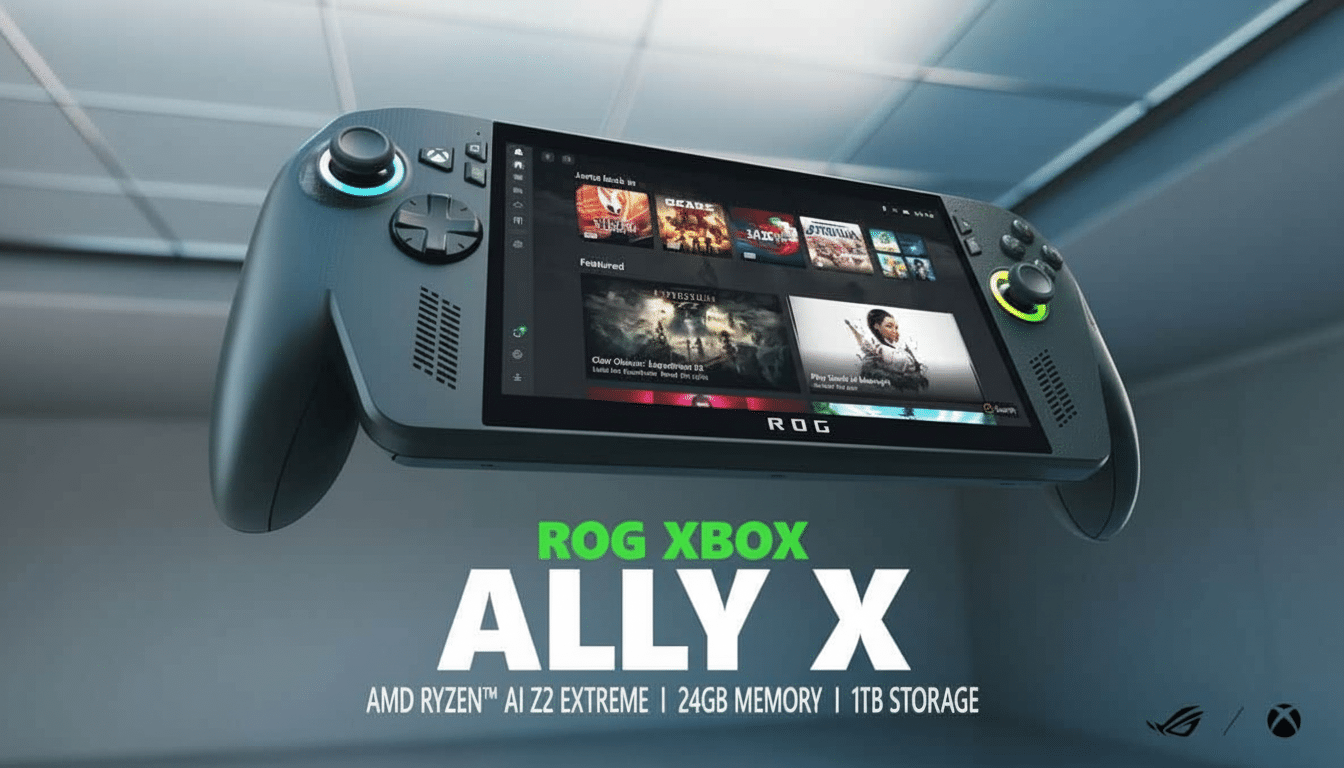
That said, the ROG Xbox Ally is powered by a Ryzen Z2 A processor, paired with 16GB of memory and a 512GB SSD. The ROG Xbox Ally X jumps to a Ryzen AI Z2 Extreme chip, 24GB of LPDDR5X memory, and storage is boosted to a 1TB SSD, with a massive 80Wh battery for longer sessions.
Both models retain the seven-inch 1,080-pixel display and bump it to a slick 120Hz with FreeSync Premium, and that’s still a rarity in handhelds. ASUS also includes impulse triggers on the X model for intuitive haptic feedback, a nice touch that Xbox players have come to expect in premium controllers.
Detailed Specs and Performance Targets for Both Models
The silicon is the headline. AMD’s Z-series chips have been designed with handheld PCs in mind, combining Zen CPU cores with RDNA graphics, and here they’ve been teamed with faster memory configurations and larger SSDs to try to minimize any bottlenecks. New form factor or not, ASUS’s Armoury Crate software is back and compatible with handheld-tailored performance modes that allow users to adjust power limits and fan profiles on the go. Storage is still user-upgradable, which is a bonus over sealed consoles given that modern PC releases tend to top 100GB.
ASUS’s battery life estimates rely in part on platform efficiency, and also the larger 80Wh pack in that X model. In the real world, endurance will depend on frame rate targets and power modes, but doubling runtime versus the last-gen could feel like a very welcome quality-of-life upgrade for commuter and couch gamers alike.
An Xbox-first Experience on Windows for Handheld Gaming
Both handhelds run Windows 11 but start up into a full-screen Xbox interface, optimized for small displays and thumb-driven navigation. That includes immediate access to the Xbox app, Game Pass libraries, cross-buy titles like Xbox Play Anywhere, and cloud saves among console and PC. Users can, when required, fall back to the Windows desktop to install launchers such as Steam, Battle.net, or Epic, highlighting the adaptability of the systems.
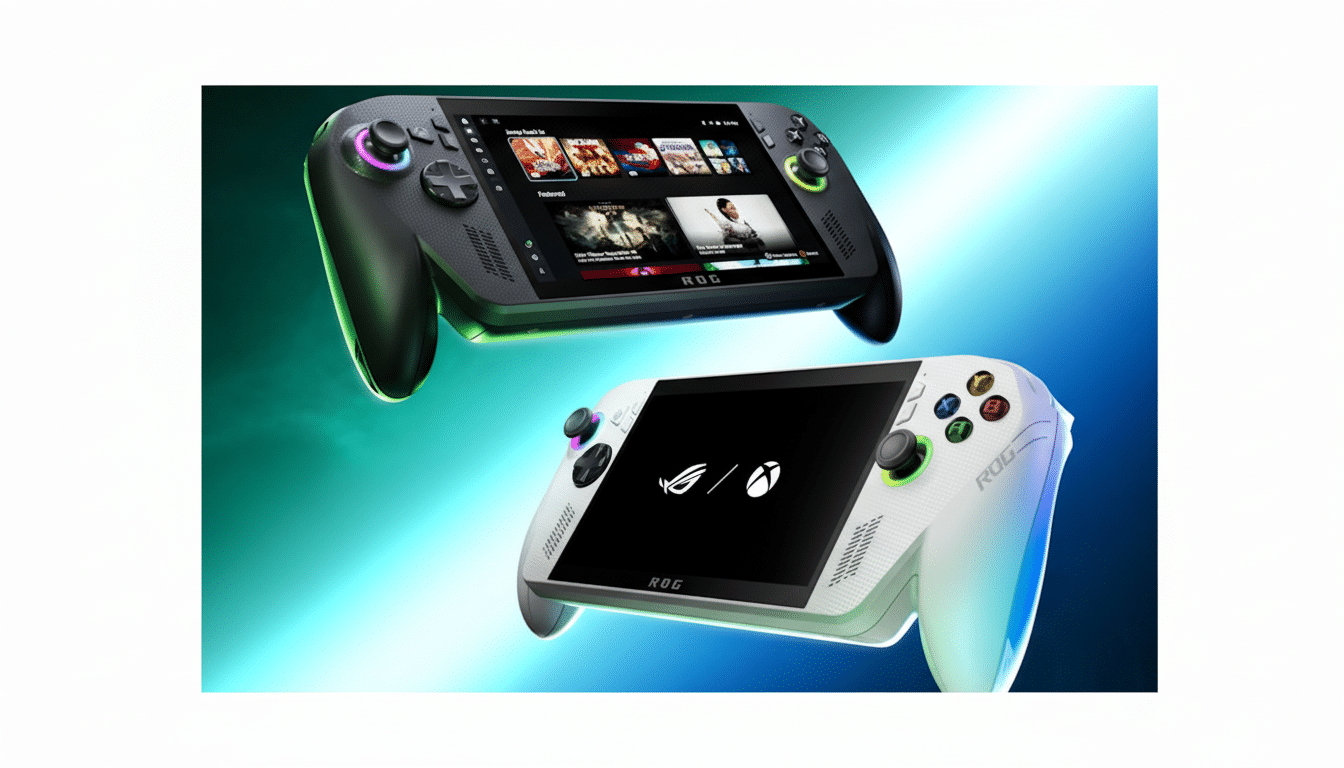
This Xbox-first shell on top of Windows is what could set it apart for players with a growing library across services. Microsoft has made no secret of wanting to be where gamers play, and a polished handheld UX is a logical extension of this ambition.
Pricing, Availability, and Retailers for Global Preorders
The ROG Xbox Ally models can now be preordered in the US, UK, Mexico, Japan, and other countries through the Microsoft Store, the ASUS eShop, Amazon, Best Buy, and other retailers. The ROG Xbox Ally is priced at $599.99 and up, while the ROG Xbox Ally X will set you back $999.99 or more. Those are expensive prices for the pair, putting the duo at the higher end of the handheld PC market, particularly the X model with its bigger battery and more memory.
For those power users, the Ally X also allows ASUS’s XG Mobile ecosystem to be connected, meaning that a plug-and-play external GPU dock on a desk can be used to give them their fill of performance. Going the external GPU route may be overkill for a traveler, but it does turn your handheld into an adaptable setup at home without you having to buy a separate desktop.
How the ROG Xbox Ally Models Compare With Key Rivals
Valve’s Steam Deck lent credence to the category, with the device topping out at a 1,280 by 800 screen and a 90Hz refresh on the OLED model. Lenovo’s Legion Go drives an 8.8-inch panel up to 144Hz, and MSI’s Claw rests on Intel silicon with mixed battery results in reviews. The 1080p at 120Hz, close Xbox integration, and aggressive battery-life claims make the ROG Xbox Ally pair stand out.
Price is the counterweight. $999.99 is a steep price for the Ally X, far more expensive than any high-capacity Steam Deck OLED. Whether the sales pitches of performance and battery life from ASUS actually pay off with a noticeable advantage will determine whether the company is successful at moving this thing in any volume. Among those shoppers, the team at Circana said it has seen continued interest in portable PC gaming hardware, with value and software experience as key purchase drivers.
Who Should Preorder the ROG Xbox Ally Handheld Models
ROG Xbox Ally models make a case if your library heavily skews toward Game Pass and Xbox Play Anywhere, or you want a Windows handheld that feels native to console right out of the box. The base Ally should cover most on-the-go gaming for less, and the Ally X appeals to a power user crowd that values longer battery life, more headroom for memory, and improvements in controllers.
As with any new piece of hardware, the smart play is to wait for independent performance and battery life testing. But with preorders now live through major retailers and a clear spec upgrade over the last generation, ASUS’s Xbox handhelds look poised to be one of the most capable — and expensive — portable PCs of 2025.