


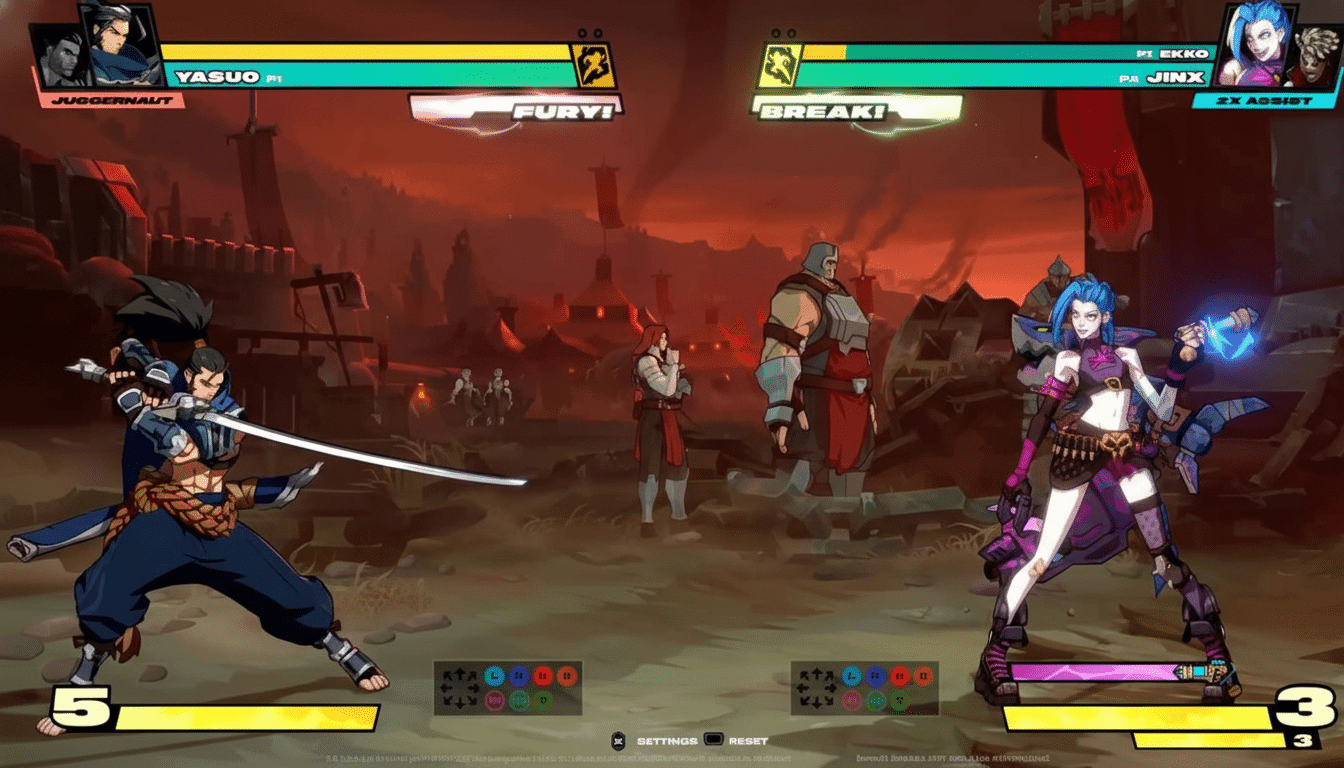
Riot’s tag-team fighter 2XKO has arrived, and the studio has published the PC specs you’ll need to jump in. The good news for most players: this League of Legends universe brawler is far lighter on hardware than many modern AAA fighters, reflecting Riot’s long-standing push for broad accessibility.
Minimum and Recommended Specs for 2XKO on PC
At the floor, Riot lists Windows 10 64-bit, an AMD FX-9590 or Intel Core i7-4770, 8GB of RAM, and a Radeon R9 380 or GeForce GTX 960, with 8GB of free storage. That’s mid-2010s hardware, which means a surprising number of older desktops should still make the cut.

For a smoother, more competitive experience, the recommended build steps up to Windows 11 64-bit, an AMD Ryzen 5 5600X or Intel Core i5-11400, 16GB of RAM, and a Radeon RX 5700 XT or GeForce GTX 1660 Ti, again with 8GB of storage. That class of GPU and CPU has been mainstream for years, so many current gaming PCs will already meet or exceed it.
What These Specs Mean for Your Current PC Build
Fighting games live and die by responsiveness. While the minimum spec will boot the game, competitive play typically demands a locked 60fps with low input latency. The recommended CPUs—both strong single-thread performers—are a smart target if you’re shopping or planning to upgrade. The GPUs listed suggest Riot is aiming for widely achievable performance at 1080p, with headroom for higher refresh-rate monitors common in the FGC.
If you’re running a GeForce GTX 1650 or GTX 1060, or an AMD Radeon RX 580, you’re likely in better shape than the stated minimums. On the CPU side, any modern 6-core chip from the last few generations should comfortably match or beat the i5-11400 and Ryzen 5 5600X, especially when paired with 16GB of RAM.
How It Stacks Up Against Other Fighters Today
Compared with recent genre heavyweights, 2XKO’s footprint is conservative. Tekken 8’s PC requirements call for notably beefier GPUs and CPUs, and Street Fighter 6 lists a GTX 1060-class card as its baseline. By contrast, 2XKO’s targets hew closer to accessibility-first fighters like Guilty Gear Strive, reflecting Riot’s philosophy of reaching the widest possible audience—a strategy that has historically paid off for League of Legends.
Storage Footprint and Platform Notes for PC Players
The 8GB install size is tiny by current standards, suggesting efficient assets and a focused launch package. That also makes 2XKO a friendly option for older SSDs with limited free space. Riot’s anti-cheat is required, and the studio notes the game will not run on Steam Deck as a result. Windows 10 and 11 are supported, with Windows 11 listed for the recommended tier.
As for controls, Riot’s design emphasizes approachability: a standard gamepad works well, while a quality fight stick remains the preference for many competitive players. The simplified directional inputs should lower the execution barrier without sacrificing depth for experienced teams.
Upgrade Tips if You’re Borderline on 2XKO Performance
If your system hovers around the minimum, prioritize a GPU and RAM bump before anything else. Moving from 8GB to 16GB of memory can smooth asset streaming and background tasks, while a used-market upgrade to a GTX 1660 Ti or RX 5700 XT often delivers a substantial uplift at modest cost. Keep drivers current—both Nvidia and AMD typically issue day-one optimizations for popular launches—and enable your monitor’s low-latency or gaming mode for the cleanest input feel.
Competitive players with 120Hz or 144Hz displays should target the recommended CPU tier or better; stable frame pacing matters as much as peak framerate in a fighter. If you need quick wins without new hardware, trim background apps, enable High Performance power plans, and cap the frame rate to your display’s refresh to reduce judder.
Bottom Line: Can Your PC Run 2XKO Smoothly Today?
Riot’s published specs signal a fighter built to run on a broad slice of PCs. If you’ve held onto a solid 1080p rig from the past few years, you’re likely set; if you’ve upgraded recently, you’ll be able to push higher refresh rates and tighter latency. With approachable inputs, a free-to-play model, and tag-team depth, 2XKO is engineered to be easy to run and hard to put down—exactly what a modern competitive brawler should be.