


Ring is expanding its AI-powered Search Party tool for finding lost dogs to people who don’t own a Ring camera, opening the crowdsourced feature to anyone in the U.S. through the Ring app and its Neighbors community. The company says the system has already been reuniting more than one dog per day since launching last fall.
How Ring’s Search Party Lost Dog Tool Works
Search Party starts when a pet owner posts a missing dog alert in the app, including a recent photo and details. Nearby outdoor Ring cameras then use on-device AI to scan new clips for dogs that resemble the report. If the system flags a potential match, that camera’s owner receives an alert and can choose to share a relevant clip, call, or message the reporting neighbor without revealing their phone number.
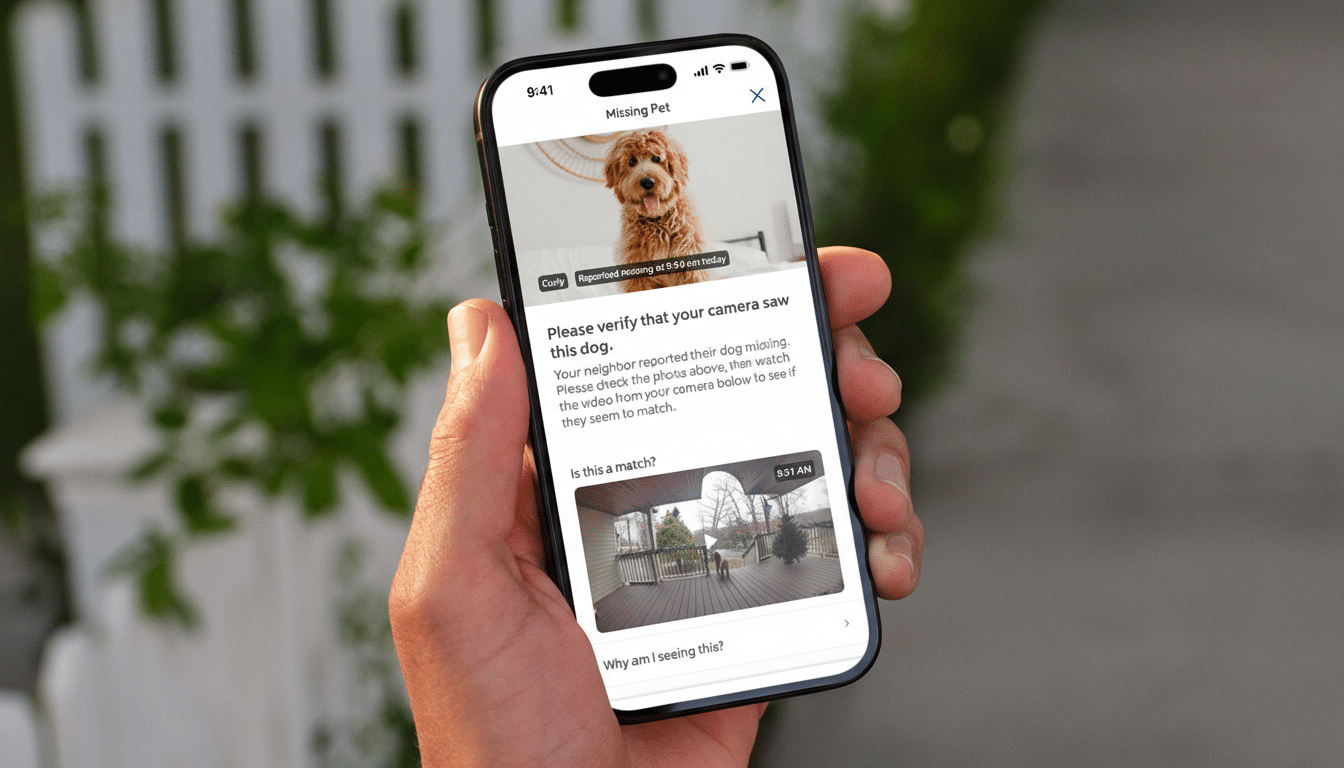
Until now, participation required owning a Ring device. With today’s expansion, anyone can submit a report and receive leads. Camera owners remain in control of what they share, and alerts are limited to the immediate area to keep the network focused and useful.
Opening Access Beyond Ring Owners Across the U.S.
Ring is positioning the update as a way to mobilize entire neighborhoods, not just device owners, around lost pet searches. The move also taps into Ring’s existing Neighbors app, which already connects local users for safety and community alerts. By lowering the barrier to entry, the company aims to accelerate first sightings—the critical moments that often determine whether a pet gets home quickly.
The rollout is U.S.-only at launch. Ring founder Jamie Siminoff has framed the expansion as a community-first push, emphasizing that broader participation increases the chances of early, actionable sightings while preserving user privacy.
Shelter Partnerships And Community Impact
Alongside the expansion, Ring is committing $1 million to equip animal shelters with camera systems, with a stated goal of aiding 4,000 shelters nationwide. The company already collaborates with nonprofits including Petco Love and Best Friends Animal Society, and says it is pursuing additional partnerships to improve reunification rates.
The stakes are high. American Humane estimates that roughly 10 million pets go missing in the U.S. each year. A peer-reviewed study in the Journal of the American Veterinary Medical Association found that dogs with microchips were reunited at a 52% rate, compared with about 22% for those without—underscoring how identification and community-driven sightings work hand in hand. Petco Love Lost, for example, uses facial recognition to match shelter intake photos with missing pet reports; Search Party adds real-time, street-level video into that ecosystem.
If Ring’s claim of more than one reunion per day holds and scales with broader access, the system could materially shorten the time between disappearance and first credible sighting. Those early leads often dictate search radius, volunteer coordination, and shelter notifications.
Privacy and Safety Controls for Ring Search Party
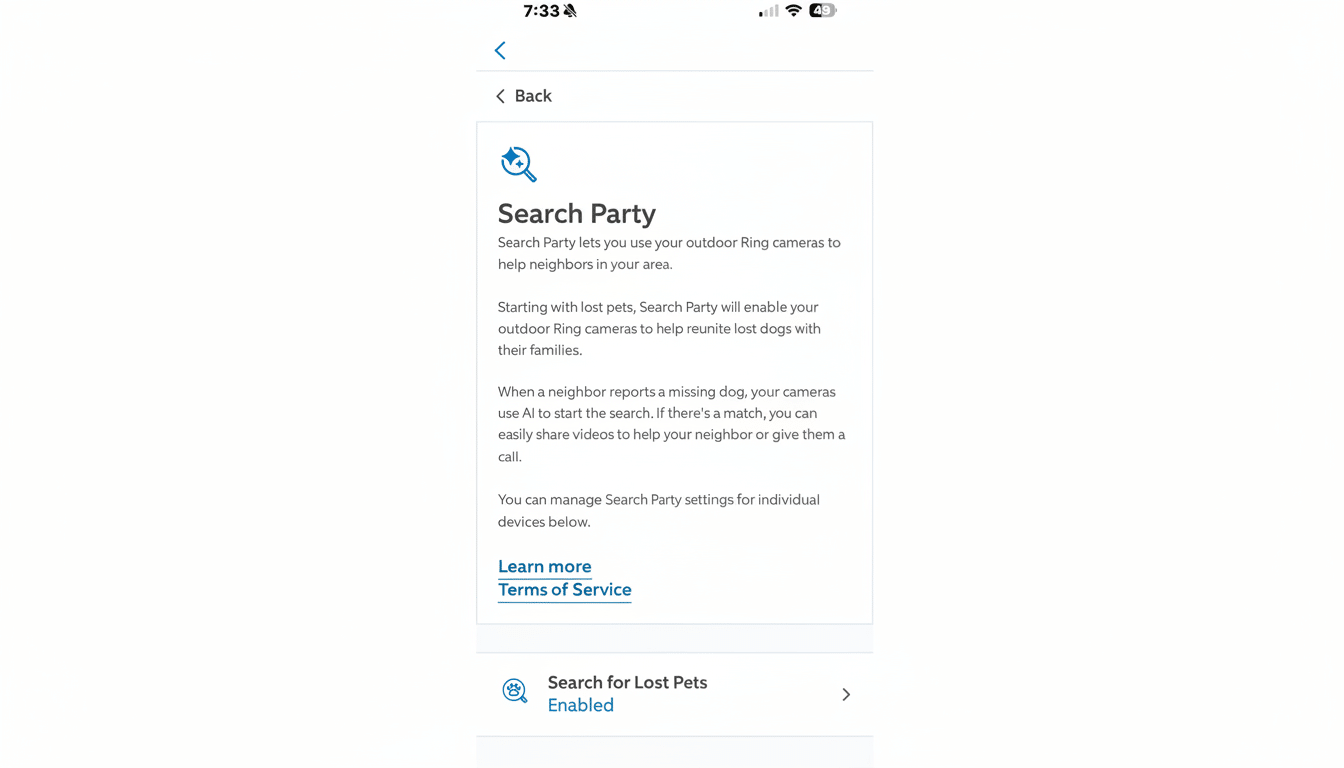
Search Party is opt-in at multiple points: camera owners receive a potential match alert, then decide whether to share a clip or contact the reporting neighbor. Communication is mediated in-app, keeping phone numbers private. Video sharing is not automatic, and neighbors can retract or limit content at any time.
Importantly, the AI looks for dogs in new footage after a report is filed, rather than trawling through archived clips across a wide area. That approach narrows the scope to relevant moments and reduces unnecessary alerts.
What Dog Owners Should Know Now to Use Search Party
Owners can participate even without Ring hardware by installing the Ring app, posting a missing dog alert, and enabling notifications.
Effective posts include:
- A clear, recent photo
- Breed or mix
- Size
- Coat color
- Collar and tag details
- Any distinctive markings
Adding the dog’s microchip number and notifying local shelters increases the odds of a fast match if the pet is found off-camera.
For neighbors with cameras, keeping outdoor zones tuned to typical walking paths and low fences can improve detection without capturing unnecessary areas. If a match alert arrives, sharing a brief clip and the time of sighting often provides the most actionable lead for the search.
Search Party is not a substitute for ID tags, microchips, or GPS collars, but it meaningfully expands the pool of eyes on the street. With broader access, shelter integrations, and community partnerships, Ring’s system could become a useful layer alongside proven recovery tools—and, for many families, the difference between guessing and getting a timely sighting.