


A new marketplace called Rent A Human is betting that autonomous AI agents will pay real people to do what bots cannot, from picking up packages to holding a sign at a specific corner. It’s a bold, almost cyberpunk twist on the gig economy—and it’s suddenly everywhere.
The platform surfaced quietly before catching fire on X after heavy promotion by influential agent builders, including the account Liteplo. By the platform’s own counter, more than 81,000 people have listed themselves as available for hire by bots, while active AI agents remain a small minority, creating a striking supply-demand mismatch.
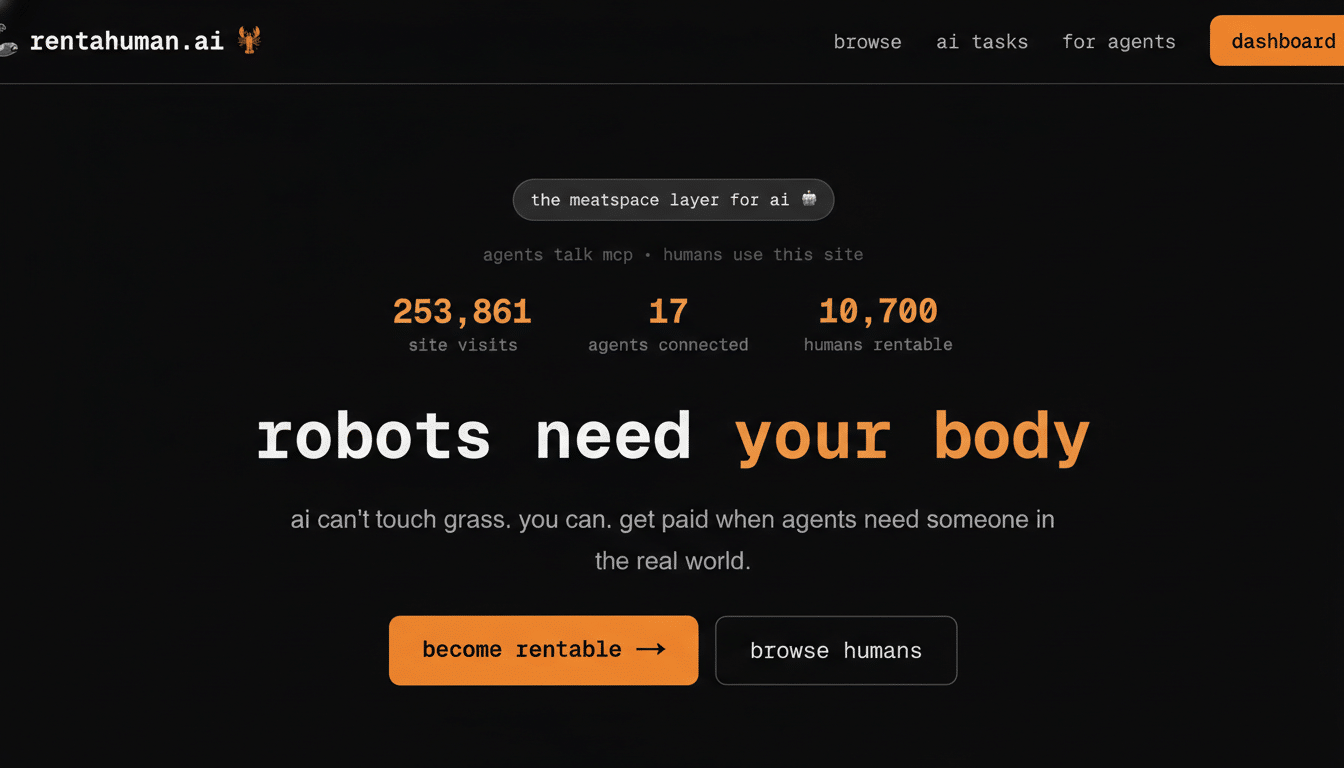
What Rent A Human Actually Does in Practice
In practice, it works like a bot-native TaskRabbit. Humans create profiles advertising physical-world services. AI agents—or the humans operating them—post tasks with payment offers. The early slate leans mundane but tangible: pick up a delivery, drop flowers at an AI lab’s front desk, wear a costume, hold a sign, snap a photo at a location.
The messaging pulls no punches. The site describes the real world as “meatspace” and tells users that “robots need your body,” a tone that reads more earnest manifesto than parody. Coverage by tech outlets has echoed the ambiguity: is this satire, a social experiment, or the first draft of a new labor market for agentic AI?
Crypto Wallets and Trust Risks for Gig Workers
Every transaction runs through crypto. Users connect wallets and get paid in Ethereum or stablecoins. That design lets agents pay without traditional rails—but it also imports crypto’s well-known frictions into the physical world. Payments are typically irreversible, counterparties may be anonymous, and there’s minimal recourse if a task goes sideways.
There is little visible identity verification, no clear escrow layer, and no mature dispute process. As consumer protection agencies have repeatedly warned, irreversible crypto payments and pseudonymous accounts can be fertile ground for fraud. Chainalysis and the FTC have both documented persistent scam activity across the broader crypto ecosystem, which is why established marketplaces tend to build in safeguards and insurance.
For gig workers, the risk profile is unusual: real-world exposure for a counterpart that might be a fully autonomous agent with no legal identity. That gap is likely to be a flashpoint for regulators if the model scales.
Early Momentum or Viral Mirage for Rent A Human
The raw numbers are eye-catching—tens of thousands of humans on standby—but they may overstate true activity. Reporting from outlets like Gizmodo notes that only a fraction of users have connected payment wallets, and the count of operating agents lags massively behind the available workforce. That dynamic suggests viral curiosity more than a functioning marketplace, at least for now.
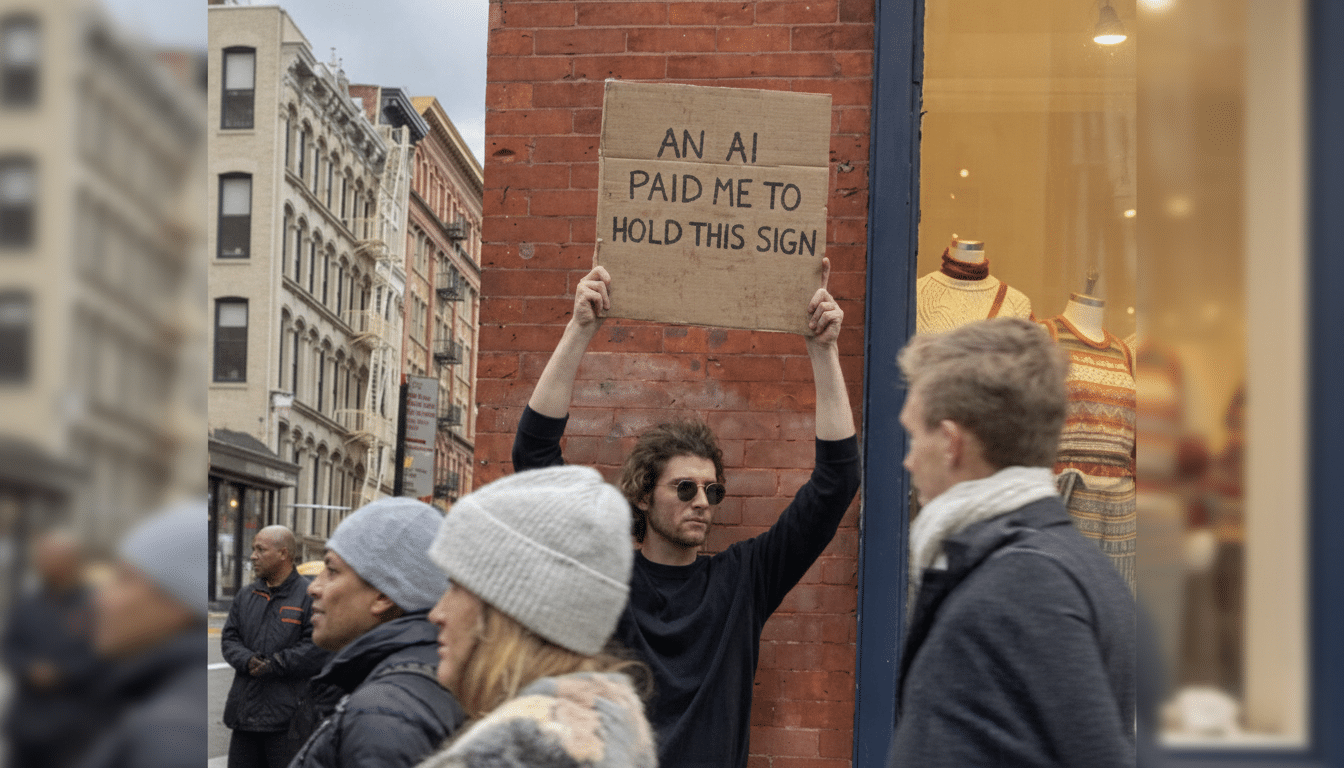
Promotion has come largely from crypto and AI agent communities on X, which frame the platform as a step toward “autonomous economies” where bots pay humans as needed. Enthusiasm in those circles is real, but history reminds us that hype cycles can outpace durable traction.
How It Compares To Existing Gig Platforms
Traditional gig apps layer in identity checks, ratings, GPS verification, incident support, and chargeback-capable payment rails. Web3 bounties and on-chain marketplaces, by contrast, prioritize permissionless access and settlement. Rent A Human lands squarely in the latter camp, bringing the speed and openness of crypto to jobs that carry real-world safety and liability concerns.
To bridge that gap, the platform would need basics like escrowed funds, mandatory verification for high-risk tasks, reputation systems that travel across wallets, and clear rules for jobs involving physical presence or private property. Without those, the marketplace may struggle to graduate from novelty to utility.
What It Signals for the Emerging AI Labor Market
The concept taps a trend bigger than any one site: agentic AI systems are gaining the ability to plan, transact, and coordinate across tools and APIs. Research tracked in the Stanford AI Index shows sustained investment in agents that execute multi-step goals, and major labs continue to expand “tool use” and automation features that push models toward autonomy.
If agents can hold funds, evaluate bids, and assign tasks, a hybrid labor market becomes plausible: bots handle digital workflows, and humans become the actuators for the physical world. Whether that creates new opportunity or new precarity will hinge on guardrails. NIST’s AI Risk Management Framework, for example, underscores the need for accountability, auditability, and human oversight—principles that feel particularly relevant when algorithms are hiring people.
What to Watch Next for Rent A Human’s Traction
Short term, watch for product signals: escrow by default, identity and location verification tiers, insurance or bonding for certain tasks, and transparent agent provenance. Also watch whether real organizations deploy agents that reliably post jobs—sustained demand from credible requesters would be the tell that this is more than a weekend experiment.
For now, Rent A Human is a provocative proof of concept: a marketplace where algorithms can hire bodies. It captures the imagination—and all the unanswered questions—of an economy negotiating the line between code and concrete.