


A like-new 13-inch MacBook Pro from 2020 is being offered for about $410, a steep 74% cut from its original $1,580 MSRP. For students, frequent travelers, or anyone who needs a capable secondary macOS machine, this is the kind of rare sub-$500 Pro deal that actually holds up to scrutiny.
What You Get For $410 on this 2020 MacBook Pro
The configuration is the sweet spot for everyday productivity: a quad-core 2.0GHz Intel Core i5, 16GB of RAM, and a 512GB SSD. That blend comfortably handles document work, dozens of browser tabs, Slack and Zoom, light coding, and photo adjustments without leaning on cloud storage or external drives.

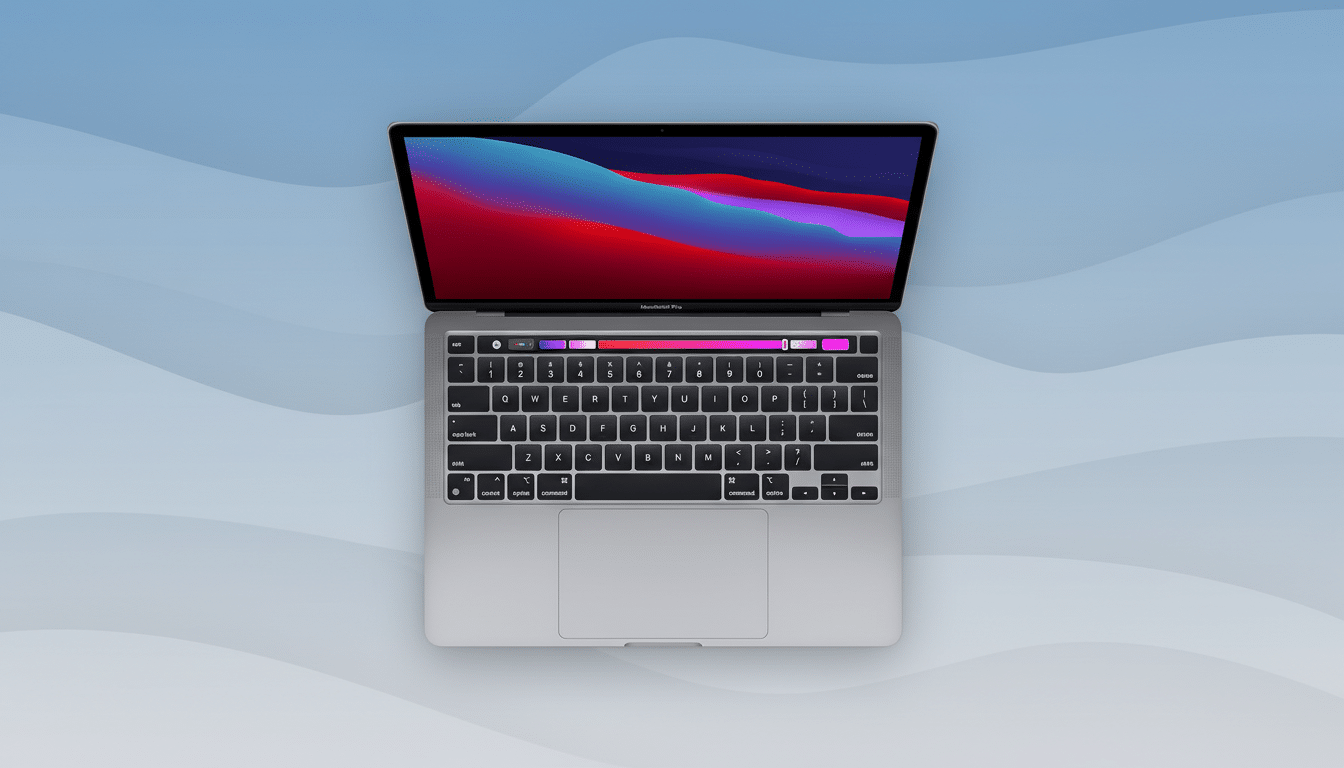
The 13.3-inch Retina display runs at 2560×1600 and includes True Tone, which adapts color temperature to ambient light for more natural viewing. You also get Touch ID for quick, secure logins and the Touch Bar, whose contextual shortcuts still win converts among video editors and power users who like fast app-specific controls.
Four Thunderbolt 3 ports—unusual at this price point—unlock a flexible desk setup. You can charge, connect fast external storage, or drive multiple 4K displays (TB3 carries up to 40Gbps) with room to spare for a dock. Battery life is rated up to 10 hours; on a well-maintained Grade A refurb, that’s enough for most cross-country flights and full days of meetings.
Performance in real terms for everyday workloads
Apple’s M-series chips are faster and more efficient, but this Intel model remains a strong daily driver. Primate Labs’ Geekbench 5 results have the 2020 2.0GHz i5 MacBook Pro landing around the mid-4,000s to low-5,000s in multi-core performance, while the first-gen M1 typically posts 7,000+—a notable jump, but not a dealbreaker for office and web workloads.
Where the 16GB RAM pays dividends is in multitasking and browser-heavy days; 8GB machines often hit swap sooner under modern macOS. The 512GB SSD also gives you breathing room for Xcode, Adobe Lightroom catalogs, or local media libraries that can make smaller drives feel cramped within weeks.
Why ports and portability still matter on this Pro
Thunderbolt 3 remains a high-end convenience. One-cable docking is smooth with TB3 hubs, and creators can tap speedy NVMe external drives for scratch space. The Intel graphics can handle dual 4K displays at 60Hz for spreadsheets, timelines, and dashboards, which is plenty for a travel-ready workstation.
At roughly three pounds, the 13-inch Pro fits in most backpacks without turning them into kettlebells. The scissor-switch Magic Keyboard—introduced in this generation—has been broadly praised for reliability and feel after the butterfly-key era, making long writing sessions less fatiguing.
Software support and security on 2020 Intel MacBook Pro
This 2020 MacBook Pro supports current macOS releases, including Sonoma and the latest features rolling out to Intel-compatible Macs, per Apple’s compatibility lists. For cross-platform teams, Rosetta 2 continues to keep many Apple silicon–first apps usable on Intel hardware, and the x86 ecosystem still runs deep for development and legacy tools.
The built-in T2 Security Chip underpins Touch ID, full-disk encryption, and secure boot. For users bouncing between coworking spaces and home offices, that hardware-level protection—and the convenience of biometric login—adds welcome peace of mind.
Refurbished reality check and what to verify first
Grade A refurbishment typically signifies minimal cosmetic wear and full functionality. Still, it’s wise to confirm battery health expectations, return windows, and the length of the refurb warranty; many reputable sellers provide 90-day coverage or longer. A smart move is to run Apple’s built-in diagnostics and check battery cycle counts on day one.
There’s also an environmental upside. The Global E-waste Monitor 2024 from the International Telecommunication Union and UNITAR reports the world generated roughly 62 million metric tons of e-waste in 2022, and only about 22.3% was formally collected and recycled. Extending a device’s life through refurbishment helps reduce that footprint while saving money.
Who this MacBook Pro deal is best suited for
If you already own a desktop Mac or a newer primary laptop, this 13-inch Pro is an excellent satellite machine for travel, meetings, and code or content edits away from your main rig. It’s capable enough for entry-level creative work and serious productivity, and the four-port TB3 layout makes it easy to drop into a desk setup.
Power users chasing the fastest exports or AI-accelerated workflows should prioritize Apple silicon. But for under $500, a Grade A 2020 MacBook Pro with 16GB RAM and 512GB storage is an uncommon value play—particularly when it’s 74% off and still supported by Apple.