


Reddit is challenging a new social media ban in Australia for those who are under 16, taking the matter to the nation’s High Court and claiming that it both overreaches and actually misidentifies Reddit. The company argues that the ban hampers young people’s ability to engage in public conversation online and, at a minimum, should not apply to Reddit because it operates more like a network of topic-based forums than a typical social network.
Reddit Says It Is Forums, Not a Friend Graph Model
At the heart of Reddit’s case is definitional: what exactly “social media” entails. Reddit bills itself as an amalgamation of public, topic-based communities in which identity and popularity mechanics should be secondary to conversation. Unlike services organized around the cult of personality, friendship ties and self-promotion, Reddit has been designed to prioritize posts, comments and community moderation by groups formed by volunteers.
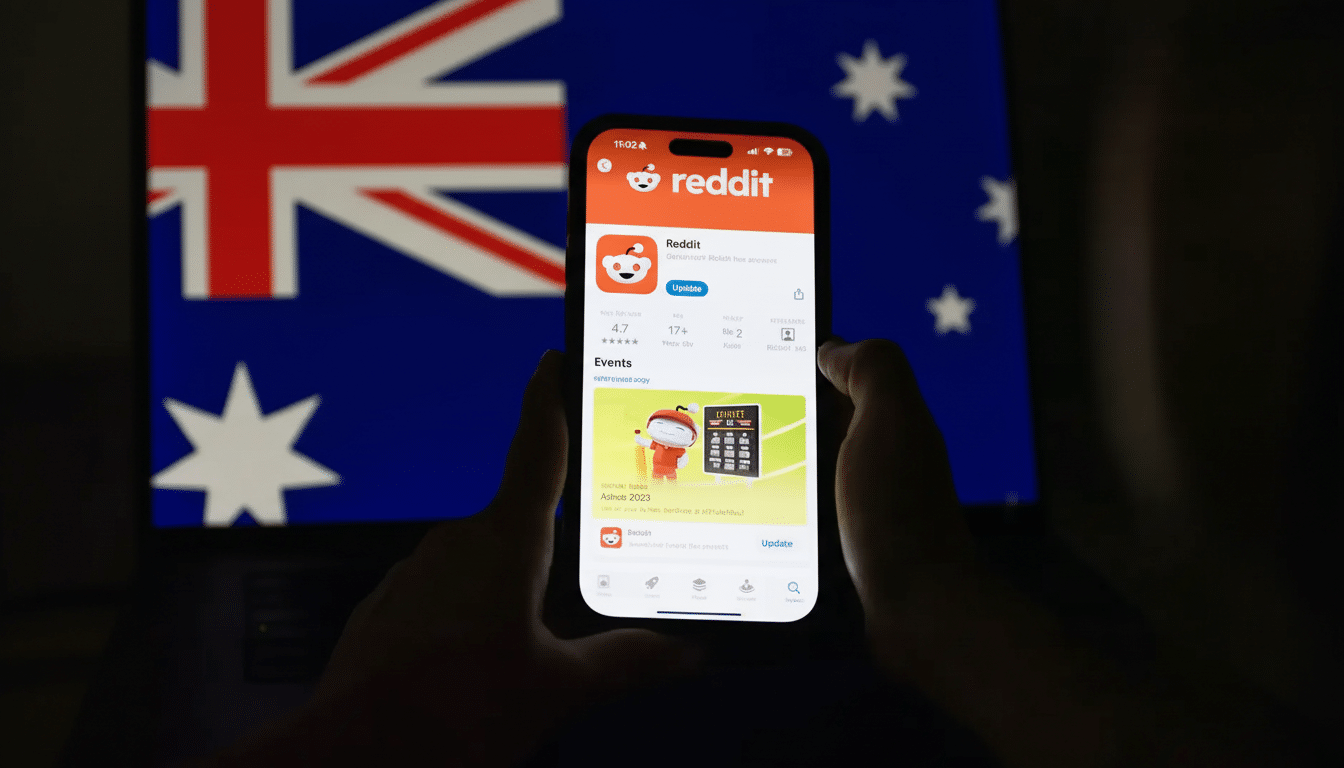
There’s more than just a semantic difference here. Australia’s law, which took effect this week, compels ten large platforms to shut down accounts held by users younger than 16, and to block further access. Reddit has said its design fosters knowledge-sharing and discussion rather than interpersonal networking, so the bill’s one-size-fits-all definition doesn’t work for a forum-like service.
The company also flags a logistical wrinkle: much of Reddit’s content is available without an account. Forcing teenagers away completely from the service could limit oversight and safety controls, it argues, while letting teenagers have age-appropriate accounts would require internal protections such as custom content filters, rate limits and community-level safety rules.
Free Political Speech Is a Crucial Test in the Case
Reddit’s filing relies on the Australian constitutional doctrine of an implied freedom of political communication, which the High Court has held in cases such as Lange v ABC and further developed in subsequent rulings. By preventing all under-16s from engaging with major online platforms where public debate happens, including on Reddit itself, the law goes too far and restricts speech that informs civic life, like youth opinions about elections, climate policy, education and local issues.
Civil society organizations have long warned against blanket restrictions on young people’s expression. The United Nations Committee on the Rights of the Child has recommended that governments weigh online safety against children’s rights to information and participation, especially in digital forums that have become public squares. In Australia, student-led movements, such as climate strikes, have demonstrated how young people can participate constructively in public debate, much of it orchestrated or amplified through the internet.
Verifying That Customers Are of Legal Age Raises Concerns
Reddit also notes it will be a nightmare to enforce because everyone will have to impose “invasive” age verification, not just kids. Age verification is frequently constructed through government IDs, third-party databases or facial estimation. Privacy researchers, the Electronic Frontier Foundation and academic centers focused on digital rights have repeatedly flagged the risks associated with building massive repositories of sensitive identity data that could be breached, repurposed or used to track users across services.

Experience abroad underscores the dilemma. The Online Safety Act in the UK, alongside several EU and US state laws, have all encountered similar difficulties when it comes to how to age-verify without encouraging widespread surveillance or excluding legitimate users. When France began the implementation of parental consent for younger teenagers on social platforms, there were similar concerns about documentation requirements, data retention and access by vulnerable youth.
In a public note, a Reddit administrator cast Australia’s broad aims as bound to cause overreach — sweeping adults needlessly into verification-dragnet policies — and collateral ills for teens who participate in safe, moderated, if often edgy, spaces for support and experiences of civic engagement.
What the High Court Would Be Deciding in This Challenge
The High Court might take several roads. It might apply the law as written, read down those parts of it that unduly restrict political communication or interpret “social media” narrowly enough to exclude platform-style forums. A narrower reading could provide carve-outs for services whose central feature is topical discussion rather than social networking, but still leave friend-based networks and messaging apps with social feeds in scope.
Any decision would have wide-reaching implications beyond Reddit. The law applies to 10 major services, and complying with it means disabling existing under-16 accounts and preventing new ones from being set up. If the Court narrows the definition or emphasizes proportionality, other platforms may tweak their policies to emphasize risk-based features and moderation rather than blanket age bans.
For now, Australian users and parents are in limbo; platforms must contend with a rapidly changing regulatory environment while courts scrutinize constitutional constraints, child safety and privacy. Reddit’s situation pushes a thorny issue into the open — whether all online forums should be regulated like a social network — and sets the stage for a landmark test of how democracies reconcile preserving young people’s safety with engagement in digital civic life.