


Reddit has launched a challenge to Australia’s government before the High Court, warning that the country’s new ban excluding under-16s from certain social media services poses significant privacy concerns and chills political speech.
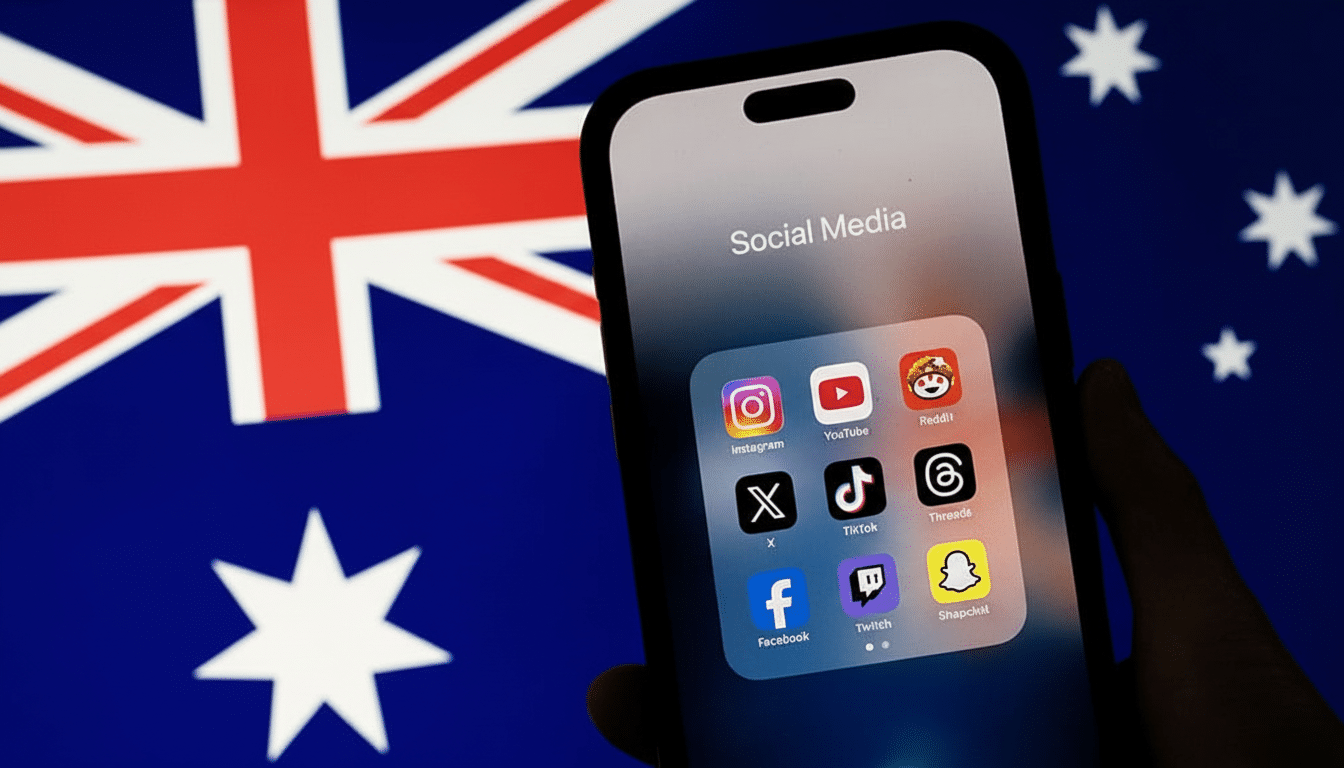
Applying to platforms like Facebook, Instagram, TikTok, YouTube and Reddit, the law carries fines of up to A$49.5 million for contraventions. Reuters said that an estimated 1 million Australian youngsters are covered by the ban and that it represents a landmark test of how far governments can go in legislating to curb youth social media use.
A High Court Battle Over Political Speech
Central to Reddit’s challenge is the implied freedom of political communication in Australia — a constitutional doctrine that sets a limit on laws that burden public discourse too much. The company says the blanket ban is preventing young people from seeking out and participating in political discussions, including Australia’s highly active state and territory subreddits where elected officials and candidates regularly engage with voters. Legal observers point out that the High Court proportionality test holds that restrictions on communication need to be appropriate, necessary and balanced; Reddit’s filing argues the law doesn’t meet the threshold.
Reddit also cites that a large portion of its content is accessible without an account and so banning users by account does little to diminish one’s exposure to hateful material. Ironically, the company says logged-in teens are more protected with safety features, moderation tools and community standards that aren’t available to anonymously browsing users.
The Privacy Problem With Mandatory Age Checks
Any age gate that is enforceable tends to involve some sort of identity checking through government IDs, credit data or biometrics — categories of data that are sensitive and exposed in numerous breaches. Australia’s privacy regulator, the Office of the Australian Information Commissioner, has said age verification schemes should practice data minimisation and security by design. The eSafety Commissioner’s own Age Assurance Roadmap has raised issues of accuracy and bias around facial analysis, and the potential for “function creep” when biometric databases are created.
Comparable systems overseas have struggled. South Korea’s real-name verification system — implemented along similar lines to help prevent gambling problems — was eventually abandoned, following privacy scandals and constitutional issues. Now, Australia’s approach is raising similar questions: Is it possible to reliably tell 15-year-olds apart from the adult population by appearance alone — and at what cost to everyone’s privacy?
Will Banning Under-16s From Social Media Make Them Safer?
Officials describe the law as a public health measure to minimize exposure to abusive, self-harm and predatory content. Yet safety experts say results depend on design choices and oversight, not just access. Without accounts, teens might drift off to the more unruly parts of the internet with fewer protections and fewer reporting tools, while parents and teachers will have a harder time seeing or controlling things.
Teenagers have what is referred to as near-universal connectivity in Australia, where communications and safety agencies have recorded high levels of social media use which suggest enforcement will always be a game of whack-a-mole. Some studies cited by child-safety organizations say that many underage users lie about their age to get around restrictions. That calculus risks incentivizing even more invasive age checks, adding to the privacy trade-offs Reddit points out.
Government Pushback and Industry Worries
Senior ministers have pledged to stand by the law, and the Health Minister likened pushback from tech platforms to tactics once deployed by tobacco companies. The government’s position is that the harms are pressing, the status quo untenable and only a clear age limit will dragoon platforms into action. The clash highlights a broader policy dispute over whether broad prohibitions or specific design rules — like strict defaults, age-appropriate feeds and bans on high-risk features — will best secure safety with limited side effects.
Reddit is not the only one sounding the alarm about unintended consequences. The rules have been called well-intentioned but potentially counterproductive by a leading public policy manager at Google in Australia, echoing warnings from civil society about privacy, feasibility and speech rights.
A Global Test Case for Youth Social Media Laws
Australia is the first major economy to implement a nationwide ban for under-16s, but other proposals are progressing elsewhere. Denmark has proposed an under-15 ban, with parental consent, and Malaysia is discussing stepping up its restrictions to under-16 in the next few years. French, Brazilian, Spanish and Indonesian policymakers are considering similar measures and several U.S. state laws — including Utah’s squeeze law — have passed but are tangled in court.
Courts in various jurisdictions are grappling with the same balancing act: how to curb real online harms without squelching legitimate speech or requiring mass collection of sensitive personal data. Australia’s High Court has a chance to create precedent that will resonate far beyond the continent.
What Comes Next in Australia’s High Court Fight
If the court sides with Reddit, legislators could be shoved in the direction of narrower, tech-neutral rules — stronger design standards, transparency obligations, an effective way to force takedowns for known harms and privacy-preserving age assurance that doesn’t rely on centralized ID databases.
Should the ban hold, platforms will need to make difficult compliance decisions and most likely face increased requests for invasive verification.
In any case, the matter is a sobering reminder of a tougher reality: protecting kids on the internet is not solely about whether they’re capable of opening an app but also about creating products that are inherently safe and which don’t create a trade-off between privacy, participation and protection.